Print Story
X




The Finance Act 2026 should be the starting point of a broader constitutional debate
| E |
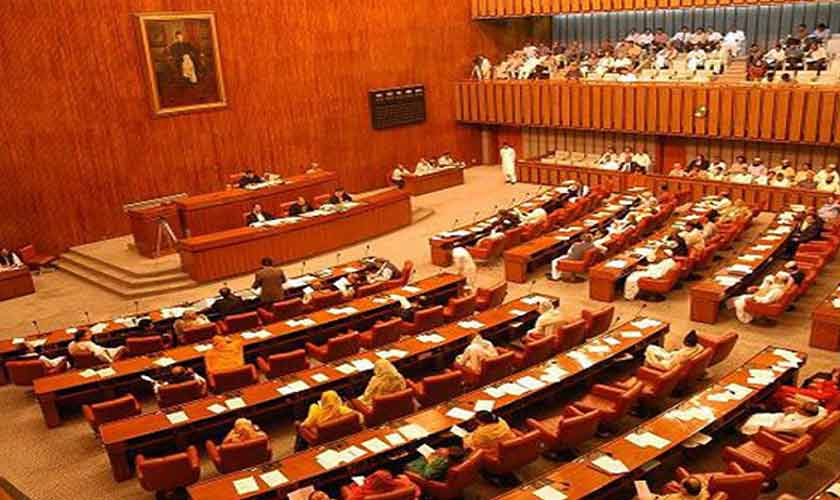
very year, the parliament follows the constitutional ritual prescribed for the enactment of a money bill. The Finance Bill is introduced in the National Assembly. It is simultaneously made available to the Senate under Article 73(1) of the constitution. The Senate cannot amend a money bill, veto it or delay its passage. Its role is limited to making recommendations to the National Assembly - within fourteen days.
The arrangement has often been criticised for reducing the House to a consultative chamber in matters that profoundly affect the fiscal rights of citizens and the financial autonomy of the federating units. Yet, even this limited constitutional role presumes that the bill examined by the Senate is the same as that laid before the National Assembly for enactment.
The Finance Act, 2026, that received assent from the president on June 26, raises a constitutional issue that deserves serious public and judicial attention. Can the Executive place a Finance Bill before the Senate, receive the Senate’s recommendations under Article 73 and, after the Senate has completed its constitutional function, introduce fresh provisions before the National Assembly that were never placed before the Senate? This is not a political question; it is a constitutional one.
The chronology is straightforward. The Finance Bill was presented before the National Assembly on June 12. It was simultaneously laid before the Senate. The Senate Standing Committee on Finance and Revenue held seven meetings over thirty-five hours, examined the bill clause by clause, heard representatives of various ministries, the Federal Board of Revenue, trade bodies and other stakeholders, and submitted its report on June 18.
The Senate committee’s work is far from ceremonial. Its report contains detailed recommendations covering direct taxation, sales tax, customs duties, tax administration, agriculture, health, digital commerce, climate policy and fiscal transparency.
Many recommendations of the Senate reflected concerns consistently raised by economists, tax practitioners and parliamentary committees over several years.
The senators recognised a reality that successive governments have apparently chosen to ignore: Pakistan’s fiscal crisis cannot be solved by merely extracting more taxes from those who are already documented while allowing vast segments of the cash economy to remain substantially outside the tax net.
The committee recommended:
* broad relief for the salaried class;
* reduction of indirect taxes on essential commodities, medicines and agricultural inputs;
* protection against inflationary consequences of expanding the third schedule of the Sales Tax Act;
* continuation of exemptions for contraceptives and family-planning devices;
* safeguards against doubling turnover-based minimum tax on distributors of food and medicines;
* statutory discipline over tax expenditures through sunset clauses and cost-benefit disclosure, protection for small digital-content creators; and
* a greater emphasis on documentation instead of increasing pressure on existing taxpayers.
The National Assembly is constitutionally entitled [Article 73(1A)] to reject each of these recommendations. That is not where the controversy lies. But after the Senate completed its constitutional exercise, the government moved amendments to the Finance Bill lying before the National Assembly. These included fresh legislative provisions — including insertion of a new Clause 6A and other amendments — that had never formed part of the bill examined by the Senate. Those provisions, therefore, escaped the constitutional scrutiny contemplated by Article 73. This distinction between rejection and circumvention is fundamental.
The constitution permits the National Assembly to reject Senate recommendations. It does not authorise the Executive to bypass the Senate by introducing fresh legislative text after the Senate has discharged its constitutional responsibility. Rejection presupposes that the Senate had an opportunity to consider the legislative proposal. Circumvention deprives the Senate of that opportunity altogether.
Article 73(1) speaks of transmission of the Finance Bill to the Senate. It does not envisage one Bill being transmitted to the Senate while another, materially different Bill, ultimately becomes law.
Constitutional provisions governing legislative procedure are not empty formalities. They exist to ensure deliberation, accountability and institutional participation. The Senate’s role may be advisory, but it is constitutionally mandated. The requirement cannot be satisfied by inviting recommendations on one legislative text and subsequently enacting another. The implications extend far beyond parliamentary procedure.
Finance Acts today are no longer confined to imposing taxes or authorising expenditure. Every Finance Act amends dozens of statutes, creates new enforcement powers, expands audit mechanisms, imposes obligations upon banks and withholding agents, restructures regulatory frameworks and affects rights extending well beyond taxation itself. The Finance Act, 2026, follows this familiar pattern.
Once fresh provisions are inserted after Senate scrutiny has concluded, the federating units are effectively denied the constitutional participation guaranteed to them under Article 73.
What happened to the Senate’s substantive recommendations is equally revealing. The committee had emphasised that the burden upon salaried taxpayers should be reduced, that inflationary indirect taxation should be moderated, that agricultural production should receive meaningful support, that essential goods should not be subjected to retail-stage taxation and that tax policy should shift from increasing burdens upon documented taxpayers towards broadening the tax base.
The notified Finance Act largely proceeds in the opposite direction. Withholding agents have acquired additional responsibilities. Banks, businesses and already documented taxpayers continue to shoulder expanding compliance obligations. Faceless audits and artificial intelligence are presented as instruments of reform despite the overwhelming dominance of undocumented cash transactions. Expansion of the third schedule to the Sales Tax Act, 1990, further distances sales tax from its original value-added structure while increasing the likelihood of higher consumer prices.
The Senate recognised these dangers. The Executive largely ignored them. More importantly, the Executive appears to have supplemented the bill with provisions that the Senate never had an opportunity to examine.
This concern is not entirely new. We have consistently argued over the years that the special constitutional procedure governing money bills must be interpreted strictly because it represents an exception to the ordinary bicameral legislative process.
The growing tendency to use Finance Acts for extensive amendments across diverse statutes has already stretched the constitutional understanding of a money bill. The post-Senate insertion of fresh legislative provisions raises an even more fundamental constitutional concern.
If this practice becomes normalised, there is nothing to prevent a future government from placing an innocuous Finance Bill before the Senate, allowing the constitutional period to expire and thereafter introducing extensive new provisions immediately before passage by the National Assembly. Article 73(1) would continue to be observed in appearance while being defeated in substance. That cannot be the intention of a constitution founded upon parliamentary democracy and federalism.
The constitutional obligation under Article 73 attaches to the legislative text that ultimately becomes law. Whenever the Executive substantially alters that text after the Senate has completed its constitutional exercise, constitutional propriety requires that those amendments should be transmitted to the Senate for recommendations before final enactment.
This does not enlarge the Senate’s constitutional powers. The National Assembly remains free to reject every recommendation made by the Senate. However, rejection after consultation is fundamentally different from legislation without consultation. Pakistan’s fiscal crisis is often attributed to weak documentation, inadequate tax collection and administrative inefficiency.
Far less attention has been paid to the constitutional quality of fiscal lawmaking itself. Laws enacted through procedural shortcuts frequently generate avoidable litigation, amendments and declining public confidence in the parliament.
The Finance Act, 2026, should become the starting point of a broader constitutional debate. Respect for bicameralism does not require giving the Senate a veto over money bills. It requires that the Senate be allowed to examine the same legislative text that ultimately governs the citizens of Pakistan. Anything less reduces constitutional consultation to a farce.
The writers are lawyers, adjunct faculty at Lahore University of Management Sciences and members of the Advisory Board of Pakistan Institute of Development Economics