Print Story
X




Reliable security requires a more comprehensive defence budgeting framework
| P |
akistan’s defence requirements cannot be determined in isolation from geographical, historical and environmental factors. The security challenges faced by Pakistan today include a highly militarised eastern border, an unstable western border, terrorist threats, vulnerabilities in Arabian Sea, cyber risks, information warfare and rapidly emerging technologies like drones, artificial intelligence, electronic warfare and satellite monitoring. These challenges necessitate that Pakistan have a good defence system. At the same time, Pakistan is facing high debt repayment, insufficient income generation, inflation, energy crisis and pressing development issues.
The question is not whether Pakistan should maintain a strong defence; it is how Pakistan can achieve maximum security value within limited resources.
Defence budgeting in the context of constrained finances necessitates a move away from conventional budgeting methods. The value for money (VfM) argument should, therefore, not be considered a way to reduce the defence capability of the nation. It is rather an effort to improve the process of defence budgeting in such a way that each rupee allocated adds optimally to preparedness, deterrence, sustainability and modernisation. Building a powerful army on the basis of mere financial constraints is impossible. It must be based on a comprehensive system that connects strategic priorities with fiscal realities, technological changes, industrial capacity and long-term maintenance needs.
National security requires that deterrence be credible. Today, deterrence is no longer assessed purely in terms of the numbers of tanks, aircraft, ships or missiles. In modern times, deterrence requires survivability, readiness, intelligence, communications, precision, mobility and speed. If a system cannot be sustained, developed further or made interoperable within modern command and control system, it may end up becoming a liability rather than an asset. Hence, the quality of defence expenditure is as important as its size.
One of the major challenges in defence procurement is the difference between purchase cost and lifecycle cost. A weapon system considered cheap at the time of acquisition might end up requiring additional expenditure on spare parts, maintenance, fuel, ammo, software improvement, special facilities and foreign technical assistance.
Lifecycle costing is imperative for a country like Pakistan, which must deal with foreign exchange constraints. Policy makers must judge before making any acquisition whether the armed forces will be able to use, maintain and upgrade the system for twenty or thirty years.
Pakistan needs a comprehensive defence budgeting framework that brings together planning, procurement, operations, maintenance and modernisation. This should not be seen as separate tasks. The strategic planners, budget managers, technical staff and commanders must share a common understanding of the threat, their resources and weaknesses in dealing with it. This will enable them to differentiate clearly between the demands of day-to-day operations, modernisation needs and the development of industry.
Not every country can purchase whatever it wishes to buy. Priority needs to be accorded to the capabilities that provide maximum deterrence and effectiveness at reasonable cost. This includes air defence, border surveillance, cyber security, electronic warfare, drone capability, anti-drone capabilities, precision weapons, secure communication, maritime domain awareness and maintenance capability in the local area. Conventional capabilities, although necessary in some areas, need to be complemented with cheaper and technologically superior options.
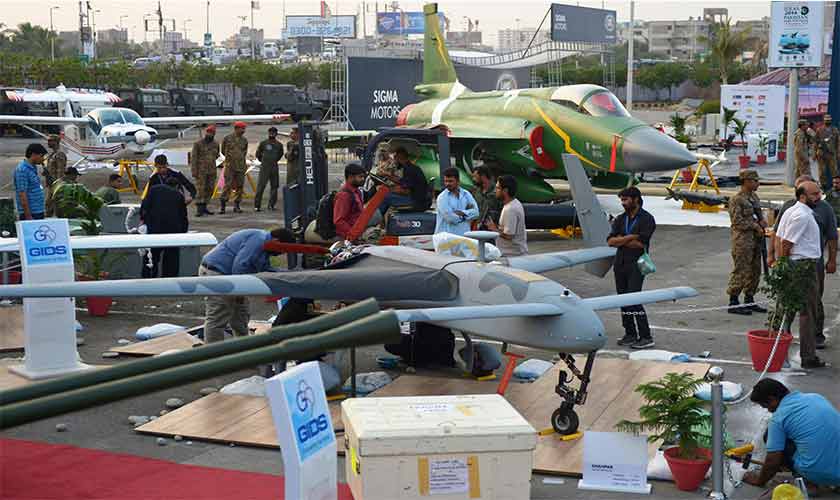
Recent conflicts around the world have demonstrated that drones, sensors and electronic warfare can completely transform battlefields. Relatively cheap unmanned vehicles can perform key tasks like intelligence gathering and attacks on logistics. Anti-drone technologies have become vital for ensuring security of personnel, military installations and critical infrastructure.
The authorities should view drone technologies and anti-drone solutions as an important component of the country’s national security policy. It is in this field that Pakistani businesses, universities and research institutes can make valuable contributions.
The long-term goal is to create an economically sustainable foundation for defence needs. This does not mean manufacturing everything within Pakistan. It means focusing on the sectors where Pakistan can achieve competitiveness and strategic security.
Self-reliance in defence manufacturing is an important element of efficient budget allocation. Organisations like Pakistan Aeronautical Complex, Heavy Industries, Taxila, Pakistan Ordnance Factories and Karachi Shipyard need to develop their capabilities further by focusing on key investments, technology transfer and expert planning. However, self-reliance needs to be approached realistically with attributable knowledge base and professional expertise.
There are certain sectors where Pakistan can develop its capability on its own. These include drones, ammunition, armoured vehicle modification, naval services, communications, training aircraft, cyberspace products and maintenance and repair capabilities.
Maintenance is one of the most important aspects of preparedness for defence purposes. Even in a constrained budget scenario, maintaining existing assets might prove more beneficial than acquiring new ones. Pakistan must work on building its own maintenance and repair centres for aircraft, naval systems, armor, radars, sensors and electronic systems. This can help reduce dependency on external sources, foreign currency, repair time and enhance operational readiness of the system.
Joint planning by the three services can lead to better value for money and lead to less duplication and better cooperation. Warfare is becoming increasingly integrated and budgeting needs to follow suit.
The strategy for defence should also include an understanding that economic security is a component of national security. A country that is economically weak will not be able to sustain a strong defence system for long. Economic problems such as debt, energy shortage, low export volumes and inefficient industries may make a nation vulnerable. Therefore, the defence budget should be integrated with overall economic plans and policies because a capable military and stable economy are not competing goals; they are reinforcing.
In the short term, the value-for-money approach needs to be incorporated into the defence planning process. Such an approach prioritises requirements based on factors such as relevance to threats, affordability, sustainability, indigenous capabilities to support operations and future utility. In the short run, the emphasis needs to be placed on ensuring that there is sufficient readiness through the supply of spare parts, ammunition, training and repair for existing platforms.
Subsequently, Pakistan needs to work towards a strategy for defence resource planning for a period of three to five years. This will bring predictability in procurement, maintenance and modernisation. Procurement should be phased according to urgency and affordability. Life cycle cost analysis should become a routine part of procurement decision.
Pakistan should also set up local maintenance hubs and develop cooperation between defence institutions, educational institutes and technical companies. A national defence innovation programme should support work in artificial intelligence, robotics, secure communications, satellite applications, electronic warfare and cyber defence.
The long-term goal is to lay an economically sustainable foundation for defence needs. This does not mean manufacturing everything within Pakistan. Instead, this means focusing on the sectors where Pakistan can achieve competitiveness and strategic security. Defence exports can be increased in certain categories such as small arms, ammunition, protective gear, training aircraft, unmanned aerial vehicles, vehicle upgrade and maintenance services. Export earnings can support local industry, improve quality standards and reduce pressure on the national budget.
It is essential that the value of human capital stays in the spotlight. Modern defence does not just require soldiers and platforms, but also engineers, technicians, cyber professionals, data analysts, drone pilots and electronic warfare specialists. Pakistan must invest in advanced technical training, simulation-based learning and specialised education for modern battlefields. A well-trained force can often produce more capability from existing resources than a poorly trained force equipped with expensive systems.
Pakistan can afford neither a weak defence nor a wasteful defence. Its strategic environment demands readiness, deterrence and modernization; the economic context requires prudence, prioritisation and reliable processes. The solution lies in a comprehensive approach to budgeting where defence considerations are integrated with economics and technology.
Spending less for the sake of saving money does not make for good defence spending. What is needed is a smarter approach to expenditure that ensures greater security for the nation. Value-for-money defence budgeting should become a part of the planning culture. It should be forward looking and rooted in national security realities.
The writer, an independent consultant on sustainable public-private partnership projects and Defence Programme Management, holds a PhD degree in the subject.He can be reached via [email protected]