Print Story
X




The HRCP annual report points to a shrinking space for freedom of expression
| T |
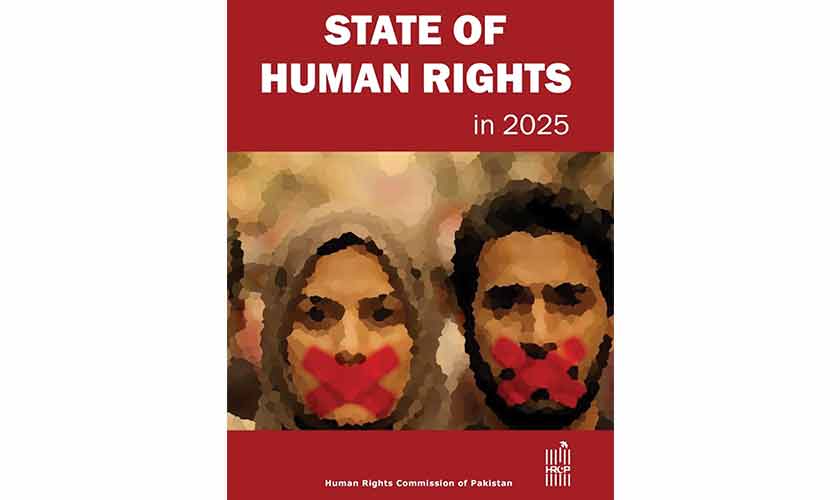
he Human Rights Commission of Pakistan’s State of Human Rights in 2025 report is one of the most comprehensive and compelling indictments of the state of democracy, civil liberties and social justice in the country. The report is not just a list of human rights abuses and violations; it is a mirror reflecting the status of Pakistan’s constitution and highlighting the gulf between law and reality. The State of Human Rights in 2025 is holistic and profound. It provides detailed information on the state of political, civil, economic, social and environmental rights in the Federation. Based on official statistics, media coverage, court proceedings, fact-finding missions and field documentation, the report offers one of the most accurate pictures of human rights in contemporary Pakistan.
The report advances an interesting, if disturbing, argument. Democracy persists in Pakistan due to certain safeguards, including the Constitution, but the space for it is shrinking. The HRCP has found that the most fundamental right - freedom of expression - is being curtailed by restrictions on journalists, political activists, lawyers, civil society groups and ordinary citizens. The report also highlights a decline in institutional accountability and peaceful dissent, driven by Legislative and Judicial changes and an increase in Executive power. The HRCP does not report individual cases; instead, it sets them against the backdrop of the broad trend of democratic backsliding resulting from the most recent measures. This is consistent with the HRCP reporting and some other human rights surveys.
One of the report’s strengths is its multidimensional approach to human rights. It is not only about civil and political rights; it also recognises that democracy cannot survive when people lack basic education, have no jobs, cannot use their labour to sustain a decent standard of living and lack access to a healthy environment. The report covers a broad spectrum of issues, including women’s rights, children’s well-being, labour protections, religious minorities, refugees, persons with disabilities, climate change, health, education and urban governance. This thematic diversity aligns with current academic debates on human rights, which increasingly frame the discussion around social, economic and environmental justice as well as political freedoms.
The report is convincing in its account of institutional changes that affect democratic practice. A good example of how legal reforms can be introduced alongside parliamentary changes and simultaneously alter the relationship among state institutions is the study of the constitutional and legislative changes in 2025. The judicial overhaul, the laws on preventive detention, the restrictions on peaceful assembly and amendments to laws on electronic crimes depict a government under which judicial independence is increasingly trampled and laws increasingly ignored. The report can be criticised for allowing multiple readings, but it raises some interesting constitutional questions that should be debated both academically and in the public arena.
The report is very useful, particularly its provincial approach. The HRCP acknowledges the disparities among regions such as Azad Jammu and Kashmir, Islamabad Capital Territory, Gilgit-Baltistan, Balochistan, Khyber Pakhtunkhwa, Sindh and the Punjab, rather than treating the country as a single, politically homogeneous entity. The geographical coverage provides readers with insight into human rights issues in various parts of the world, given varying political, security, administrative and socio-economic conditions. A methodological merit of this report is its decentralisation. This contrasts with several other international human rights reports that tend to be based on national-level stories and therefore miss some of the challenges rooted in provincial realities.
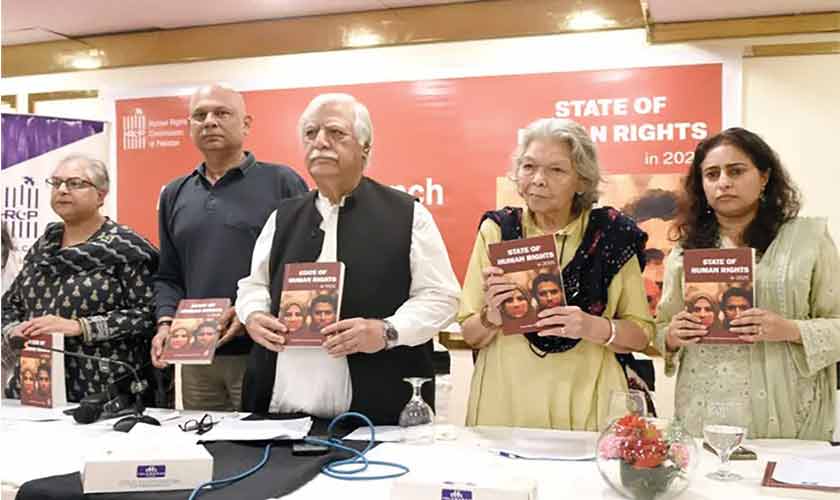
One of the report’s strengths is its multidimensional approach to human rights. It is not only about civil and political rights; it also recognises that democracy cannot survive when people lack basic education, have no jobs, cannot use their labour to earn a decent standard of living and lack access to a healthy environment.
The detailed empirical evidence also makes the report rich in original information. The HRCP relies on official statistics, independent monitoring, court records, media reports and field investigations and reports by HRCP volunteers throughout Pakistan. Importantly, the editors do not try to hide the fact that data remain sparse and that the level of human rights violations may be under-indicated by official statistics and press reporting. The flexibility of methodology also makes this report more credible, since it does not demand an impossible level of accuracy and recognises the difficulties of documenting human rights abuses in political settings amid conflict.
The report also helps one identify areas for improvement. There is definitely some good news, as indicated by the National Commission for Minorities Act, the Child Marriage Restraint Act of the Islamabad Capital Territory, improved management of judicial queues and a few superior court judgments on women’s inheritance rights. The HRCP recognises the positive change as well as the ongoing injustices.
The report, however, comes with a few caveats. It is comprehensive, but that comprehensiveness is also a disadvantage. When so many areas of human rights are covered in a single volume, it is not possible to provide in-depth analysis of the structural causes of many of the violations described. The report is good at identifying trends but less effective at explaining why the patterns persist despite changes in the law and the pledges made by state institutions.
The HRCP papers also present a wide range of statistical evidence. The report relies heavily on official statistics, media monitoring and institutional reporting. These sources are common across many contexts. They can originate from political and administrative structures and some accounts may be biased or under-represented. More specific qualitative data on rights violations experienced by affected communities, especially marginalised communities whose experiences are not reflected in official documents, could be generated through large-scale, systematic field surveys, longitudinal community-level research and/ or oral history.
The report also addresses broad issues of rights and security. Pakistan remains at risk from terrorism, militancy and violent extremism. From the outset, the HRCP has placed strong emphasis on the fundamental freedoms enshrined in the constitution. Future editions will likely offer more discussion of the policy choices a state faces in balancing national security priorities with democratic freedoms. This might defuse tensions and make the report more appealing to policymakers.
The State of Human Rights in 2025, is a very important publication. It is not an annual “dirty laundry list.” It is a rich document on Pakistan’s march toward democratic governance. It provides empirical evidence for scholars, the media, lawmakers and citizen organisations engaged in research and analysis of the relationship between the state and the citizen. It offers authoritative data on changes in law, judicial decisions, governance and socio-economic indicators. It is a useful document for future studies of democracy, constitutionalism and citizenship in Pakistan.
Finally, the report reminds readers that human rights are not mere theoretical constructs but fundamental to a democracy. It is not just that constitutions promise rights, but the extent to which they are realised in everyday life. The HRCP’s latest report notes that the state has made some progress in certain areas. It also points out a worrying overall trend in institutional accountability, civic freedoms and constitutional governance. While some of HRCP’s interpretations may be questioned, the report does succeed in stirring the kind of debate that informed citizens in healthy democracies want and need. The State of Human Rights in 2025 is, therefore, not just a report on a bad year, but an important reminder of why defending rights is the same as defending democracy.
Mazhar Abbas, author of The Aftermath of the Bangladesh Liberation War of 1971: Enduring Impact (Routledge, 2024), has a PhD in history from Shanghai University. He is a lecturer at GCU, Faisalabad, and a research fellow at PIDE, Islamabad. He can be contacted at [email protected]. His X-handle is @MazharGondal87.