Print Story
X




For layered development in Umerkot, governments should work alongside local voluntary organisations
| C |
ities are not a mere collection of so many buildings - homes, offices, academic institutes, cantonments, business centres and or places of entertainments - they also carry stories of the past that make them stand out among others in the region.
Umerkot is distinguished on account of its eye-catching architecture, unique celebration of Eid, Diwali fireworks, colours of Holi, melas and urses. It is the birthplace of Mughal Emperor Akbar the Great and recognised as a city of love, peace and harmony. Umerkot district is situated in south of Sindh. It also lies between Khokhrapar and Chhachhro, and closely related to Mithi in the south and Hyderabad and Sukkur in the north.
According to Pakistan Bureau of Statistics, the district stretches over 5,608 square kilometers. The Umerkot taluka is more expansive than the Kunri, Pithoro and Samaro talukas. Umerkot has a population of more than one million. The average household size is 5.03.
Historical accounts reveal that Umerkot was once a prosperous region. Its wealth is remembered and celebrated in culture, tradition, business, family norms.
Travelling from Mirpurkhas district to Umerkot, one sees sugar mills, roadside trees, donkey carts, bicycles, motorbikes, kiosks, buses and coaches. One also sees bare-foot children on both sides of the road. Most of them are playing or walking. One cannot help wondering why they are not at schools.
Apparently their parents as clueless about what they need to do to have a prosperous future as the children themselves. Many children are forced into low-wage labour. The scale of child labour is one of the most pressing issues in Umerkot. The children are clearly being deprived of their childhood in the name of excuses like poverty and lack of facilities like reliable electricity supply.
The one great social indicator is communal harmony. Hindus and Muslims mostly live in peace. In the holy month of Ramazan, the Hindus organise iftar parties for their Muslim neighbours. They offer cheerful greetings, bring sweets and attend their ceremonies.
This has done nothing, however, to mitigate the lack of development. Many streets, including those behind the historic fort, are filled with drainage sludge. Potable water is in short supply so that many families are forced to consume brackish water.
Yet, the city is expanding. New communities, mostly migrants from Tharparkar, are settling along the outskirts. What plan does the district government have for them is not clear.
Legislators should inform people of their plans for improving the education system in the city.
The elected legislators from the area should inform people of the governments’ plans for the improvement of the city’s education system. They should also discuss the measures they propose for the preservation of folk culture.
For their part, the voters should be asking what measures have been taken and plans developed for poverty alleviation. How many schools have enough teachers to enroll the designated strength of students and sustain 100 percent attendance?
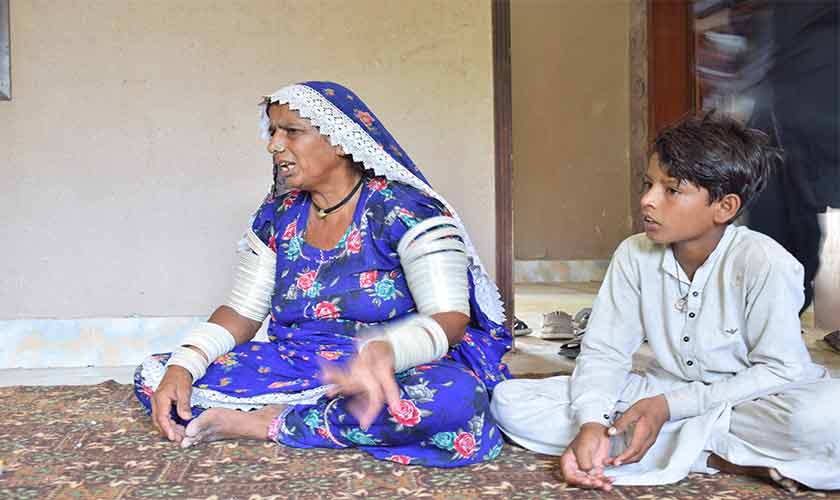
At the grassroots level, some non-government organisations are trying to revitalise community life. Sharifan Bheel, 45, from Syed Hakeem Shah Khejrari village in Umerkot is quite vocal regarding development in her village. She is thankful to the Management Development Foundation that, with financial assistance from Pakistan Poverty Alleviation Fund, helped with capacity building to prepare local activists and volunteers for disaster risk reduction and management, hygiene best practices and preventing gender-based violence.
Nadir Gul Barech, the local head of PPAF, says that the launch of the Restoring Social Services and Climate Resilience project has been a significant milestone in rebuilding and strengthening the resilience of flood-affected communities. He says collaboration between the PPAF, its partners like the MDF and the provincial government reflects a shared commitment to promoting sustainable recovery and building a more resilient future for all.
For layered development in Umerkot, the governments should benefit from the expertise of local NGOs and voluntary organisations. Governments alone are capable of bringing about large-scale change in the society.
Yameen Memon, the MDF president, says that the project empowers communities to rethink their strengths and explore how they can build climate-resilient communities. It also supports the government in identifying ways to improve development schemes in the context of disaster situations.
The civil society in Umerkot has an important role to play in the uplift of the district. They need to devise a strategy that connects every segment of the society to preserve the city and take it forward.
The writer is a development professional and public policy analyst. He can be reached at [email protected]