Print Story
X




How regulatory failure cost 15 young lives
| F |
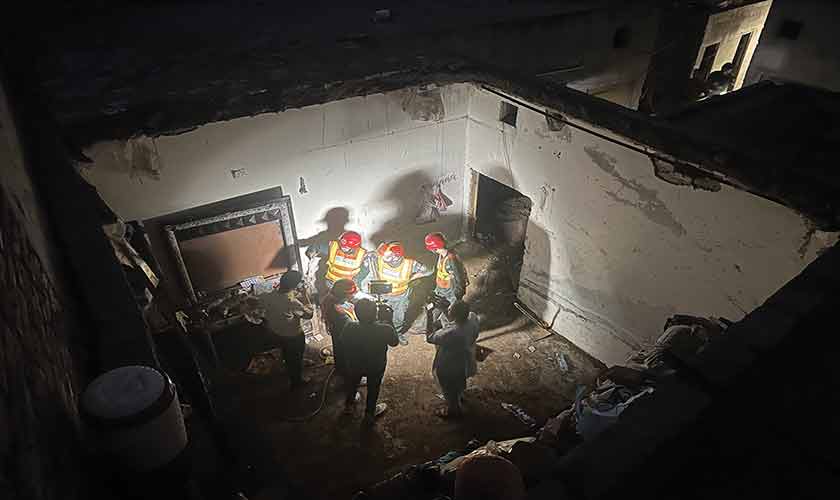
riday was a day of profound grief for the town of Kahna, echoing across a mourning nation. Chief Minister Maryam Nawaz Sharif, accompanied by Education Minister Rana Sikandar Hayat, visited the devastated families of 14 children who had lost their lives when the roof of a tuition centre collapsed. Many others were injured.
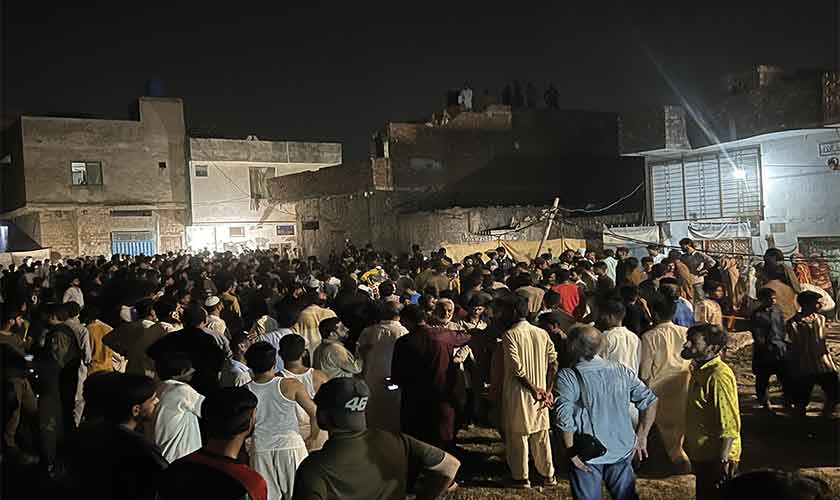
Ahead of the CM’s arrival, the area was scrubbed clean and placed under tight security. Nearby shops were forced to shutter. Commandos kept watch from rooftops. Because the narrow, dingy lanes leading to the site of the tragedy were inaccessible for the CM’s convoy, officials selected a more convenient location for the meeting: the home of Sarwar, who had lost three relatives in the disaster.
Among those grieving was Muhammad Qasim, whose bother had lost three children — Muhammad Fawad, Muhammad Salman and Khadija. They were all five to nine years old.
Qasim says the CM showed deep compassion during the meeting. He says he did not want action taken against the woman running the tuition centre, describing her as a good teacher. Instead, his anger was squarely aimed at the systemic failures that allowed an unsafe building to operate in the first place.
The provincial government announced a compensation package of Rs 2 million for the family of each deceased child and Rs 500,000 for each injured child.
This tragedy has once again exposed the glaring lack of regulation in Punjab’s educational landscape. Thousands of tuition centres, private schools and coaching academies operate out of structures never designed to host classrooms. Many are converted homes — old, structurally weak and uninspected — tucked away in cramped plazas and suffocating alleyways.
| A |
As Kahna reeled from the disaster, news broke of a horrifyingly similar incident in Baghbanpura, where another young student was killed in a tuition centre roof collapse. Eyewitnesses said that, fortunately, most of the deceased student’s classmates were away when the structure caved in.
In the immediate aftermath, the District Education Authority suspended four education officers in quick succession. Education Minister Rana Sikandar Hayat began projecting an aura of urgency. He met and praised a Suthra Punjab worker who was the first to pull a dying child from the debris in Kahna.
The minister conceded the gravity of the systemic failure. He revealed that the Kahna building was under construction and its concrete roof slab had been stripped of its support shutters after just five days—in violation of building bylaws that require a minimum of a fortnight for curing.
Hayat admitted that an education officer had visited the school two weeks prior but was turned away with the excuse that the owner was away on the Hajj pilgrimage. The centre was operating without a No Objection Certificate. The warning signs were blatant, yet ignored.
The minister also announced the immediate closure of nearly 750 unregistered academies across the Punjab, declaring that no academy would be permitted to reopen without obtaining a building fitness certificate by September. Additionally, he urged parents to boycott unregistered schools and called on the public to blow a whistle on unsafe facilities.
| T |
The Lahore Education Authority has issued urgent monsoon safety guidelines for schools across the province. Institutions have been mandated to undergo immediate inspections of buildings, rooftops and entry/ exit points. Schools have also been ordered to fix drainage issues, repair faulty electrical wiring, stock first-aid kits and keep children indoors during heavy rains.
While these are sensible measures, they arrive in the wake of 15 coffins. The guidelines existed long before the Kahna and Baghbanpura disasters; the only element missing was enforcement.
Dr Rubeena Zakir, a professor of public health at Punjab University, says that these disasters are a symptom of a poor check-and-balance system. “When a building is under construction, there should be absolutely no human activity inside it. It seems that people are oblivious to this basic safety rule,” she says, noting that many structures in areas like Kahna and Androon Shehr are centuries old and desperately require structural reinforcement.
Dr Zakir says government institutions must proactively identify vulnerable structures, particularly those undergoing cheap, substandard renovations. She also says that most commercial buildings in the city lack emergency exits, evacuation plans and routine safety drills.
“Many tuition centres operate beyond the regulatory framework, which is nothing short of criminal,” she says.
Dr Zakir, who is part of a degree programme focused on workplace health promotion and safety to train student inspectors, emphasises that the state’s approach must pivot. “Safety assessments cannot be a reactive, one-time exercise. They must be routine, mandatory and strictly enforced.”
Ahsan Raza is the editor of an English daily. He can be reached at [email protected]