Print Story
X




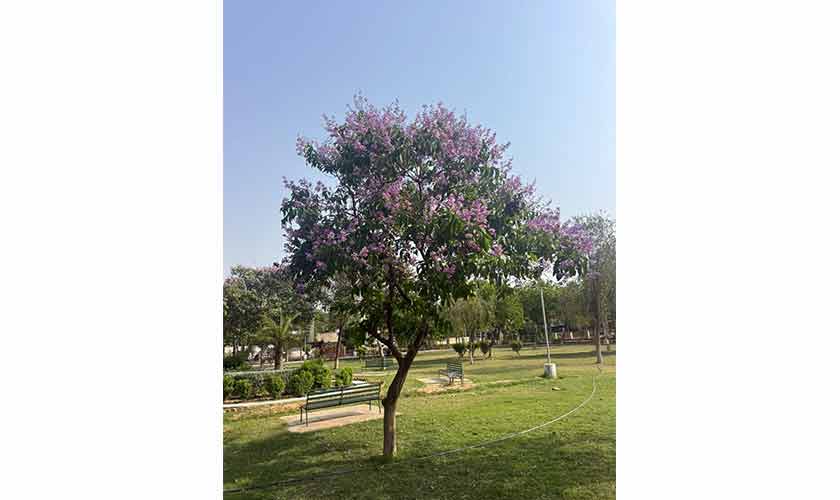
The banaba tree represents a bridge between human health and environmental sustainability
| P |
akistan stands at a critical juncture, simultaneously facing rising public health challenges and escalating environmental degradation. The urgency to identify solutions that address both these issues in an integrated and sustainable manner has never been greater. In this context, an intriguing candidate is emerging from the intersection of traditional medicine and modern agro-forestry: the banaba plant (Lagerstroemia speciosa). Native to tropical regions of Southeast Asia, this plant is gaining global recognition for its remarkable medicinal and ecological properties. For a country like Pakistan—grappling with high rates of diabetes, soil degradation and climate vulnerability—the banaba plant presents a compelling opportunity that merits careful exploration and scientific evaluation.
Historically, the banaba plant has been used in the traditional pharmacopoeias of the Philippines and India. Its striking purple blossoms have long been admired, but its true significance lies in its medicinal value. For centuries, practitioners of folk medicine have used banaba leaf decoctions and teas to treat various ailments, particularly those related to blood sugar regulation. These traditional uses have served as a foundation for modern scientific inquiry. Over recent decades, rigorous laboratory and clinical research has begun to validate many of these ancient claims, positioning banaba as a promising component of evidence-based herbal medicine.
This development is particularly relevant for Pakistan, which ranks among the countries with the highest prevalence of diabetes. The effectiveness of banaba in managing blood glucose levels is largely attributed to a bioactive compound called corosolic acid, a triterpenoid known for its insulin-like properties. This compound enhances the transport of glucose from the bloodstream into cells, thereby lowering blood sugar levels in a gradual and regulated manner. Unlike some pharmaceutical interventions that may cause abrupt fluctuations, banaba supports the body’s natural metabolic processes, reducing the risk of hypoglycemia and promoting more stable glycemic control.
Beyond its primary role in glucose regulation, banaba offers a range of additional metabolic benefits. The plant contains a variety of bioactive compounds that work synergistically to address multiple aspects of metabolic syndrome. Notably, it exhibits strong anti-inflammatory properties. Chronic, low-grade inflammation is now widely recognised as a key contributor to insulin resistance, a precursor to Type 2 diabetes. By mitigating inflammation, banaba helps improve insulin sensitivity at a fundamental level. Furthermore, its antioxidant components—such as ellagic acid—combat oxidative stress, which is associated with cellular damage and long-term diabetic complications affecting the eyes, nerves and cardiovascular system.
Banaba may also contribute to weight management, an essential component of diabetes care. Its influence on lipid metabolism and fat processing suggests potential benefits in maintaining a healthy body weight. Additionally, its traditional use as a mild diuretic indicates possible supportive effects on kidney and urinary tract health—systems often compromised in diabetic individuals. However, it is crucial to emphasise that banaba extracts should not be viewed as a substitute for prescribed medical treatments. Rather, it holds value as a complementary therapy that can enhance conventional care when used under proper medical supervision. Given its glucose-lowering effects, it may interact with existing medications, making professional guidance essential to ensure safety and effectiveness.
In addition to its health-related benefits, the banaba tree possesses significant ecological potential. As Pakistan undertakes large-scale environmental initiatives such as reforestation and land restoration projects, the selection of tree species becomes critically important. The goal is no longer limited to increasing tree cover but extends to creating multifunctional landscapes that deliver a wide range of ecosystem services. In this regard, banaba stands out as a promising candidate.
While banaba is not a cure-all, it exemplifies the kind of innovative, nature-based solutions that deserve rigorous investigation and thoughtful implementation.
Banaba is a medium-to-large deciduous tree with a strong root system and a broad canopy. These characteristics make it particularly suitable for combating soil erosion—a major concern in regions such as Thar, the Potohar plateau and riverbanks across Pakistan. Its extensive root network acts as a natural stabiliser, binding soil particles and preventing the loss of fertile topsoil due to wind and water erosion. Additionally, its leaf litter contributes organic matter to the soil, gradually improving soil fertility and structure over time.
In urban environments, where air pollution is a growing crisis, banaba could play a role in improving air quality. Its large leaf surface area enables it to trap particulate matter and absorb harmful gaseous pollutants, making it a valuable addition to urban greening efforts in cities like Lahore, Karachi and Faisalabad. Perhaps most notably, banaba holds potential in agro-forestry systems, where it can be cultivated alongside crops. In such systems, it can provide partial shade, act as a windbreak, stabilise soil and offer farmers an additional source of income through the sustainable harvesting of its medicinal leaves. This integration of environmental conservation with economic opportunity represents a model of productive conservation, where ecological health and livelihoods are mutually reinforcing.
Despite its promise, the introduction of banaba into Pakistan’s ecosystems must be approached with caution. As a species native to humid tropical climates, its adaptability to Pakistan’s diverse and often arid conditions cannot be assumed. Initial cultivation efforts should focus on southern Sindh and coastal Balochistan. Key questions are: can banaba thrive without excessive water consumption? Will it produce sufficient leaf yield to be economically viable? Most importantly, can it be introduced without disrupting native ecosystems or displacing indigenous species such as neem, shisham or keekar?
Answering these questions requires systematic research and pilot studies. Agricultural research institutions and university departments in regions like Tando Jam, Hyderabad, and Karachi should lead controlled trials to assess growth rates, water requirements, pest resistance and adaptability. Simultaneously, market research involving Pakistan’s herbal and pharmaceutical industries is essential to evaluate the commercial potential of locally produced banaba products. This dual approach—scientific and economic—will provide policymakers and farmers with the data needed to make informed decisions.
The banaba plant symbolises a broader vision of integrated solutions in an era of complex challenges. It represents a bridge between human health and environmental sustainability, offering a realistic yet hopeful pathway forward. For Pakistan, a country facing both a diabetes epidemic and ecological vulnerability, such multifaceted resources are invaluable. While banaba is not a cure-all, it exemplifies the kind of innovative, nature-based solutions that deserve rigorous investigation and thoughtful implementation. It invites us to view nature not merely as a resource to exploit, but also as a partner capable of supporting healthier bodies, restoring degraded landscapes and strengthening communities—provided we engage with it through knowledge, respect and scientific integrity.
Prof Dr Khalil-ur Rehman is the Riphah University, Faisalabad campus director
Dr Usman Khalil is an assistant professor in the Department of Environmental Sciences at Riphah University, Faisalabad