Print Story
X

| M |
ay 1 arrived inevitably on Friday—a global emblem of solidarity with the working class. In many countries across the world, the day is a public holiday. In big cities and industrial towns throughout the world rallies are taken out, slogans raised and seminars organized. Messages from government leaders pledge commitment to workers’ rights.
“Workers of the world, unite!”
“Fair wages, not just promises!”
Beneath the noise of these well-rehearsed rituals lies an uncomfortable question: can the aspirations of workers ever be fulfilled through mere symbolism—a day of marches, photo-ops and lofty speeches? The question cuts to the heart of a society that claims to honour labour.
Who is a worker? Narrow lenses too often confine the definition to the factory floor, the construction site, or dusty fields—those performing visible, back-breaking physical toil. But an inclusive definition needs to be broader and more honest. Everybody who trades time, talent, sweat or intellect for wages or salary should be recognised as a worker. The office clerk, glued to his spreadsheets until late hours; the teacher shaping young minds in underfunded classrooms; the journalist chasing stories through the night; the shop bookkeeper balancing ledgers by lantern light; the nurse on double shifts in overcrowded wards; the driver navigating chaotic roads for a meager fare—are all workers.
Together their toils drive the machinery of the economy and sustain the very fabric of civilised life. Without them, no industry can thrive, no government function, no society stand.
Inflation does not pause for May 1 speeches. Prices climb relentlessly—food, fuel, electricity, rent, medicine, school fees—even when wages remain frozen in time. A day’s work, once enough to put three modest meals on the table, now barely covers one. Consider the basic dignity of sustenance; a worker returns home exhausted, body aching from hours of continuous effort, and must replenish energy for the next dawn.
Three square meals a day, safe water, a roof that does not leak and transport to the workplace are not luxuries; they are survival needs. For millions of people, however, they have become virtually unattainable. Families have been forced to shrink portions, skip medical care, pull children from school, or sink deeper into debt just to keep going. The gap between what a worker produces and what he or she receives has grown wider, turning honest toil into a perpetual poverty trap.
Private sector employment paints an even darker picture. Payments are often delayed for weeks, sometimes months. Overtime is expected as routine, not rewarded. Leaves are unpaid, health coverage is a near myth. Job security hangs by a thread.
The annual theater of May Day—elegant platforms, rehearsed slogans, revolutionary poetry recited under chandeliers—has become a hollow spectacle. Leaders in crisp attire praise the dignity of labour, then return to offices where the guards at their gates earn less than the cost of a catered lunch.
The workers do not crave applause or hashtags. All they want is fair and consistent enforcement of laws that protect their rights; wages that keep pace with inflation; contracts that are honoured; safety that prevents maiming or death on the job; and treatment that acknowledges their humanity rather than treating them as disposable machinery.
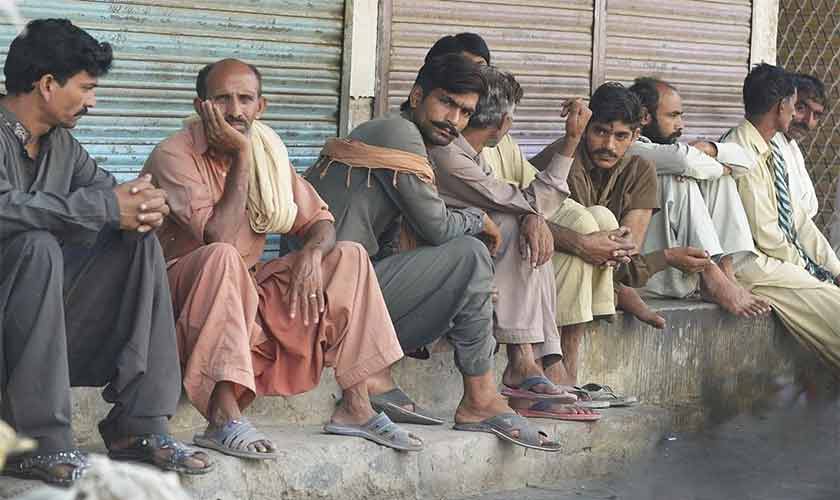
For the daily-wage labourer—the mason mixing cement at sunrise, the street vendor pushing his cart, the helper unloading cargo —May 1 is not a day of rest but of hunger. No work means no pay. A holiday in their name robs them of their only income for the day. Small shopkeepers shutter their stores, informal workers lose precious hours. No compensatory mechanism exists for them. The very symbol of solidarity becomes, for the most vulnerable, another form of deprivation. The performative empathy that costs the powerful nothing, punishes those who can least afford it?
Real progress demands that we abandon rhetoric and embrace rigorous, enforceable action. Governments must legislate a living wage—automatically indexed to inflation, reviewed annually by independent economic boards and applied uniformly across public and private sectors. Annual increments for both skilled and unskilled workers should be mandatory. Timely payment of wages must be a non-negotiable legal duty, with heavy penalties for delays, including interest on overdue amounts and potential imprisonment for repeat offenders. Labour courts should rule on complaints within weeks, not years.
Particular attention is due to overlooked sectors: healthcare, education, transport and the vast informal economy. Workers in these sectors must be explicitly covered under comprehensive labour laws. Independent labour commissions—free from political interference—should be empowered to conduct surprise inspections, audit payrolls, investigate complaints and impose swift sanctions.
Trade unions must be strengthened and given seats at policy tables. Social security nets—universal health insurance, pension schemes, maternity benefits and subsidised housing—need urgent expansion and transparent delivery, reaching even the smallest workshop or home-based worker.
For the daily-wage and informal workers who lose income on public holidays, a dedicated compensatory fund should be established without delay. Financed through equal contributions from employers, large industries and the state, it should ensure that no labourer is penalised for a day meant to honour them.
Concern for workers’ rights is not a modern invention. Holy Prophet Muhammad (peace be upon him) commanded clearly: “Pay the labourer his wage before his sweat dries.” The Holdy Quran repeatedly commands adl (justice) and ihsan (kindness) in all transactions, especially with the weak and the toiling. Exploitation is condemned as a grave sin; timely, fair compensation is an act of worship.
The workers have waited long enough. They have marched and chanted slogans through countless Labour Days. What they need now is not another round of declarations but enforced protections, monitored compliance and transparent accountability for those who exploit them. Their wages must reflect their worth.
Dignity of labour must be a daily routine, not occasional embellishment. Only when our policies, our courts, our employers, and our collective conscience begin to match the sweat and sacrifice of every worker—factory hand or freelancer, sweeper or surgeon—can we claim that we have imbibed the spirit of May Day.
May Day should not be a mere holiday. It should hold a mirror to the society. It should be a day of reckoning, and above all, a renewed covenant with human dignity. The worker deserve not slogans shouted once a year, but quiet, consistent justice delivered every single day.
The writer is director general (Research) at the National Assembly Secretariat, Islamabad