Print Story
X




A new law sets the minimum age for marriage at 18
| O |
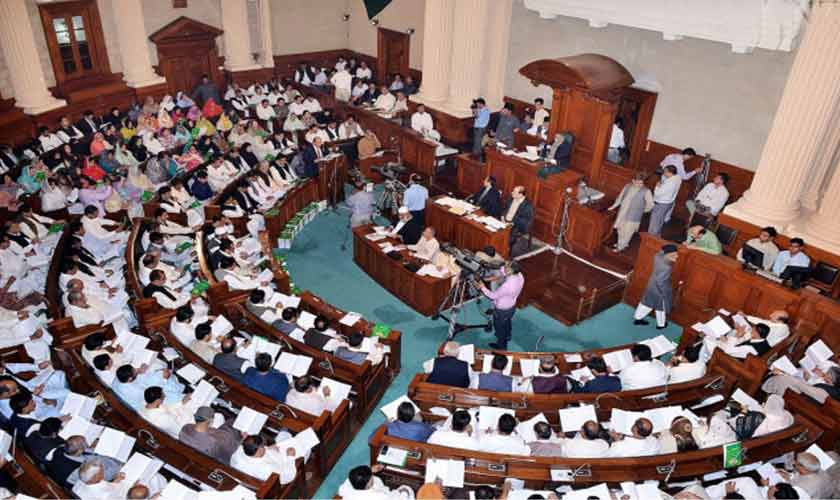
n April 27, the Provincial Assembly of the Punjab approved the Child Marriage Restraint Bill, 2026, establishing 18 years as the minimum legal marriage age for both boys and girls. A handful of members opposed the bill, arguing that it was in conflict with the social norm. However, it was passed by a majority vote. Once signed by the governor, it will apply to all citizens - Muslims as well as non-Muslims. Previously, under the Punjab Child Marriage Restraint Act of 1929, the legal age was 18 for men and 16 for women.
In February 2026, Governor Saleem Haider had promulgated an ordinance establishing 18 as the minimum age for both sexes. However, the ordinance was set to expire in three months. The new bill therefore represents a timely legislation. It aims to curb underage marriages, eliminate gender-based discrimination and strengthen child protection across the Punjab.
Child marriage has been widespread in Pakistan, particularly among poorer and less-educated communities. The practice has grave consequences for the health and well-being of children, especially girls. While some see it as rooted in social custom, others regard it as inhuman and a violation of fundamental rights. International rights frameworks, including the Convention on the Rights of the Child and the Convention on the Elimination of All Forms of Discrimination Against Women, define child marriage — any union involving a person under 18 — as a human rights violation that undermines health, education and autonomy. Consequently, human rights organisations have been calling for addressing this issue in line with international human rights standards.
The passage of the new bill is a positive development. Most human rights activists have welcomed it. Activists have been pointing out that girls from poor Christian communities have been particularly vulnerable to kidnapping, forced conversion and forced marriage. They hope the new law will help reduce the risks faced by both Christian and Hindu girls.
“It is a welcome and progressive development. We commend this important legislative step, as well as all the individuals and stakeholders who played a constructive role in advancing this reform. We also appreciate every positive voice that supported the protection of children’s rights and welfare,” said Kiran Afzaal, a senior lawyer from Lahore.
Earlier, on April 13, the provincial assembly’s Standing Committee on Local Government and Community Development had approved the bill, despite reservations expressed by some members, including the committee’s chairperson, Pir Ashraf Rasool, who said that the bill disregarded the prevailing social reality.
Some people have cautiously welcomed the bill, expressing hope that it will help reduce incidents of forced conversion and forced marriage involving Christian and Hindu girls. The abduction, forced conversion and forced marriage of girls from minotrity faiths— many of them minors — remain a serious concern. Minority groups and human rights organisations have consistently raised alarm over these abuses, which disproportionately affect already marginalised communities. Minority Concern, a minority rights organisation, has described the bill as a step in the right direction. However, it has cautioned that effective implementation will likely take time.
The passage of the new bill by the Punjab Assembly is a positive development. Most human rights activists have welcomed it.
A recent judgment of the Federal Constitutional Court has intensified concerns. On March 25, the court upheld the marriage of a 13-year-old Christian girl, Maria Shahbaz to a 30-year-old man. Christian leaders, including church authorities, strongly reacted to the verdict, warning that it may set a dangerous precedent and make Christian girls even more vulnerable to forced marriages with their abductors. Archbishop Khalid Rehmat of Lahore expressed deep anguish over the decision, calling it “profoundly disturbing” and “unacceptable.” As head of the country’s largest Catholic diocese, he stated that the ruling “represents not only a grave failure of justice in Maria’s case but also sends a dangerous message that undermines the rule of law and weakens protections for vulnerable minority girls.”
Seeking to reassure the Christian community, Federal Minister for Information and Broadcasting Attaullah Tarar promised an Easter gathering that the government would address the issue. There are reports that the federal government has formed a 37-member national committee—including church leaders, politicians and human rights activists—to review the case and propose safeguards against forced conversions and marriages. The committee has yet to be formally notified.
The Punjab government similarly constituted a 37-member committee on April 6 to address the related concerns.
Meanwhile, Phalbous Christopher, a member of the Punjab Assembly and chairman of the Standing Committee on Minority Affairs and Human Rights, introduced a private bill on April 9 to protect Christian women and children, by proposing amendments to the Christian Marriage Act of 1872.
The issue holds particular significance in the Punjab, which is home to approximately 80 percent of Pakistan’s Christian population.
“Now that the bill is set to become law, its effective implementation must be ensured in both letter and spirit. The government and law enforcement agencies must take firm action against all those who support or facilitate child marriages, whether within formal institutions or society at large. Particular attention must also be given to the concerns of Christian and other minority communities regarding the marriages of underage girls. We remain hopeful that the government will address these concerns with the same seriousness and commitment, especially in matters involving forced conversions, forced marriages and the protection of vulnerable girls,” said Kiran Afzaal, who has long advocated for girls’ rights.
Sindh, Balochistan and the Islamabad Capital Territory have set the minimum age for marriage age at 18. In Khyber Pakhtunkhw, the minimum age for girls remains 16.
The writer, a freelance journalist based in the UK, is a former executive secretary of the Justice and Peace Commission of Pakistan. He can be reached at aftabmughal7 @hotmail.com.