Print Story
X




As the Punjab government promises to make Lahore a child-friendly city, experts have mixed reactions
| I |
n December 1999, one Javed Iqbal shocked Lahore by claiming to have killed as many as 100 street children; a claim he would later retract. The retraction was not believed. He and his two alleged accomplices were convicted and sentenced to death. Pending appeal, he was reported to have died by suicide. The claims, counterclaims and speculation around the case left some permanent scars on the national psyche, raising important questions about the state’s ability to protect its most vulnerable citizens.
Come 2026, the city is seeking a radically different image. The provincial government has embarked on an ambitious journey to transform Lahore into a child-friendly city. It is aiming for a formal certification by the UNICEF — a possible first in the region.
According to Home Secretary Dr Ahmad Javed Qazi, the Punjab is the first province in the country to approve a comprehensive Child Protection Policy. “We are following a zero-tolerance policy against violence, abuse and exploitation,” he says. The government’s approach combines immediate intervention — providing food, shelter and legal aid — with long-term education, such as ‘good touch, bad touch’ awareness campaigns designed to empower children to report abuse.
To support this initiative, 19 new child protection units are being set up across the province. These units will work alongside the Child Protection and Welfare Bureau, led by Sarah Ahmad, which has become a focal point for rescue and rehabilitation operations.
What is a child-friendly city? According to the UNICEF, it is a system of local governance committed to the Convention on the Rights of the Child. In practice, it means that the children are not passive observers of life; their voices, safety and development are integrated into the fabric of public policy.
To earn this title, Lahore must navigate the Child Friendly Cities Initiative, a rigorous six-step process:
Memorandum of Understanding: A formal commitment between the local government and the UNICEF;
Situation Analysis: A data-driven deep dive into the current state of education, health and safety;
Action Plan: Creating a Synthesis Action Plan that prioritises urgent needs;
Implementation and Monitoring: Executing the plan and tracking real-time results;
Evaluation: An independent assessment of whether goals were met;
Recognition: Grant of the child-friendly city designation.
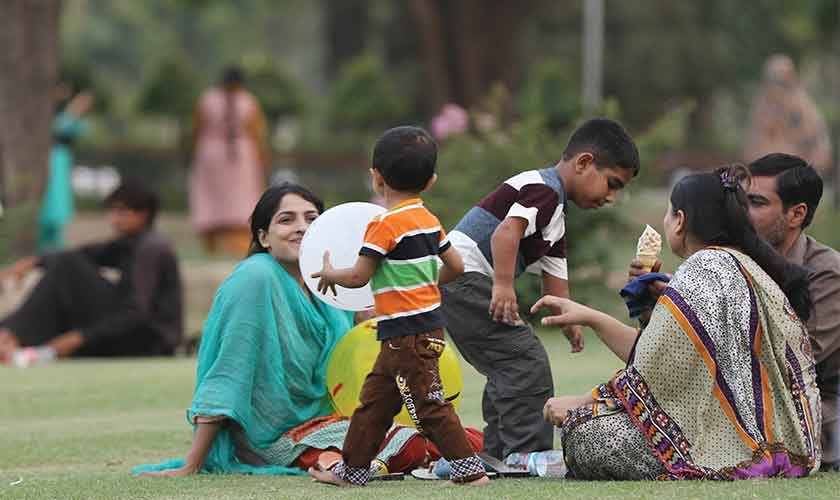
According to the UNICEF, a child-friendly city is a system of local governance committed to the Convention on the Rights of the Child. In practice, it means children are not passive observers of life; their voices, safety and development are integrated into the fabric of public policy.
| D |
r Farid A Malik, a public policy expert, says that the CFC concept relies heavily on a robust local government. He points out that such a system is currently missing in Lahore.
“When basic municipal structures are weak, it is difficult to see how a city can meet high global standards,” Malik says. He doubts whether a city can be truly child-friendly while its governance systems are still evolving.
The Lahore Development Authority responds by emphasising a phased approach. LDA officials say that while their past projects have focused on “roads and buildings,” the new mandate prioritises people. Upcoming budgets are expected to fund child-centric infrastructure: safer parks, walk-able school zones and inclusive public spaces.
Social scientists see this as a necessary evolution. Dr Rubina Zakar, professor of public health at the University of the Punjab, points to global benchmarks like Copenhagen’s cycling infrastructure, Rotterdam’s community spaces and Barcelona’s “super blocks” where play takes precedence over traffic.
“A child-friendly city focuses on physical, mental and social well-being of its children,” she says. “It requires services that are accessible to every child, regardless of class or background; and youth councils where children actually have a seat at the decision-making table.”
Educationist Syed Shamim Azam counsels caution. He warns that without transparent data and independent verification, the UNICEF certificate risks becoming a mere label.
“We need to define standards clearly,” he says. “Awareness is a start, but we need trained personnel and strong monitoring to ensure that these programmes aren’t just on paper.”
As the government prepares to sign the agreements with the UNICEF, all eyes are going to be on Lahore.
Ahsan Raza is a senior journalist.He can be reached at [email protected]