Print Story
X




Punjab’s School Meal Programme is transforming education and sustainability
| P |
akistan’s education challenge is no longer just about access—it is about retention, engagement and learning outcomes. While enrollment has improved over the years, consistent attendance and meaningful learning remain persistent concerns. Increasingly, evidence points to a simple yet powerful truth: a hungry child cannot learn effectively.
The Punjab government’s School Meal Programme is emerging as a transformative policy intervention—one that operates at the intersection of education, nutrition and sustainability.
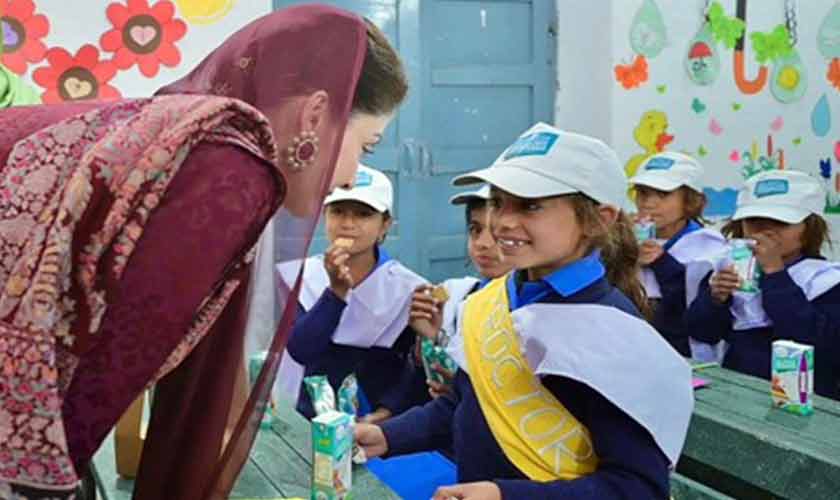
Launched to address both malnutrition and low classroom engagement, the School Meal Programme is designed to improve students’ health, concentration and daily attendance, particularly in underserved districts. By providing nutritious meals, including milk, the initiative tackles a fundamental barrier to learning: hunger. For many families, especially in low-income communities, the assurance of a daily meal acts as a strong incentive to send children to school consistently. This translates into improved attendance, reduced dropout rates, and a more engaged classroom environment.
Global evidence strongly reinforces this approach. School feeding programmes are widely recognised as effective tools to increase enrolment, improve attendance and enhance cognitive performance. Global programme evaluations have highlighted that children receiving regular nutrition in schools are more likely to stay in school, participate actively and achieve better academic outcomes. Nutrition, particularly protein-rich intake such as milk, plays a vital role in brain development, memory retention and concentration—making it a critical enabler of learning.
China provides one of the most compelling examples of how school milk programmes can deliver a multi-dimensional impact. Introduced in 2000, China’s School Milk Programmes have reached over 14.5 million children. Beyond measurable improvements in children’s health and learning capacity, the initiative has had a transformative effect on the country’s dairy sector ecosystem that expanded significantly, with the number of dairies growing from 700 to 1,600. Farmers’ total income increased from $2.15 billion to $3.24 billion. This demonstrates how a well-structured school nutrition programme can simultaneously improve education outcomes and stimulate economic growth by strengthening local value chains.
Punjab’s School Meal Programme offers a replicable model—one that combines nutrition, education and sustainability into a cohesive policy framework. It moves beyond short-term welfare and positions school feeding as a strategic investment in the country’s future.
Punjab’s School Meal Programme reflects a similar strategic vision, adapted to local needs. By integrating milk into daily nutrition, the programme is not only improving children’s health and learning ability but also creating demand within the domestic dairy sector. What truly distinguishes the initiative is its forward-looking integration of sustainability and circular economy principles.
The programme incorporates the use of fully recyclable milk packaging, supported by a structured system for collection and recycling. Instead of becoming waste, used cartons are being recovered in real time and repurposed into practical products such as school benches and notebooks. This creates a closed-loop model where the delivery of nutrition is seamlessly linked with environmental responsibility. It is a powerful example of how packaging circularity can drive tangible social impact, transforming consumption into a resource for community development.
This integrated approach aligns closely with the United Nations Sustainable Development Goals, particularly those related to zero hunger, good health and well-being, quality education and responsible consumption and production. By embedding sustainability into the design of a social sector programme, the Punjab is demonstrating how public policy can deliver layered value—addressing human development challenges while also advancing environmental stewardship.
The economic case for such programmes is equally compelling. School feeding initiatives are globally recognised as high-return investments, with long-term benefits linked to improved educational attainment and workforce productivity. Better attendance leads to higher years of schooling, which ultimately enhances earning potential and contributes to economic resilience. At the same time, the stimulation of local agriculture and dairy sectors generates income opportunities, particularly in rural areas.
For Pakistan, where a significant proportion of children face nutritional deficiencies, scaling such initiatives could prove transformative. The School Meal Programme offers a replicable model—one that combines nutrition, education and sustainability into a cohesive policy framework. It moves beyond short-term welfare and positions school feeding as a strategic investment in the country’s future.
As the programme evolves, its impact will be measured not just in attendance figures or improved grades, but also in the kind of generation it helps shape—healthier, more capable and more conscious of sustainable practices.
The writer is a communications expert