Print Story
X




A simple gift in a Spanish hostel opens onto a deep truth about Pakistan’s handicrafts
| H |
e hugged a small woolen rug to his chest as if it were something far more precious than was apparent.
Hiro, a young, energetic Japanese man with an MBA from McGill University in Canada, and I met at a hostel in Spain and quickly became friends. It was the first time I had met someone from Japan and I was curious about his country, its culture and his habits. He spoke fluent English, so conversation was easy.
In my backpack, I carried a small woolen rug, about a foot square. I had bought it in Ghakhar, a town near Gujranwala, before travelling to Europe. It was an inexpensive souvenir, suggested by my wife, a handmade piece that might appeal to Western tastes: simple, elegant and easy to carry.
When I offered it to Hiro as a gift from Pakistan, his eyes widened.
“Is it really for me?”
I nodded. “Yes. It’s a handmade craft from one of our cities known for rugs, carpets and textiles.”
He took it, still looking unsure, and then hugged it tightly. He seemed genuinely moved.
“It must have been expensive,” he said. “Don’t worry,” I replied. “It’s not much.”
By European standards, it was cheap. But to him, it clearly wasn’t.
Hiro wore a cross-body bag, its strap running across his chest. He carefully tucked the rug into the strap, securing it in front of him. “You’ve made my day,” he said, smiling.
He kept it there, held close, until he waved me off at the bus station for my next destination. The rug stayed pressed against him.
He treasured it. That much was unmistakable.
Across Pakistan, culture expresses itself in countless forms, in what people make, wear and eat. It is a country of striking diversity. Almost every city and town offers something distinctive for the home, the wardrobe or the table. My wife and I have long been drawn to small handicrafts and rarely miss a chance to buy some when we travel. They are, for us, irresistible.
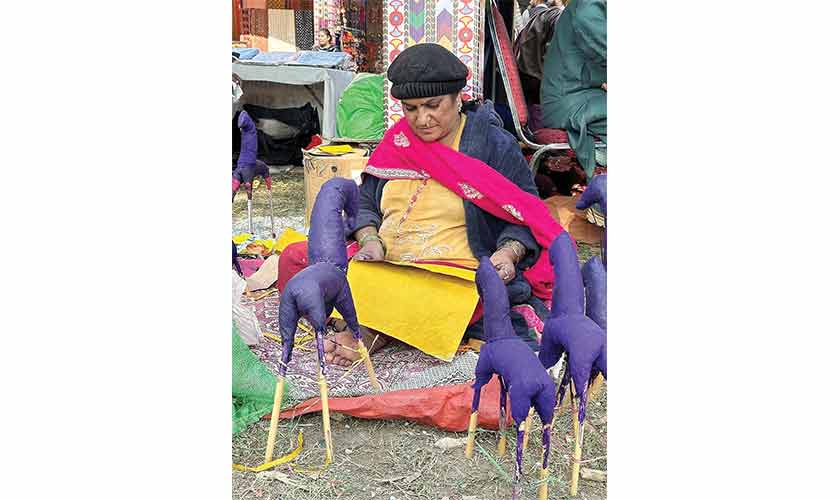
We often meet the people who make these objects. They are usually poor, living in conditions that are far from comfortable. Yet their craft endures, passed down from one generation to the next. The rewards are meagre, but the ties, to skill, to tradition, to one another, remain strong.
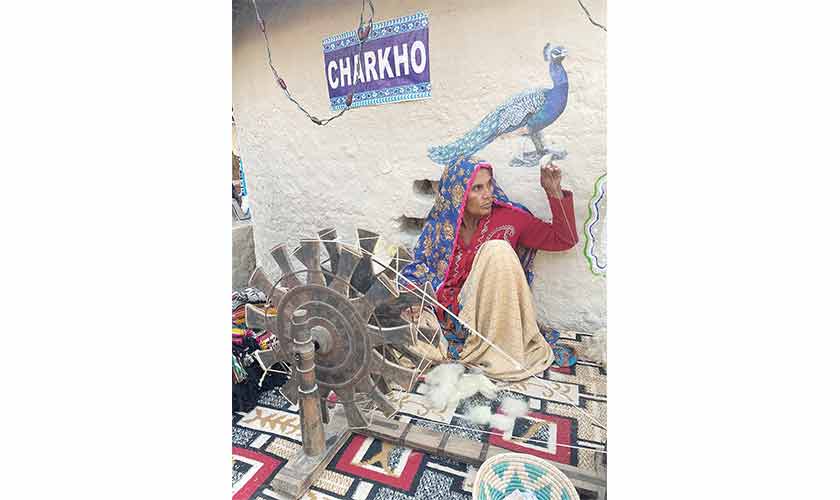
Watching them work reveals the labour behind each piece. There is no automation, only raw talent and the steady discipline of the hands. It demands focus and patience. Only a few items can be completed in a day. Each one is shaped by hand, turning simple materials into something fine.
Those who create the handicrafts receive very little in return. In a world driven by brands and mass production, they cannot compete with machines that produce in volume.
Fixing tiny mirrors onto cloth and stitching them in place by hand is painstaking work. It strains the eyes and the body. From Karachi to Khyber, artisans spend long hours completing each piece.
In Multan, a city known for its culture and history, I once went looking for embroidered suits. The shopkeeper, lively and talkative, laid out brightly coloured, heavily embellished garments and explained how he sourced them. Curious, I asked to see where they were made.
In a small, dimly lit space, young and middle-aged women worked quietly over lengths of cloth. The room was cramped, but the labour was immense. Most are approached by intermediaries with strong bargaining power. They receive orders along with raw materials, fabric and thread, and are expected to return finished pieces within close deadlines.
They often have little choice but to accept low wages. Their work is bought for a fraction of its value, given the labour involved. Payment may come lump-sum or in instalments. Few know where their work is sold, or at what price. What matters is meeting deadlines to earn enough to get by.
Pakistan is rich in resources, yet caught in a familiar paradox: abundance without meaningful use.
Multan is not an exception. Across the country, the pattern repeats. Many artisans have never benefited from the Handicrafts Association of Pakistan. Instead, they rely on informal, short-term arrangements.
Some find opportunities to sell at festivals and melas, but these are sporadic. Buyers with access to international markets sell the same items abroad for hundreds of pounds or dollars. The makers receive little beyond modest payment and passing appreciation.
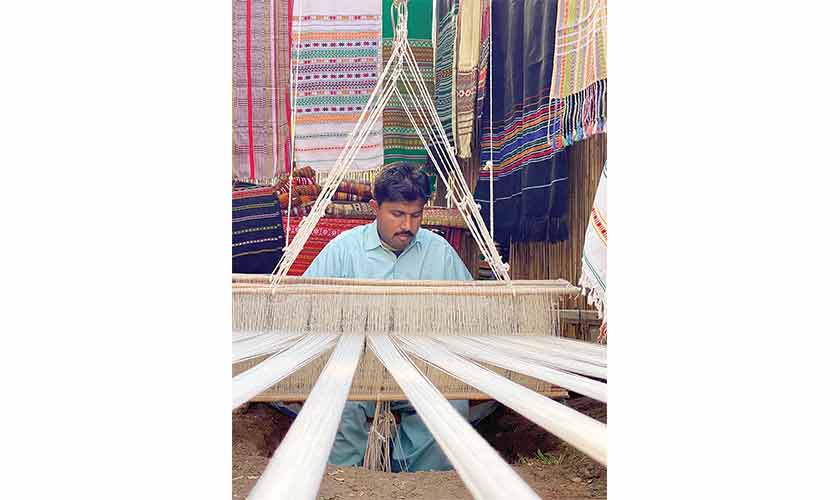
“I don’t want my son to learn this craft. He should do something else and earn an easy living. I can barely survive making shawls.”
The old man in Khushab said this as he produced a colourful shawl on a handloom, his hands moving with practiced ease.
Many artisans share the sentiment. Their skills are refined, even remarkable, yet they struggle to make ends meet. Few are aware of the Punjab Small Industries Corporation, whose mandate includes the production and promotion of handicrafts. The organisation has set up centres across the Punjab, but — like much of the sector, it suffers from limited support and weak follow-through.
There are government-funded and privately financed industrial estates, yet the institutional links between them and working artisans remain fragile. The pattern holds across other provinces as well.
The country has no shortage of talent or potential. What is missing is a system to sustain it.
Pakistan is rich in resources, yet caught in a familiar paradox: abundance without meaningful use.
Projects and publications are neatly presented on official websites, but turning handicrafts into viable businesses is another matter. Artisans speak plainly about the obstacles. “We have to carry our products ourselves and bear the cost of travel, accommodation and food. It is not easy to take part in exhibitions in other cities,” one group told me.
Associations meant to support cottage industries struggle, much like the craftsmen they represent. There are a few government-backed outlets in major cities to display and sell handicrafts, especially when set against the reach of private shops. The sector remains loosely regulated, with limited coordination or support.
The appeal of these crafts is undeniable. Foreign visitors are often struck by their variety and detail. They recognise the labour behind each piece and are willing to pay more than the makers receive. Even after returning home, many continue to seek them out.
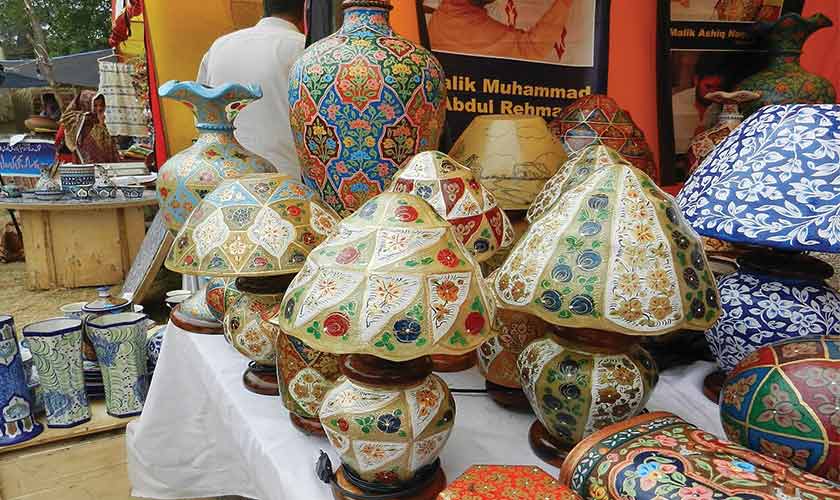
Friends and family living abroad often ask me to bring handicrafts from Pakistan. They remember them, value them and want more. But travelling across Europe, I found little trace of Pakistani handicrafts on display or for sale.
Each November, the Capital Development Authority hosts a week-long cultural mela at Lok Virsa Museum in Islamabad. We rarely miss it.
Artisans from across the country gather to display their skills and present their work with care. For many young visitors, it is a chance to encounter regional crafts without travelling far. In recent years, helped by social media, the festival has drawn larger crowds.
Yet each visit leaves a trace of unease. The richness is undeniable, but the system around it feels thin, unable to carry these crafts beyond moments like this.
At one stall, an elderly man worked quietly with straw and glue, shaping portraits of well-known figures on canvas. He was a master of his craft, but stood alone, without any support for marketing or sales. Nearby, a middle-aged man painted wooden tops, lattu, in bright colours.
“I make these because people like the designs,” he said. “My father taught me this. It’s what I do.”
His words were simple. The resignation beneath them was not.
Pakistan has what many markets seek, yet lacks the system to turn that value into a fair return.
A coherent national handicrafts policy could begin to change that. It needs to be drafted, adopted and implemented with intent. Provincial governments, working with trade development authorities, could mobilise resources to ensure these products gain wider recognition. There is a clear case for attracting foreign direct investment into the sector, so that scale and access do not come at the cost of the people who make the work.
The hope is straightforward: that Pakistan’s handicrafts travel farther, in greater numbers and that their makers share the rewards.
As I write this, I look at a bright Hunza mat on my table, its colours lifting the room. It brings a quiet sense of satisfaction and a decision. On my next visit to Hunza, I will buy more to give as a gift to someone far away, who will value it, perhaps even more than Hiro valued the small rug from Ghakhar.
The writer is a professor at the National University of Sciences and Technology.