Print Story
X




Gandhara is one of South Asia’s great cultural inheritances. Protecting it requires putting local communities at the centre of the effort
| O |
ne of the historically famous cultural spaces of South Asia is known to the world as Gandhara. Gandhara evokes memories that are simultaneously geographical, historical, artistic and religious.
The cultural sphere of Gandhara extends beyond the Durand Line, the border between Pakistan and Afghanistan. Chronologically, it is generally bracketed between the First and Fifth centuries of the Common Era. The western regions of Gandhara are located in the eastern part of Afghanistan. These include the iconic Bamiyan. Taxila makes its eastern boundary. Its historical development and cultural references draw on a much wider area, from the Mediterranean to Pakistan and northern India.
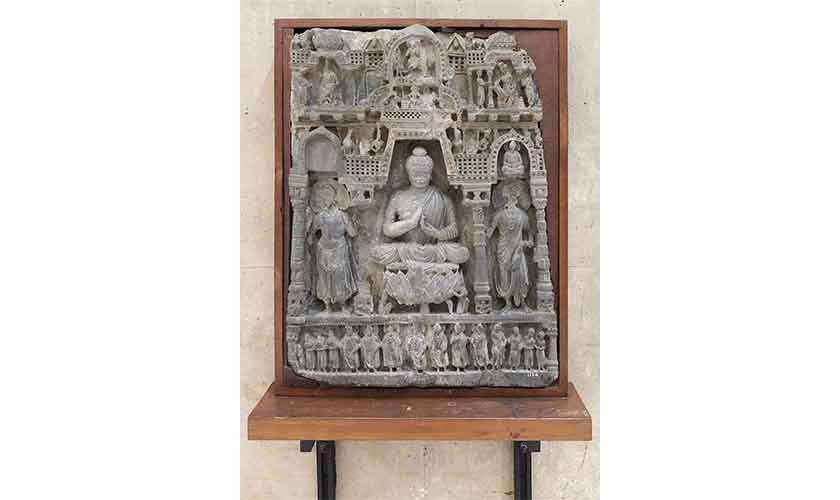
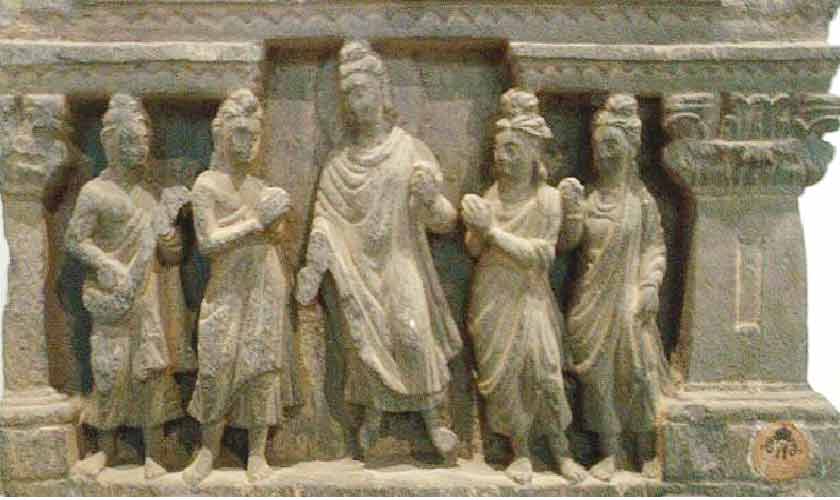
In popular imagination, Gandhara stands for the school of art of the same name, which is hybrid and highly cosmopolitan in character. It fuses Eastern and Western traditions of art and salvation. Scholarly opinion on Greek and Roman artistic influences on the Buddhist art of Gandhara is divided. The substance of this art is the representation of the life story of Buddha and the Buddhist pantheon.
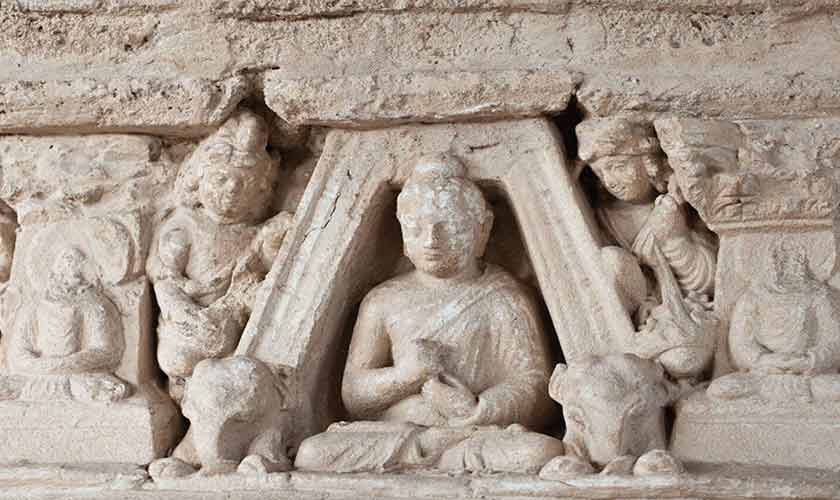
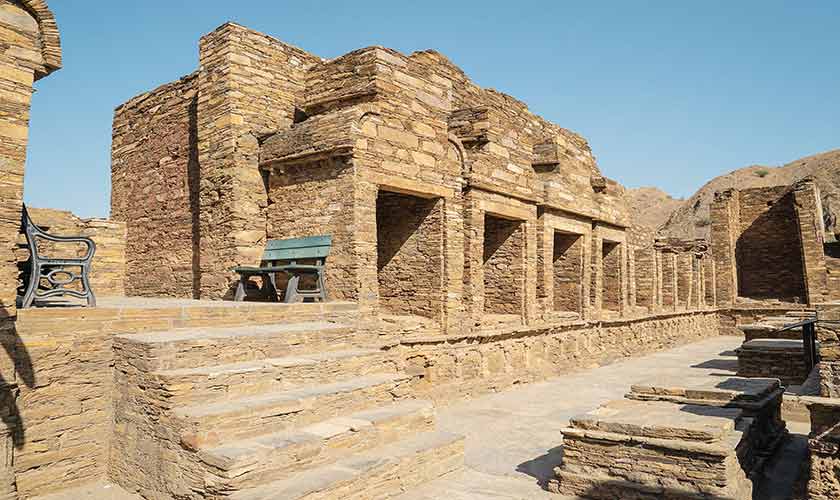
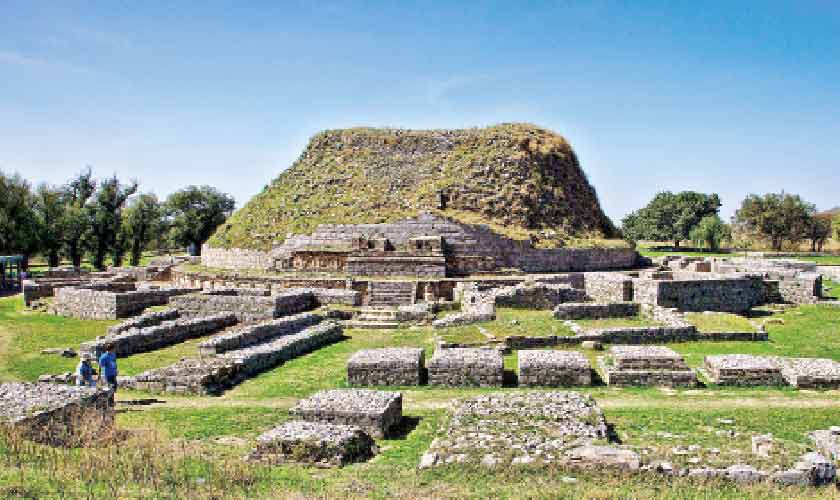
The Buddhist architecture of Gandhara, including stupas and monasteries, is valuable from historical, aesthetic and religious points of view. The most prominent remains are found at Taxila, Swat and the Peshawar Valley. Gandharan urban remains are found in Taxila, Charsadda and Swat in Pakistan, as well as in Afghanistan. Recent research has established that, alongside Buddhism, the foremost religion in the region at the time, other cults and belief systems existed. The story of these explorations is full of adventure, often bringing together scholarly concerns on the one hand and economic and political considerations on the other.
By the time the British arrived in north-western India, Gandhara as a historical entity had gone out of local memory. Nothing was accurately known about its metropolitan centres and socio-religious landscape. The saga of Gandharan antiquities and monuments is embedded in the story of Indology and South Asian archaeology.
Since the 1830s, numerous coins and stupas have been recovered and reported from both the north-western part of British India and Afghanistan. Charles Masson, Alexander Burnes and Alexander Cunningham were the pioneers in this effort, not to mention John Marshall and Aurel Stein, who followed in their footsteps.
Gandhara, in popular imagination, stands for the school of art of the same name - hybrid and highly cosmopolitan in character. It fuses Eastern and Western traditions of art and salvation.
Systematic Gandhara studies began with the exploratory work of Sir Alexander Cunningham, the first director general of the Archaeological Survey of India (1861-85). His successor, Sir John Marshall, director general from 1902 to 1928, oversaw many of the breakthroughs in Taxila. Nearly all the Buddhist complexes, including Dharmarajika and Julian, and the three cities of Bhir Mound, Sirkap and Sirsukh, were unearthed under his watch. Excavations and explorations were also carried out in other parts of Khyber Pakhtunkhwa and the adjacent agencies. Since 1947, archaeological research in Gandhara has been dominated by foreign archaeological missions to Pakistan.
The managerial and legal aspects of archaeology have assumed utmost importance in the modern world. The overriding consideration is that archaeological heritage is not only scarce but also prone to irreversible loss. Modernisation and development, treasure hunts and imperial and majoritarian conflicts have already exacted a heavy toll on it.
Increasing awareness of the threats to South Asian archaeological sites and antiquities since the Nineteenth Century has led to the promulgation of laws and regulations. Early efforts in this regard were consolidated in the Ancient Monuments Preservation Act (1904). The Act regulated archaeological excavations and prohibited trafficking in antiquities. In practice, transgressions, including smuggling, continued. Being bureaucratic in its orientation, the Act focused on exploration and conservation until the 1940s. Other institutions, such as foreign research teams and Indian universities, were permitted later to undertake research projects. This was made possible through an amendment to the 1904 Act. After independence, authorities in both Pakistan and India retained the framework.
In Pakistan, the custodianship laws control and guide research as well as conservation/ protection. Less attention has been paid to the local people’s relationship with the heritage. This should, however, be the foremost concern in post-colonial situations. Popular engagement vis-à-vis Gandharan heritage management is direly needed. Among other things, this calls for concerted efforts to replace the old paradigm of archaeological practice with a new one. Traditional institutional and professional elitism has to give way to a sociological turn and archaeology from below. The new understanding must aim to empower local people so that they can be part of decision-making and policy matters.
The writer is an associate professor at Taxila Institute of Asian Civilisations, Quaid-i-Azam University, Islamabad.