Print Story
X




The bloom of the amaltas becomes more than a seasonal spectacle in the city’s punishing summer
| M |
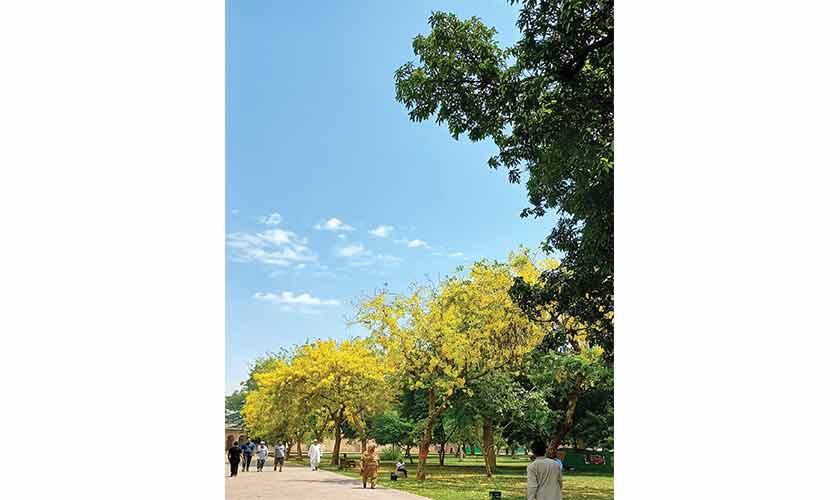
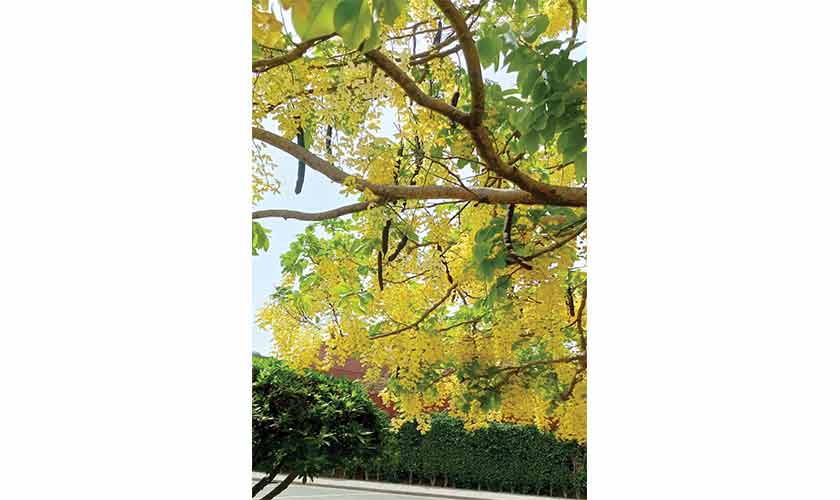
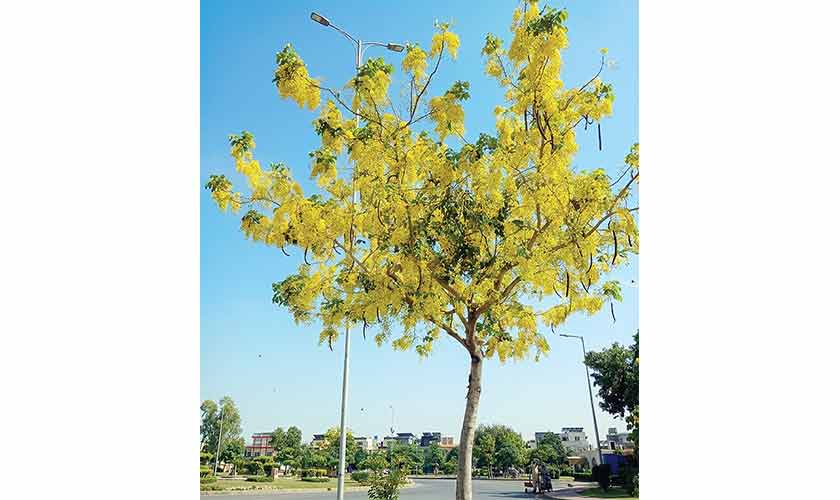
ay is the month of the laburnum (Cassia fistula), or amaltas, when Lahore’s streets erupt in cascades of brilliant yellow blooms. The amaltas tree is a favourite among gardeners because it grows quickly and is resplendent in vivid yellow and green hues. During the first two weeks of April, it sheds its leaves. By the second fortnight, only pipe-like seed pods remain on its branches. Come May, its boughs burst into yellow blossoms that hang like bunches of golden grapes, offering relief to onlookers in the searing summer heat.
Amaltas is also known as the golden shower tree. Its blooms are in evidence across all parts of Lahore. The beautiful spectacle lasts barely a fortnight before the yellow flowers give way to green leaves. Once the blooming season is over, a flâneur like me looks at the same trees in disbelief because they become utterly unrecognisable. It feels as though someone has robbed a vivacious person of their smile.
As temperatures soar in the city, there is scarcely anything outdoors - apart from the many varieties of vegetation and flowers - that offers any respite. Lahore has two spells of summer: hot and hotter. The ever-expanding grey structures and mounting vehicular pollution are fast making big cities unlivable. Something similar has been happening in Lahore for two decades. The only hope lies in the trees and flowers that bloom and give us a reason to carry on.
Until recently, I had been taking in the spectacular sight of bright bougainvillaea and graceful gulmohur, while eagerly awaiting the arrival of the amaltas. Just two days ago, I was at my sister’s home in Lake City, a housing society on Raiwind Road. Heading out to buy some snacks from the mart, I cruised down the street and emerged onto the sector’s main boulevard, where I caught sight of vibrant amaltas blooming along the road median.
I pulled over in the middle of the road, stepped out of the car and moved closer to the tree to take in the sight. The sun was beating down mercilessly, yet I remained under the open sky, in the sparse shade, for a good 15 minutes. Those forced to steer around my car looked annoyed. One uncle and auntie, however, gave me passing smiles, perhaps suggesting that they understood how rare such sights were becoming. Afterwards, I noticed that the entire median strip was lined with fresh-bloom amaltas. That night, I walked along it for more than an hour.
The next day, I was in Bahria Orchard and spotted two amaltas trees standing side by side, offering a breath of fresh air amid the sweltering heat. I performed the usual ritual of taking a closer look at the swaying, flower-laden branches before proceeding with the errand that had brought me there.
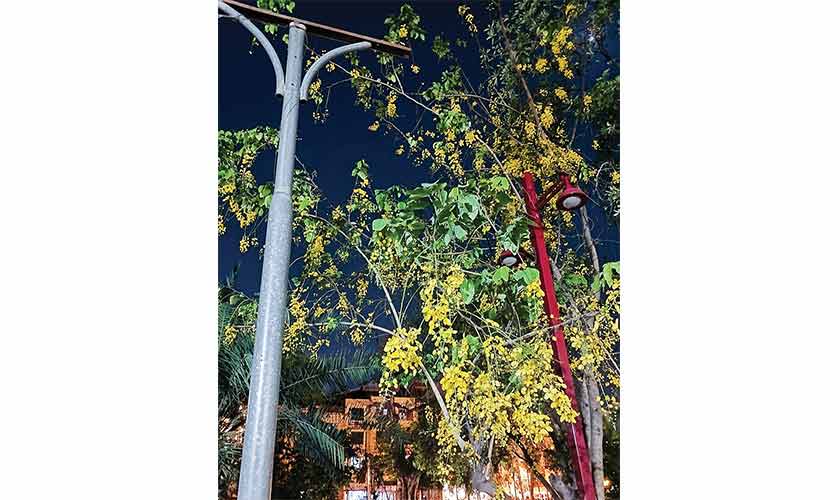
On Friday night, I was strolling along The Mall when, from a distance, I noticed what appeared to be fireflies strung across the branches of a tree near the pavement where the Sunday Book Bazaar is held every week. As I drew closer, I realised that they were the captivating amaltas blossoms. Amid a stretch of more than 100 metres and a cluster of trees, the laburnum stood out like a necklace of canary diamonds, illuminating the neck on which it rested. I spent quite some time taking in the sight before moving on to see whether more amaltas trees lined the thoroughfare Pran Nevile refers to as Thandi Sarak.
The sight of amaltas flowers at the height of summer often feels like a feast for the eyes and a comfort to the soul.
A friend of mine, not accustomed to walking miles on end, was accompanying me. We might have walked nearly half a mile when, failing to spot more of such beauties on either side of the road, we hailed a rickshaw and headed towards Lawrence Garden, popularly known as Bagh-i-Jinnah.
Travelling along The Mall in a rickshaw in the evening or at night can be a thoroughly delightful experience. The fresh air rushing through the open sides and striking one’s face works like a balm for the weary soul. Within five minutes, we were at the Mall-side gate of the garden. It was dimly lit, and there were barely a handful of people in sight. Perhaps the administration had switched off the lights as part of the government’s austerity measures.
The air was heavy with the fragrance of jasmine and lilac. In front of the stately building of the Quaid-i-Azam Library stood a lone amaltas tree, radiating a soft glow. In comparison, the surrounding trees looked dark and dejected; the amaltas seemed to smile, spreading joy and hope.
I perambulated for a while in search of another, but did not spot any and eventually returned to revel in the beauty of my prized find.
There is something peculiar about moments of joy: the memories we weave remain etched in the mind. Although I have not managed to visit the Shalimar Gardens this May, I recall it as one of the places where amaltas bloom in abundance. The garden’s layered layout and colourful flora stand as a splendid reflection of Mughal grandeur and refined taste. The presence of tall amaltas trees laden with yellow blossoms greatly enhances its beauty and enriches the ambience. I often wonder whether there is anything more calming than sitting in Shalimar Gardens, surrounded by amaltas trees, on a breezy afternoon.
The sight of amaltas flowers at the height of summer often feels like a feast for the eyes and a comfort to the soul. Words seem inadequate when one attempts to capture the charm of these ephemeral guests. Khushwant Singh, in his book Nature Watch, writes: “The beauty of the [...] laburnum defies description. No poet or writer has ventured to put it on paper. Only painters have been able to do it justice.” I agree wholeheartedly.
The government must utilise the potential of the Parks and Horticulture Authority to help Lahore live up to its City of Gardens appellation.
The writer is a storyteller and literary critic based in Lahore. He may be reached at usama.malick183 @gmail.com.