Print Story
X




The tradition, identity and the evolution of the celebration of Eid
| E |
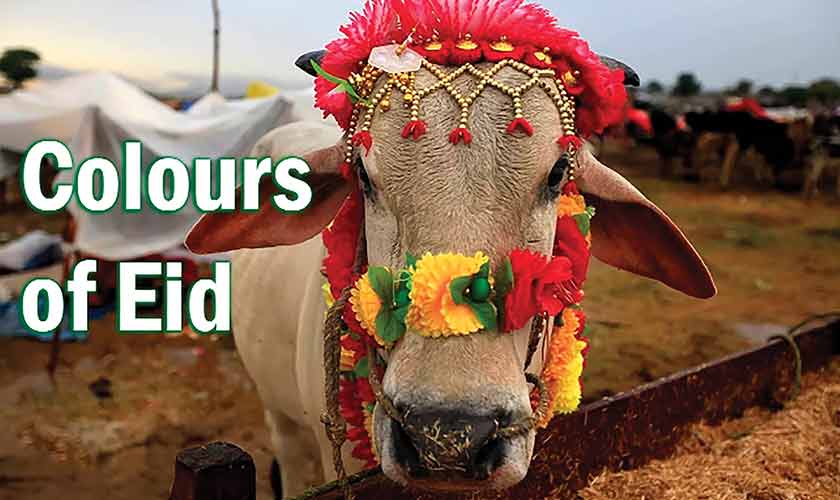
id has always been more than a religious festival. In South Asian Muslim societies, Eid has historically functioned as a cultural anchor—a moment where faith, family, memory, charity, food, clothing and social belonging converge into a shared emotional experience. Yet, like all living traditions, the celebration of Eid has evolved alongside changes in technology, urbanisation, migration, economics and modern social values.
The question today is not whether the celebration of the festival has changed—it clearly has—but whether its emotional and communal essence remains intact beneath those transformations.
For older generations, Eid was often remembered through scarcity and anticipation. New clothes were stitched months in advance; children counted coins saved for Eidi. Entire households participated in preparations that turned the festival into a collective project rather than a consumer event. The excitement lay not merely in the day itself but in the gradual build-up toward it. Markets illuminated at night; the aroma of sheer khurma in kitchens; cousins arriving from distant towns; rooftop moon-sighting anxieties; and the tactile rituals of applying henna and ironing Eid clothes all contributed to an emotional ecosystem that made the festival deeply experiential.
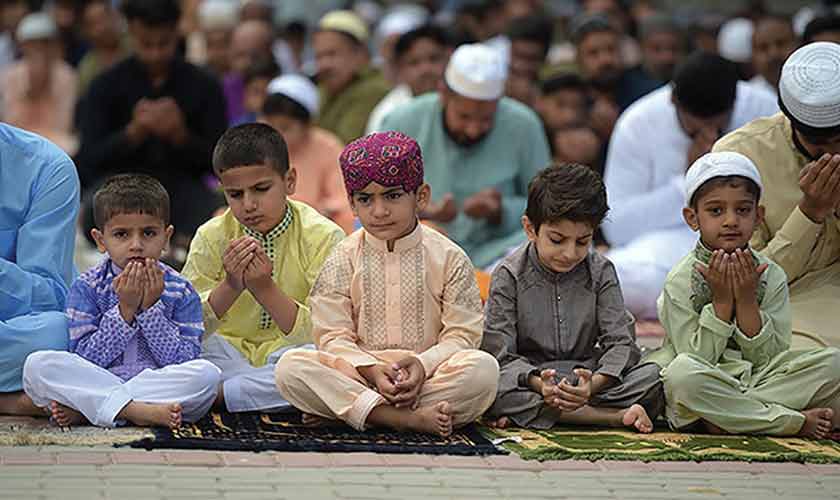
In many communities, Eid also represented social equality in its purest form. The rich and the poor stood shoulder to shoulder in prayer. Zakat and charity reinforced the moral obligation of inclusion. Doors remained open. Food circulated among neighbours regardless of social class. The festival temporarily softened rigid hierarchies and reminded communities of collective belonging. In rural and semi-urban societies particularly, Eid was inseparable from the ideas of kinship and locality. One’s identity was anchored within a visible community.
Modernity has inevitably altered that landscape.
Urbanisation has fragmented extended family structures into nuclear households. Migration has dispersed relatives across cities and continents. Economic pressures have reduced the amount of leisure time available for elaborate preparation. Digital communication has replaced physical visitation in many cases. Today, Eid greetings may arrive through hundreds of forwarded messages rather than personal encounters. Video calls now bridge distances once crossed physically.
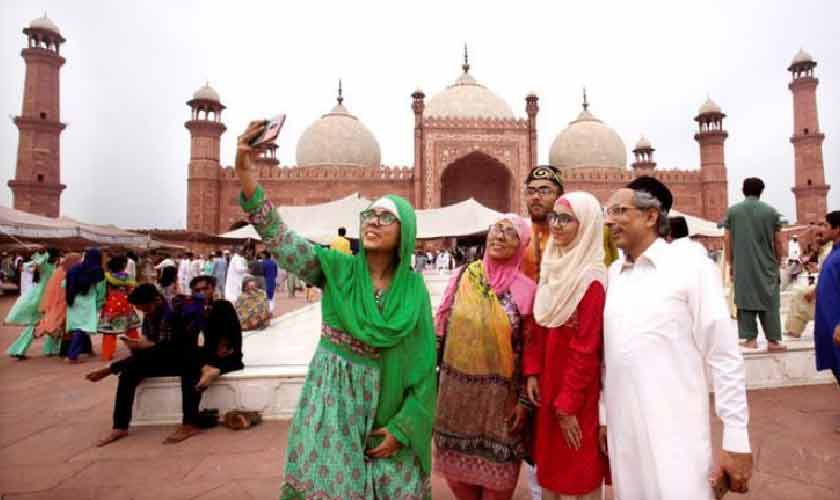
At the same time, consumer culture has profoundly reshaped the public perception of Eid. Advertising campaigns begin weeks in advance. Fashion brands, television specials, restaurant deals and online sales dominate the season. Social media has introduced a performative dimension to celebration: carefully curated photographs; matching family outfits; aesthetic dining tables and “Eid content” often become central to how the festival is displayed publicly.
In some circles, Eid risks becoming less about collective spirituality and more about visual presentation and consumption.
This does not necessarily mean that the spiritual or emotional core has disappeared. Rather, it suggests that Eid now exists in the tension between tradition and modernity.
For many younger Muslims, Eid still carries deep emotional significance but the nature of that significance has shifted. The emotional centre may no longer lie primarily in communal rituals but in personal experiences of comfort, nostalgia, identity and temporary reconnection. In increasingly fragmented societies, Eid often functions as one of the few remaining occasions capable of pulling families back together physically or emotionally. Even among highly secularised or globalised urban populations, there remains an instinctive attachment to Eid that transcends doctrinal religiosity.
This reveals something important: traditions survive not because their outward forms remain unchanged but because societies continuously reinterpret them according to contemporary realities.
In diaspora communities, Eid has acquired an additional layer of meaning. Muslims living as minorities, especially in Western societies, often experience Eid as an assertion of identity and continuity. Public Eid festivals, community prayers in stadiums and multicultural celebrations demonstrate how traditions adapt when communities seek both integration and preservation. Ironically, distance from Muslim-majority environments sometimes intensifies attachment to Eid’s symbolism.
Technology, too, has altered but not entirely erased communal warmth. Digital platforms allow overseas relatives to participate virtually in gatherings. Online charity enables broader acts of giving. Social media spreads awareness of humanitarian causes during Eid. The same technologies criticised for commercialisation also preserve connection across vast distances.
Still, there is a legitimate concern that the emotional texture of Eid has become thinner in certain urban settings.
The slow rituals that once built anticipation have been compressed by convenience. Readymade clothing replaces tailoring traditions. Food delivery substitutes collective cooking. Shopping malls replace neighbourhood gatherings. Entertainment sometimes overshadows reflection. As societies accelerate, festivals risk becoming events to consume rather than experiences to inhabit.
Yet, nostalgia itself can romanticise the past.
Earlier Eids were not universally idyllic. Economic hardship, social conservatism, gender restrictions and limited mobility shaped many experiences negatively as well. Modern Eid celebrations, despite commercialisation, have also become more inclusive in some respects. Women participate more visibly in public spaces. Intercultural interactions are broader. Young people express individuality more freely. Communities engage more openly in charitable activism and humanitarian awareness.
What remains remarkably persistent, however, is Eid’s role as an emotional reset point in Muslim societies. Regardless of changing forms, Eid continues to symbolise reconciliation, renewal, gratitude and belonging. Families still attempt to gather. Children still wait for gifts and attention. Homes still prepare special meals. People still seek forgiveness and reconnection. Even those distant from religious practice often feel compelled to participate emotionally in Eid’s atmosphere.
This persistence suggests that Eid’s inherent character remains deeply tied to the social fabric of Muslim communities. The human need for collective celebration, memory and spiritual reaffirmation endures. Eid survives because it fulfills emotional and social functions that modern life increasingly struggles to provide elsewhere.
Perhaps the real transformation is not that Eid has lost its essence but that its meaning has become layered. It is simultaneously spiritual and commercial, intimate and performative, traditional and modern, local and global. Different generations now experience different “versions” of Eid while still recognising it as the same festival.
The challenge for contemporary societies is therefore not to resist change entirely but to preserve intentionality within celebration. Communities may need to consciously revive practices that foster genuine connection: visiting relatives; sharing meals beyond social class; prioritising charity over display; and creating spaces where Eid remains more participatory than consumptive.
Traditions endure when communities actively invest meaning into them. Eid’s future will likely depend less on whether people continue wearing traditional clothes or posting photographs online and more on whether the festival continues to cultivate empathy, togetherness and spiritual reflection in increasingly fragmented societies.
That is the enduring power of Eid: despite every transformation, it still retains the ability to remind people that they belong to something larger than themselves.
The writer is a published anthropologist. She has taught at the International Islamic University, Islamabad, and National University of Medical Sciences. She is also a Red Cross/ Red Crescent Youths as Agents of Behavioural Change trainer.