Print Story
X




Karachi’s rapid expansion is putting ancient stone-carved graveyards in Gadap in danger
| G |
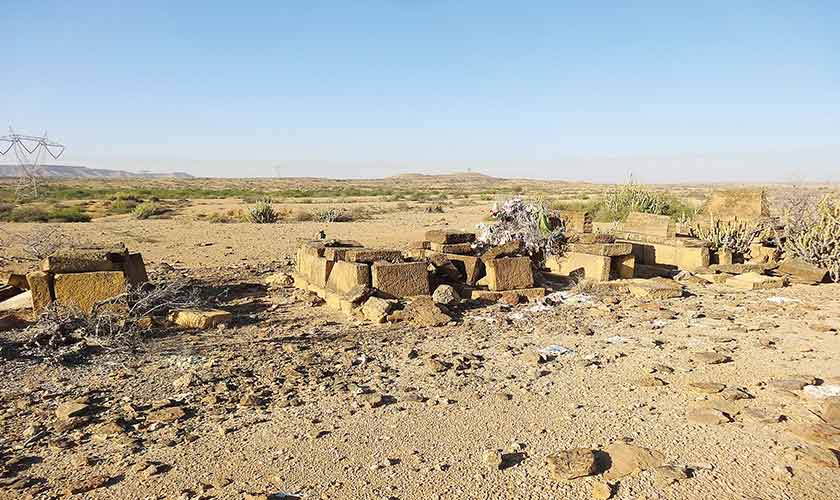
adap in Karachi’s Malir district has a large number of historic stone-carved graves located in several ancient graveyards. These graves are located around various gorges of Gadap, including Thado, Mol, Malir, Khadeji, Jarando, and others. One not only finds stone funerary monuments around these gorges but also rock carvings dating back to the prehistoric period, showing the antiquity of present-day Karachi. I have been documenting these tombs since 1998. These tombs are located along the banks of Thado, Mol, Malir, Khadeji and various other hill torrents. These tombs reflect Sindh’s centuries-old stone carving traditions. Each style in the various graveyards is a testament to the skilled craftsmanship of Sindhi artists. Such refined, decorative stone-carved graves are a part of Sindh’s rich cultural heritage. Among the various graveyards I have visited, there are two located in and around Lal Bakhsh Kachelo village in Gadap taluka in Karachi’s Malir district.
One of the earliest graveyards, dating back to the 15th century, is located west of Lal Bakhsh Kachelo village. These stone-carved graves now lie in deplorable condition. They are locally known as Rumiyon or Rumiyon Waro Qabristan. Not much is known about these funerary monuments. According to Muhammad Hanif Kachelo, a notable of Lal Bakhsh Kachelo village, it is believed that old tombs may belong to the Khaskheli caste and the Muradpota lineage of the Kachela caste. There are about 20 graves which are noted for distinctive features. Most graves are characterised by single caskets with horizontally oriented upper headstones. These headstones have a narrow rectangular base. The headstones’ slight steps, sometimes in several tiers, all around their vertical sides. They finish at the top in cylindrical or barrel shapes. Most of the headstones have four to five steps, with a receding, cylindrical termination at the top. The tombs are unique in this graveyard for these types of headstones. One can see such tombs in various other graveyards in Sindh, particularly in Thatta, Malir, and Jamshoro districts. However, one notices on the headstone the number of steps or relief lines that make it distinct from other stone-carved headstones in various cemeteries in Sindh. This is perhaps the skilled rendering of local craftsmanship in treating the headstone this way. It might have had some symbolic significance. I have seen similar stone-carved graves in several cemeteries in Malir, Keamari and other districts in Karachi division. Some of the most impressive tombs with similar headstones are found in the Jamshoro district. One of the graveyard located near Rababi Dhoro in Jamshoro’s Thano Bula Khan are noted for such headstones. Headstones reflect not only the architectural elements of the graves but also the symbolic meanings the engravers conveyed through their work.
Two headstones in Rumiyon Waro Qabristan depict geometric and floral designs. On the third receding slab of one of the headstones, two panels on the right and left sides depict a floral pattern. Above these steps are two other steps that represent geometric designs. This is the most refined carving. This type of headstone was commonly used in the stone graves that emerged in the 16th century. This means that the stone graves in the cemetery may belong to the fifteenth and sixteenth centuries. People still bury their dead in the cemetery. However, these old cenotaphs were constructed mainly in the fifteenth and sixteenth centuries. A few others may have been constructed later, but the majority of the tombs are now in deplorable condition.
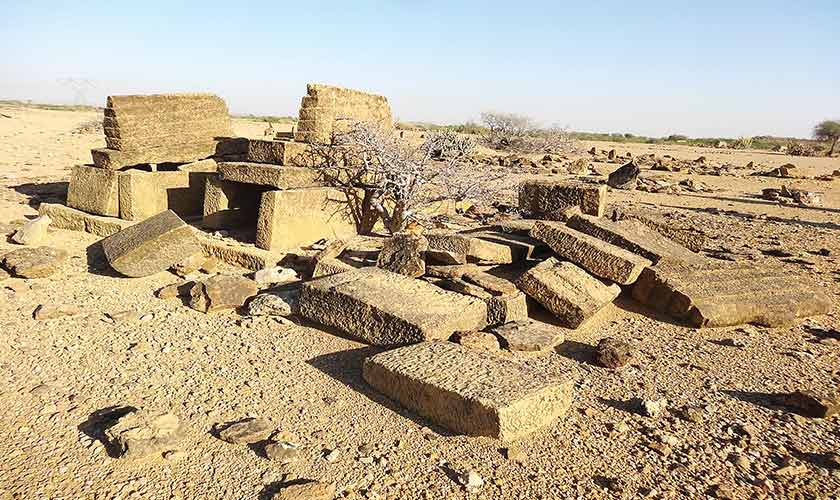
These funerary monuments reflect the exceptional craftsmanship of Sindhi artisans and stand as enduring symbols of Sindh’s rich tradition of stone carving.
Apart from this graveyard, another historical graveyard is located north of Lal Bakhsh Kachelo village, known as the Kachela graveyard. In this graveyard are interred the dignitaries of the Kachleo clan. This graveyard contains richly carved stone graves. It is also noted for its large gravestones. One of the graves, which is exquisitely carved from bottom to top, captures the visitor’s attention. It is a multi-tiered grave with each tier featuring floral and geometric patterns. It features double caskets. Another distinctive feature of the grave is the bedsteads on the upper casket. There is another stone-carved grave in this cemetery, which also features a bedstead motif. This grave has a covering slab with floral patterns and corner bedsteads, on which a headstone is placed. The headstone depicts a variety of jewellery, suggesting that it belongs to a female of the Kachelo clan.
Apart from these two graves, there are a few others which are also multi-tiered graves. These graves are decorated with floral and geometric designs. One of the stone-carved graves bears an inscription that is now illegible. It is believed to belong to Sobhan, a notable Kachelo dignitary. According to Muhammad Hanif Kachelo, dignitaries of Lal Bakhsh Kachelo, Juma Khan Kachelo and Ameer Bakhsh Kachelo are interred in this necropolis. Another distinctive feature is the large gravestones in Kachela graveyard. These gravestones are undecorated. In several other graveyards in the Karachi division, one can see decorative gravestones. A few of the most magnificent decorative gravestones are found in the necropolises of Darsano Chhano, Mangho Pir, Narathar, and others in the Karachi division.
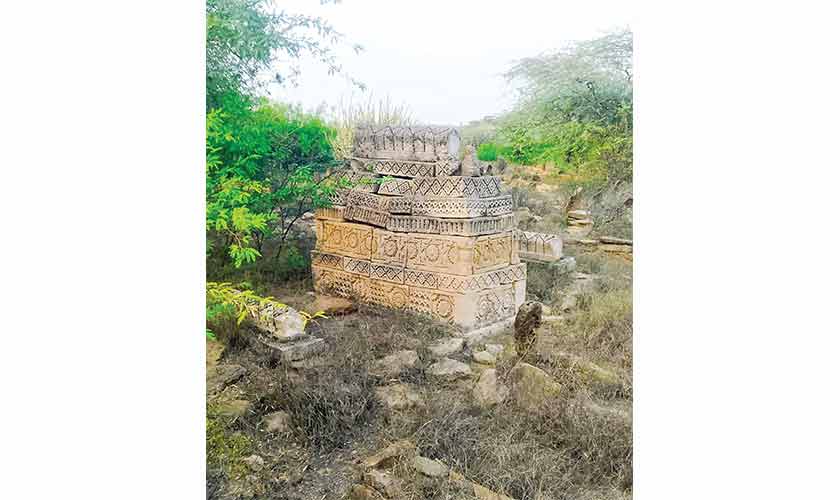
These gravestones are adorned with floral and geometric motifs. The gravestones of women’s graves depict jewellery. The names of the deceased are also occasionally inscribed on the gravestones. These funerary monuments reflect the exceptional craftsmanship of Sindhi artisans and stand as enduring symbols of Sindh’s rich tradition of stone carving.
Unfortunately, the ill-planned expansion of Karachi is damaging these gravestones on the one hand and destroying entire stone-carved graveyards on the other. There is an urgent need to develop a comprehensive strategy to preserve these fabulous works of art from further decay and destruction. Both graveyards around Lal Bakhsh Kachelo, Kachela graveyard and Rumiyon Waro Qabristan should be declared protected heritage sites, as the city’s rapid expansion may soon erase them.
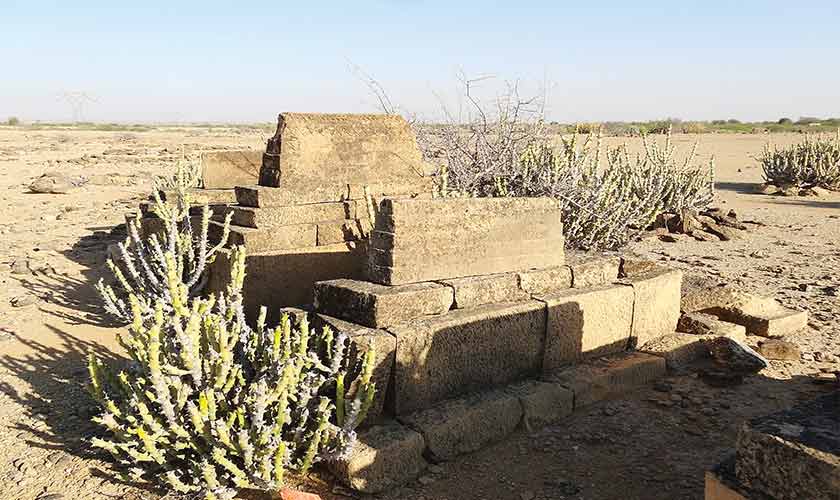
These funerary monuments embody Sindh’s centuries-old stone-carving traditions, which are now fading and surviving only in remote villages and valleys. The Sindh government should also take steps to revive this traditional art to support the communities still associated with the stone-carving craft in Sarri and other areas of Jamshoro and Malir districts. Today, little attention is given to the work of contemporary stone engravers, whose artistry deserves recognition and preservation. Protecting and promoting this vanishing craft should become a priority for the Sindh government before it disappears into oblivion.
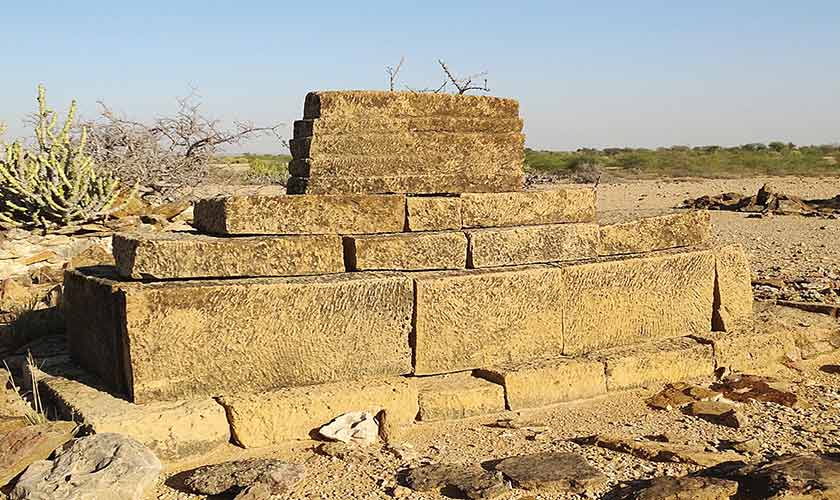
Moreover, the authorities concerned should preserve these historical tombs and promote them as a potential tourist destination. Turning these sites into a tourist destination will benefit the community as well. As tourists start arriving, the area will definitely boost the local economy and create local employment. Another important point is that the area surrounding Lal Bakhsh Kachelo village should be designated as a protected cultural landscape due to the presence of historic funerary monuments that embody the region’s cultural identity and historical heritage.
The writer is an associate professor and anthropologist at the Pakistan Institute of Development Economics (PIDE), Islamabad. He has authored 18 books on Pakistan’s cultural heritage and anthropology. He tweets @kalhorozulfiqar. He may be contacted at [email protected]