Print Story
X




Recent engagement between Iran and Pakistan offers an opportunity to revive a rich tradition of cultural exchange
| T |
he recent flurry of activity between Iran and Pakistan has been almost unprecedented. Though prompted by circumstances beyond the control of either country, it is hoped that these exchanges will not peter out but instead develop into sustained interaction between two societies whose historical and cultural ties run deep. Despite their shared past, relations between the two have seen a prolonged cooling-off.
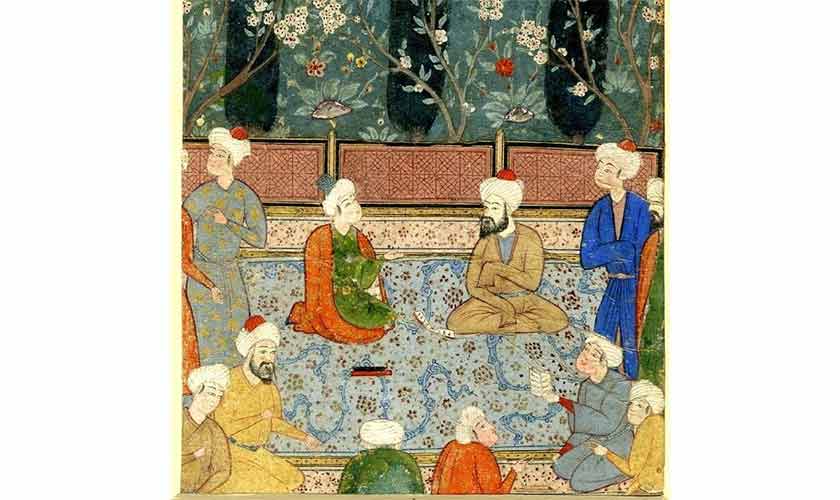
Persian was the language of the court and of scholarship during the nearly one thousand years of Muslim rule in the subcontinent. Its various poetic forms became the prototypes for those later emulated here, first in Persian and then in the emerging language of Urdu. Persian poets were admired, quoted and referenced. Similarly, miniature painting was introduced by the artists who accompanied Humayun when he reclaimed the Delhi throne. At the same time, the modes of religious scholarship were shaped by traditions that had evolved in Iran. The political structure of the monarchy and its court rituals were also cast in a similar mould. The lifestyles of the elite were cut from the same cloth. Iranian musicians performed at the Mughal court. This contributed to the development of what later became known as Hindustani, or North Indian, classical music, distinct from the Carnatic tradition.
But these exchanges dwindled, particularly after the 1979 revolution in Iran, when everything came to be viewed through the prism of religion and culture took a back seat. The vibrant exchange dried up, and Khana Farhang-i-Iran became largely a centre for teaching Persian.
Iran, despite its outward appearance of dourness, is a highly dynamic society. All its facets should be open to the people of Pakistan. Iranian cinema has earned international acclaim. Although Majid Majidi has visited Pakistan twice, the level of cultural exchange has remained far from satisfactory. What is required is a constant flow of ideas, information and artists across the border, so that the flame of creativity may be rekindled.
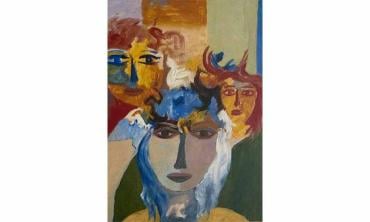
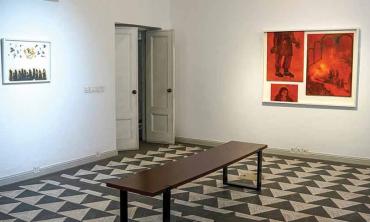
Contemporary Persian literature is largely unavailable in Pakistan. Current developments in the visual arts have also remained hidden from view. Little is known here about contemporary musical forms or about the state of theatre in Iran.
When an ideological regime takes hold, the outward appearance can seem dull and uniform, even though considerable dynamism may exist beneath the surface. The Iranian diaspora, too, is highly dynamic and is often perceived as being at odds with the regime at home.
Pakistan, from the outside, may also appear one-dimensional, but beneath the surface lie many layers that reflect the dynamism and vibrancy of a society that refuses to be typecast. We often look to the West for diversity and alternative voices, yet many in our own region deserve closer attention.
It is hoped that this renewed reconnection will bring the diverse strands of the two societies together and foster a more expansive sensibility. More exchanges between artists may follow. Perhaps a new era of cultural engagement, beyond the confines of religion and politics, will emerge.
The writer is a Lahore-based culture critic.