Print Story
X

| A |
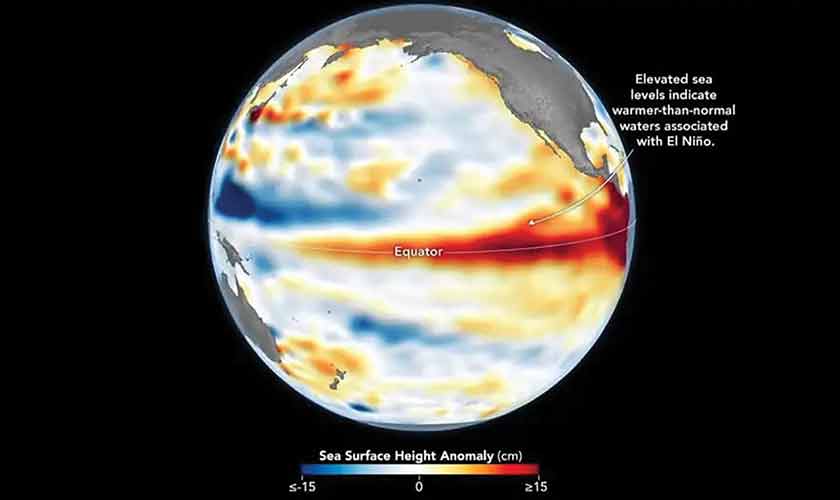
new El Niño has formed in the Pacific. This has put South Asia on alert. Early forecasts point to the possibility of weaker monsoon and below-normal rainfall across the region, raising concerns of growing water and food insecurity. Scientists have warned that if it develops into a Super El Niño, it could sharply intensify the climate stresses, increasing the risk of drought and further straining already vulnerable food and water systems.
The emerging El Niño has been flagged by the World Meteorological Organisation, European climate models and Columbia Climate School scientists. The South Asian Climate Outlook Forum has also forecast drier-than-normal conditions and a weaker monsoon across the Indian subcontinent.
El Niño is a climate pattern in which warm Pacific waters and rainfall shift eastward from the western Pacific (Indonesia) toward the central and eastern Pacific (South America). Unlike short-lived weather events, El Niño is a large-scale ocean-atmosphere phenomenon that typically lasts several months. It can sometimes persist for longer than a year. It usually reaches its peak during winter in the northern hemisphere.
Historically, major El Niño events have been linked to famines and social upheaval. One of the deadliest was the Great Famine of 1876-78, when El Niño-driven monsoon failures devastated much of British India. It is estimated to have claimed up to 5.6 million lives. Researchers have also linked major El Niño episodes to famines in China and environmental shocks that contributed to the collapse of Peru’s Moche civilisation. The 2015-16 and 2023-24 El Niño events each affected over 60 million people, causing droughts, floods, crop failures, food shortages, disease outbreaks and mass displacement, particularly in Africa.
The WMO and NOAA have also cautioned that the evolving event could develop into a “particularly strong” El Niño. This is being referred to as Super El Nino. With tensions around the Strait of Hormuz already driving higher energy prices, fertiliser shortages and inflation, a rainfall disruption is likely to worsen food security pressures.
Talking to The News on Sunday, Dr Sardar Sarfraz, the former chief climatologist of the Pakistan Meteorological Department, Sindh, described the 2023 El Niño as a major driver of global warming in 2024.
Similar climatic conditions could push 2026 or 2027 to record temperatures, Dr Sarfraz warns. Extreme heat is likely to intensify heatwaves in Pakistan, increasing heat-related illnesses and mortality risks, particularly among outdoor workers, children and the elderly.
These impacts can be severe in urban environments - in Karachi, Lahore, Peshawar, Quetta, Rawalpindi - due to the urban heat island effect, where dense concrete infrastructure, poor airflow and a largely vegetation-deficient landscape, cause cities to absorb and retain heat throughout the day, experts suggest. Crucially, the stored heat is released slowly at night, keeping temperatures unusually high even after sunset and preventing normal cooling that the human body depends on for recovery. They say this energy retention and heat release is a key characteristic of systemic urban planning failures. Combined with recurring electricity shortages, that limit access to cooling, clean water and basic relief, it can lead to prolonged and dangerous heat stress, particularly in low-income communities and informal settlements where vulnerability is already high. They say as climate change intensifies, it is now imperative to urgently and comprehensively re-engineer the urban design to prevent cities from becoming increasingly unlivable.
Beyond higher temperatures, El Niño is also associated with suppressed rainfall across the Indian subcontinent, increasing pressure on agriculture, water resources and economies that depend heavily on seasonal rains. He points to the historical examples of 1987-88 and 1997-98, when El Niño events were associated with droughts across Pakistan and the surrounding region. “The 1987-88 El Niño was a moderate-to-strong global event causing below-normal rainfall and dry conditions in several parts of Pakistan. By contrast, the 1997-98 El Niño ranks among the strongest on record, contributing to severe drought conditions.” In some areas, the dry spell persisted beyond the peak of the event, with drought impacts extending into the early 2000s, Dr Sarfraz says.
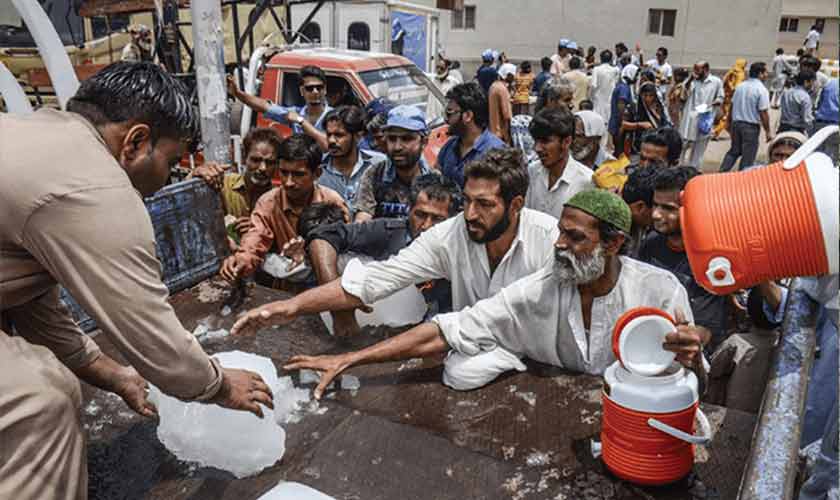
Experts have warned that the event could develop into a Super El Nino. With tensions around the Strait of Hormuz already driving higher energy prices, fertiliser shortages and inflation, a rainfall disruption is likely to worsen food security pressures.
The Pakistan Meteorological Department has warned that below-normal rainfall could seriously impact Kharif crops, the main summer agricultural season, running from June to October. Those include key cash and staple crops such as rice, maize, sugarcane and cotton, all dependent on timely rains and adequate soil moisture. “A sustained rainfall deficit could increase irrigation demand, reduce yields and raise production costs,” he says.
The warning is particularly significant for rain-fed agricultural regions such as Azad Jammu and Kashmir, the Potohar plateau and the Hazara division, where farming is heavily dependent on seasonal rainfall rather than irrigation. Here, a weak monsoon can translate into lower harvests, and income losses, Dr Sarfraz says. Prolonged rainfall shortages during the Kharif season could have wide implications affecting national food supply, market prices and food security across the country. However, El Niño’s impact on monsoon rainfall can be moderated by other climate systems. “El Nino’s impact on monsoon rainfall is sometimes neutralised due to positive IOD (Indian Ocean Dipole) and favourable MJO (the Madden-Julian Oscillation) over Indian Ocean,” Dr Sarfraz says.
Talking to TNS, Pakistan Meteorological Department, Islamabad Chief Climatologist Dr Faisal Saeed says that El Niño is being amplified by human-induced climate change.
Global warming has already raised Earth’s average surface temperature by approximately 1.1-1.3°C above pre-industrial (1850-1900) levels.
The El Niño-driven temperature spikes also increase evaporation from oceans, lakes and soil, enhancing the atmosphere’s moisture-holding capacity. This leads to higher humidity and intensifies the hydrological cycle, resulting in more frequent and intense rainfall events, including floods, flash floods, urban flooding and landslides, particularly in mountainous and vulnerable regions, Dr Faisal says.
He says the PMD’s seasonal outlook projects excess rainfall in upper catchment areas, likely enhancing reservoir storage and supporting agricultural water supply and hydropower generation. This could also lead to urban flooding in low-lying parts of major cities across Sindh, the Punjab, Balochistan and Khyber Pakhtunkhwa. The weather pundits “have also warned of increasing incidence of vector-borne diseases like dengue alongside pest attacks on crops due to highly humid and hot conditions.”
Dr Faisal says 50 years of meteorological data points to a “modest” increase in overall precipitation, including both pre-monsoon rains (May-June) and monsoon rainfall (July-September). This aligns with global climate change models, including those of the Inter-governmental Panel on Climate Change, which project a slight increase in monsoon rainfall over the coming decades.
Dr Faisal says that due to El Niño-driven variability, especially when such conditions persist alongside a warming climate, there is a heightened possibility of intense and unpredictable changes in snow, glaciers and water systems in the Hindu Kush-Karakoram-Himalayan region.
He says that since 2018 snowfall across the Hindukush-Karakoram- Himalayan region has declined significantly, weakening seasonal snowpack accumulation particularly during December-January. This reduced winter recharge undermines glacial stability. The rising temperatures from April onwards “accelerates early-season melt.” “The combined effect is an earlier and more intense melt phase that limits the conversion of seasonal snow into long-term ice, causing sustained glacial mass loss,” Dr Faisal says.
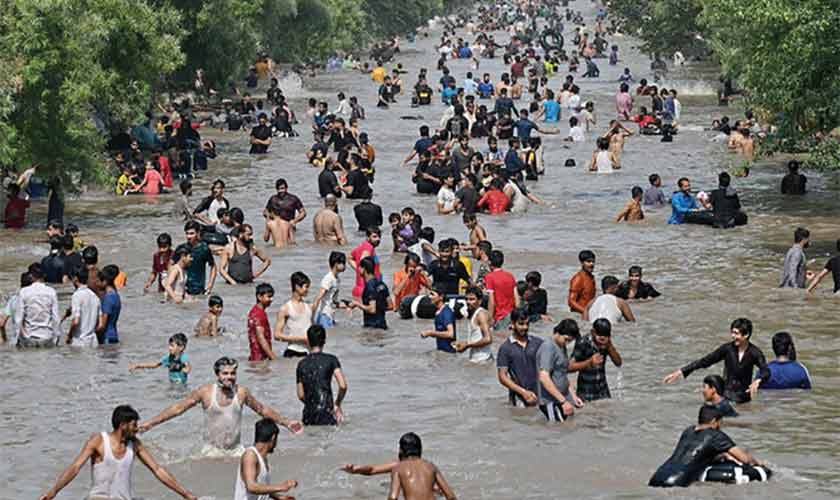
He says that, during such El Niño-associated warm and wet phases, the short-term hydrological response of snow and glacial melt may temporarily increase river discharge - improving reservoir storage levels, supporting water availability for agriculture and the power sector. “Together with chances of hazardous flood events, this short-term benefit comes with heightened risk of long-term weakening of cryosphere-dependent water security in the region,” Dr Faisal warns.
The twin effect of elevated temperatures and accelerated melt can also increase the destabilisation of glacial lakes and greatly raise the risk of glacial lake outburst floods (GLOFs). GLOF events are now occurring almost every year. Last week, a GLOF event linked to the Hispar glacier system in Gilgit-Baltistan was reported widely in the media.
As El Niño unfolds against a backdrop of accelerating global warming, scientists caution that South Asia may be entering a phase of more frequent and unpredictable climate extremes. From weakened monsoons and heatwaves to flash floods and glacial hazards, the region’s exposure is expected to deepen, underscoring the urgent need for adaptation across water, agriculture and disaster management systems.
The writer is a senior The News staffer in Karachi.