Print Story
X




Amanat explores what happens when grief ceases to belong to a single moment
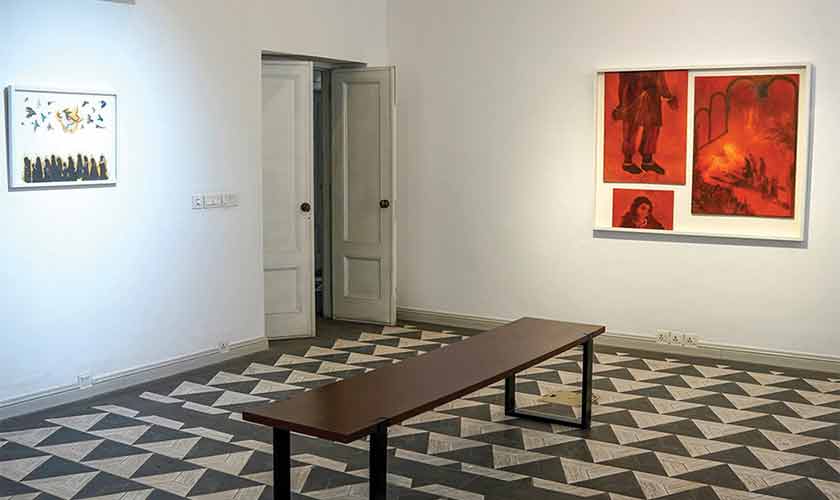
It was raining when I stepped out of Numaish Gah that day, greeted by a soft breeze that offered a short-lived respite from the horrors that the summer months continue to inflict on Lahore. The weather had taken an unexpected turn for the better during the half an hour or so that I spent inside the gallery, taking in Amanat, a group show curated by Lahore-based contemporary artist, curator and educator Irfan Gul Dahri. It was the fifth of Muharram.
Amanat brings together the work of 12 artists to reflect on the beauty of collective grief and the strength it can inspire. If grief is the price we pay for love, then this exhibition asks what happens to it when it becomes an heirloom, a keepsake to be nurtured, revered and eventually passed on to the next generation.
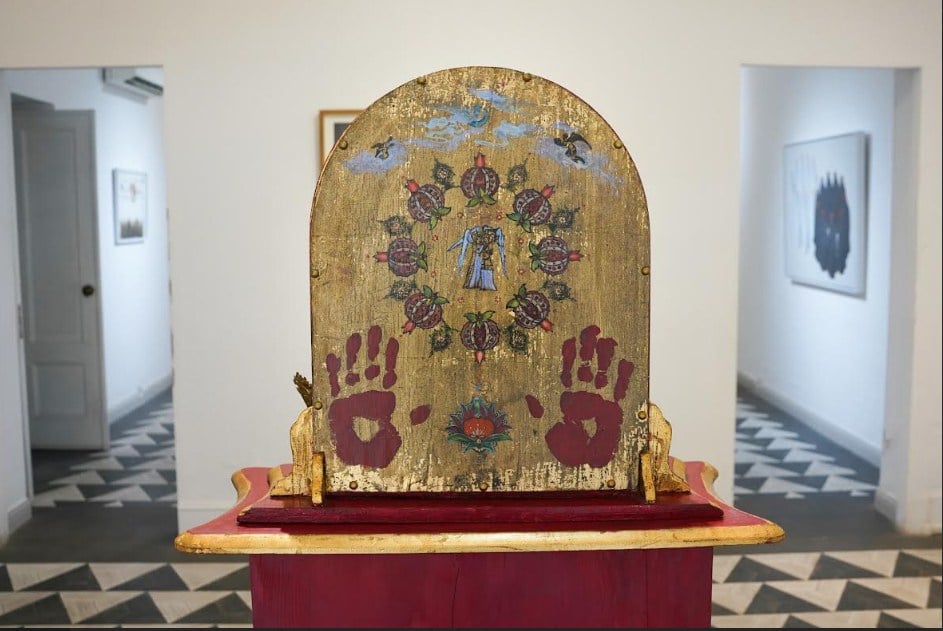
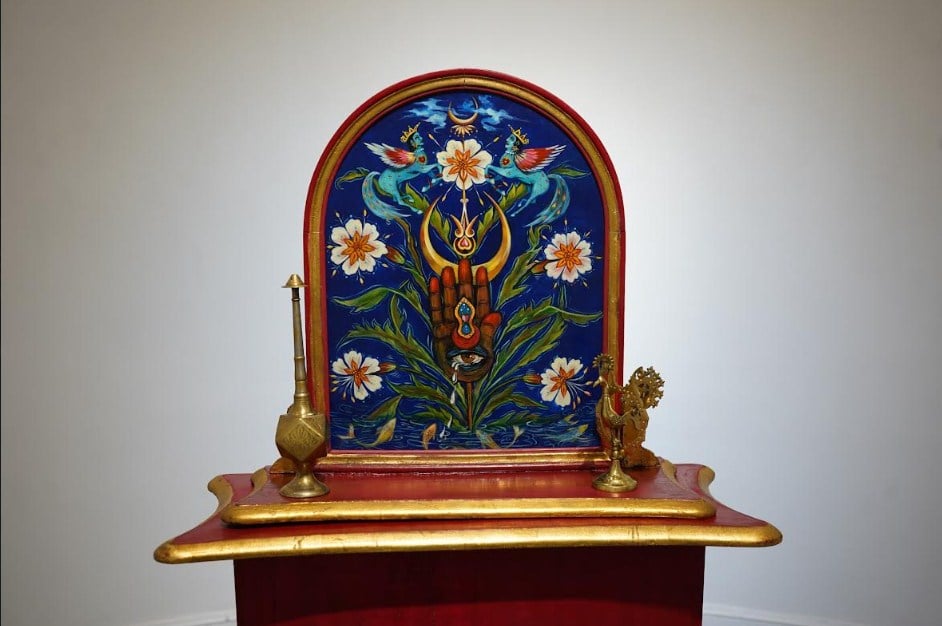
The first piece I encountered was Amra Fatima Khan’s The Pomegranate’s Vein, a shrine-like structure made of oil, acrylic and gold leaf on repurposed wood, embellished with brass ornaments. The work stands alone in the gallery’s circular room, inviting the viewer to move close to appreciate the intricate details painted across both the front and the back, especially the tiny winged figures and floral motifs. There is something about the shrine-like form of this work that makes one think of paradise as something both longed for and already lost. The never-ending search for Eden here feels like a reflection on what we continue to neglect in the world around us.
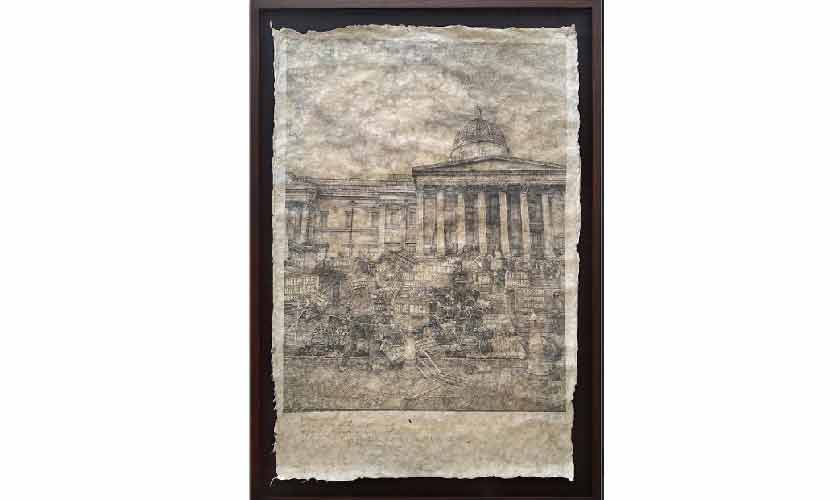
Affixed to the adjacent walls are two works that approach how remembrance is carried across generations, albeit from different perspectives. Ali Laraib Rizvi’s Karbala Gamay Shah 1443H is a sombre gouache painting filled with raised hands and tightly packed figures. Meanwhile, Haider Ali Naqvi’s #HUSSAININSPIRES, a graphite drawing on handmade paper, depicts a gathering organised by Who is Hussain outside the National Portrait Gallery. In Naqvi’s drawing, the crowd gathers in a public square far from Karbala, yet is connected to it. Rizvi’s painting focuses on a more traditional setting, where raised hands merge into one another, with individuals almost dissolving into a collective body. In both works, remembrance appears more like a shared responsibility than a private act.
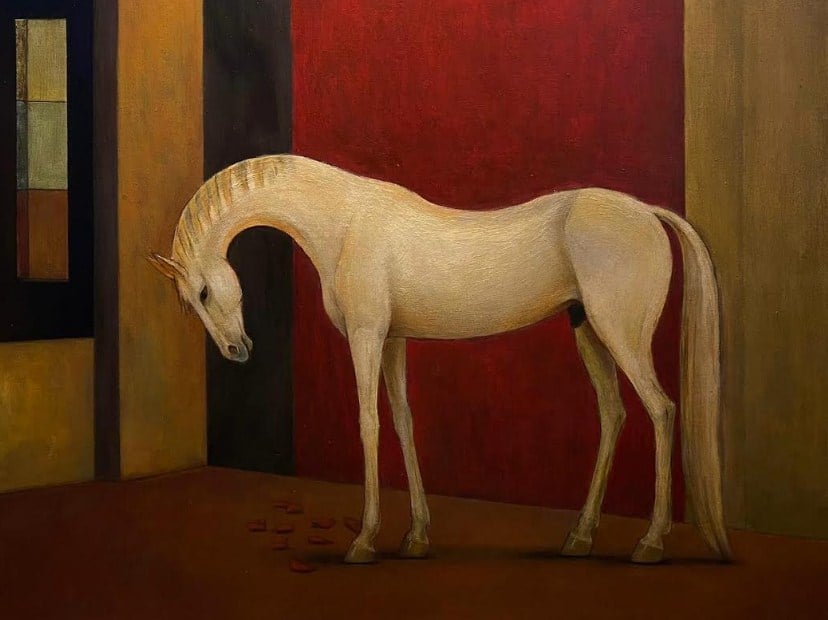
The exhibition asks questions that may feel discomfiting at first. One feels the pull of the questions in much of the work on display. Amna Suheyl’s depiction of the mashkeeza of Hazrat Abbas, Fate of the Water Carrier, seems to ask a simple question: How does one find courage in the face of adversity without losing hope? Silent Witness by Imran Ali Kazmi, an oil painting on canvas, shows a white horse standing alone with its head bowed, almost bent in devotion, a quality one does not generally associate with an animal. Nad e Ali’s digital C-print, Falak Badshah (A Glimpse), shows the black horse associated with Zuljinah during Lahore’s Ashura processions. The photograph captures the composure of the stallion as it makes its way through the congested streets of Androon Lahore, showing how Muharram’s rituals are forever woven into the fabric of the collective memory of the city, readily inherited by each generation. Nuqtay Aur Lakeerein by Ahsan Jamal also features a white stallion, which the artist draws from his childhood memory of Muharram in Jhang. It is difficult not to notice how often the image of the horse returns, telling a different story with each appearance.
In the last hall are placed works that perhaps relate most directly to the exhibition’s title. Phullan de Rang Kalay by Sana Saeed approaches the act of remembering through a female lens. The work places women at the centre, reflecting on their role in carrying stories of loss, keeping them alive long after the events.
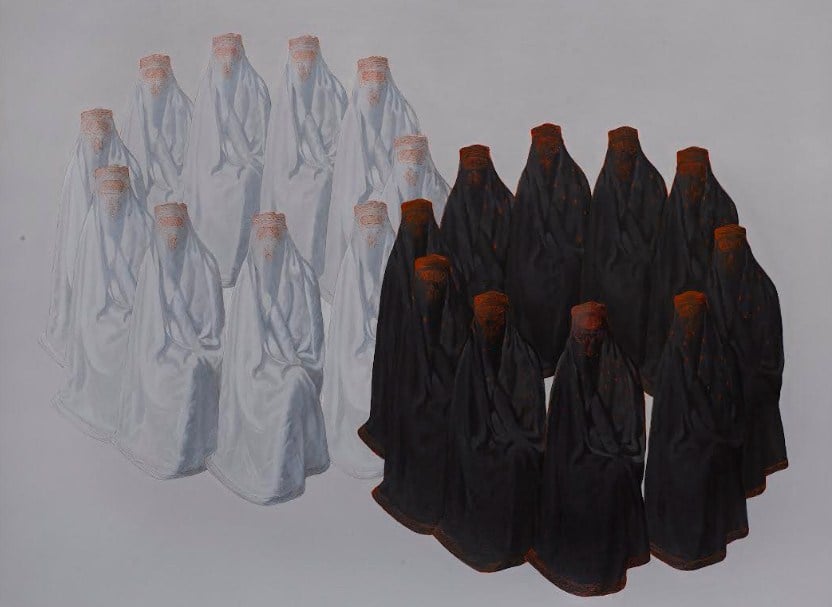
If Saeed’s work is concerned with the inheritance of grief, Hamid Ali Hanbhi’s People of Paradise 4 turns to a different kind of inheritance. The oil on canvas painting shows two groups of veiled figures, one in black and the other in white, covered from head to toe, with no part of their skin showing. The figures appear almost identical, the only apparent difference being in the colours of their burqas, making one wonder whether the distinction between them exists at all. There is something about the image that feels familiar, as though it depicts an idea passed down over time.
Sad-e-Aab by Ahsan Javaid was what I found most difficult to place within the exhibition. While the work, with its scattered vessels and stretches of landscape, also seems concerned with what is left behind, it approaches the subject in a way that feels somewhat removed from how most of the other works on display engage with it.
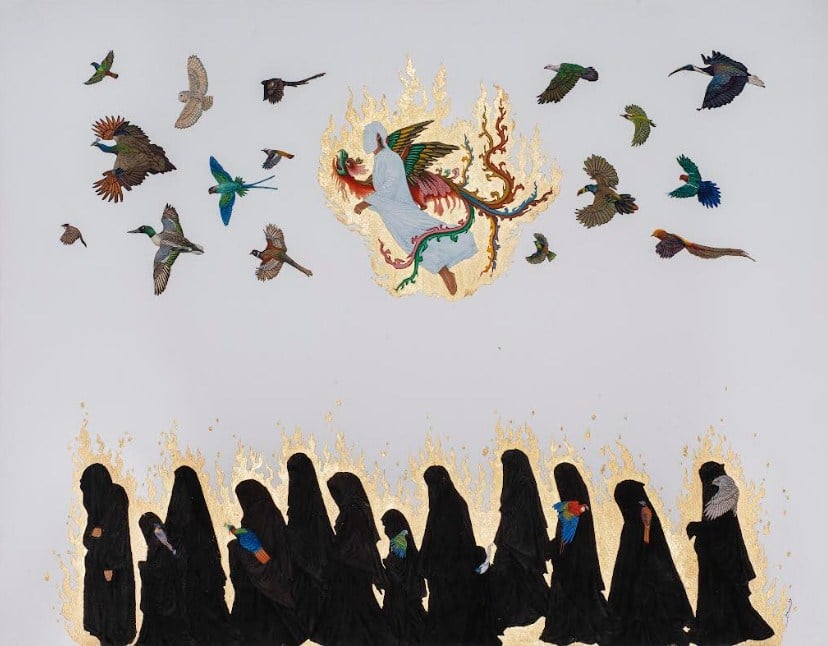
Zafar Ali’s
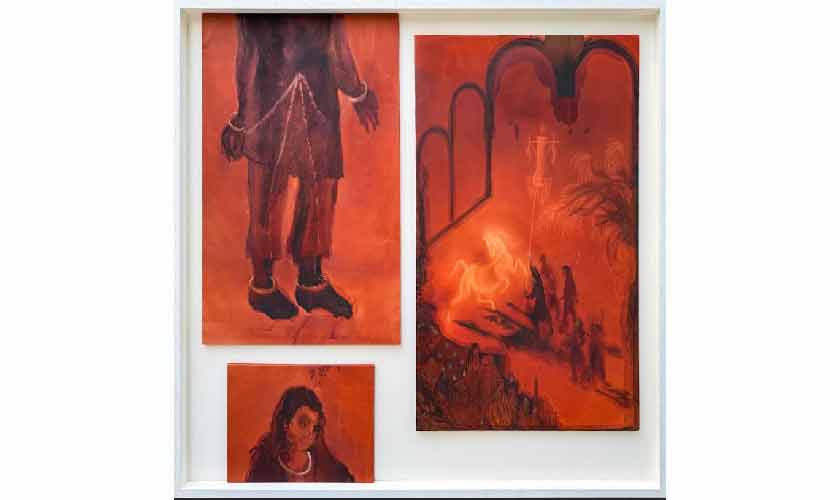
Untitled by Bibi Hajra brings together a female figure, a suspended body and a small procession moving through a landscape made almost entirely in shades of orange and red, where a ghostly horse emerges from the glowing background. There is something dreamlike about the image, as though one is witnessing someone’s memories rather than events.
Some of the imagery in the exhibition will be familiar to those who have grown up around Muharram rituals, but not every work carries the same emotional weight. The exhibition is at its strongest when it moves beyond commemoration and invites deeper reflection on what it means to inherit grief. It is in these moments that the exhibition’s title begins to resonate most clearly, as one is left thinking about what survives and what is carried forward.
Amanat runs until June 30.
The reviewer is a staff member.