Print Story
X

| H |
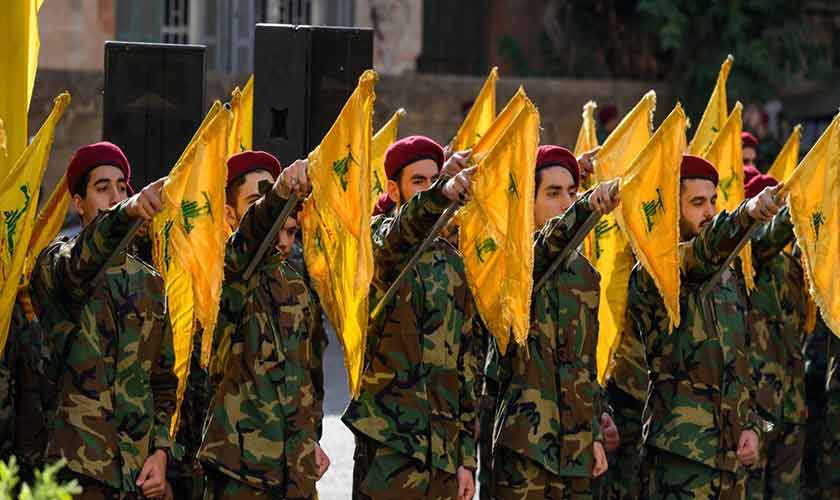
ezbollah remains one of the most influential and contested political movements in the contemporary Middle East. Its emergence cannot be understood apart from the turbulent history of Lebanon during the 1970s and 1980s, a period marked by civil war, foreign intervention, social inequality and regional conflict. Lebanon was founded upon a confessional political system that distributed power among religious communities, reserving the presidency for Maronite Christians, the premiership for Sunni Muslims and the speakership of parliament for Shiite Muslims. Although this arrangement was initially intended to preserve communal harmony, it increasingly produced political and economic imbalances.
By the 1970s, Shiite Muslims constituted one of the country’s largest communities, concentrated in southern Lebanon, the Beqaa Valley and the southern suburbs of Beirut. Yet, they remained among the most economically marginalised and politically under-represented segments of Lebanese society. As the Lebanese historian Fawwaz Traboulsi has argued, the modern Lebanese state developed unevenly, concentrating wealth and public investment in Beirut and Mount Lebanon while neglecting the predominantly Shiite rural periphery. This disparity created fertile ground for political mobilisation and communal consciousness.
The situation was further complicated by the arrival of large numbers of Palestinian refugees after 1948 and the relocation of the Palestine Liberation Organisation to Lebanon following its expulsion from Jordan in 1970. Southern Lebanon became a major arena of confrontation between Palestinian guerrilla groups and Israel, provoking repeated Israeli military incursions. Lebanon itself gradually became a battleground for competing regional and international interests involving Israel, Syria, the Palestinians and various Lebanese factions. When civil war erupted in 1975, the state effectively disintegrated into a patchwork of sectarian territories controlled by rival militias. Amid this atmosphere of insecurity and institutional collapse, many Lebanese Shiites felt abandoned by the state and vulnerable to both internal and external threats.
The rise of Hezbollah can also be understood through the insights of historian Usama Makdisi, whose scholarship challenges the notion that sectarian identities in Lebanon are timeless realities. Makdisi argues that modern sectarianism emerged through historical processes shaped by Ottoman reforms, colonial intervention and state-building. Lebanon’s confessional order institutionalised communal identities while often failing to create an inclusive citizenship capable of addressing social and economic inequalities.
From this perspective, Hezbollah’s emergence was not simply a consequence of Iranian influence or religious ideology; it was equally rooted in the marginalisation of Lebanon’s Shiite population and in the recurring failures of the Lebanese state. Makdisi’s work further highlights how crises of state legitimacy enabled communal organisations to assume functions normally associated with government. Hezbollah’s later provision of education, healthcare, welfare, reconstruction assistance and local governance reflected a broad pattern in which non-state actors filled vacuums left by weak state institutions. He also emphasises that Lebanon has repeatedly been transformed into an arena for regional rivalries involving Israel, Syria, Iran, Western powers and Gulf states, making sovereignty a persistent and contested question. Hezbollah’s evolution, therefore, reflects both a response to foreign intervention and an active participation in wider regional struggles.
It was against this backdrop that Hezbollah emerged in 1982 following the Israeli invasion of Lebanon. Inspired by the Iranian Revolution of 1979 and supported by Iran’s Islamic Revolutionary Guard Corps, a group of Lebanese Shiite clerics and activists sought to organise resistance against Israeli occupation while simultaneously addressing the social and political grievances of their community. Hezbollah was not the creation of a single individual. It was the product of a collective effort involving religious scholars, political activists and former members of the Amal movement.
Among its most important founders was Sheikh Subhi al-Tufayli, who later became the movement’s first secretary-general and articulated a vision combining social justice with armed resistance. Another pivotal figure was Sayyed Abbas al-Musawi, whose organisational abilities helped transform Hezbollah into a disciplined political and military force before his assassination by Israel in 1992. Equally influential was Sheikh Muhamsmad Hussein Fazlallah, one of the most respected Shiite intellectuals of the modern era. Although he was never formally Hezbollah’s leader, his religious teachings and emphasis on social responsibility deeply shaped the movement’s worldview. On the military front, Imad Mughniyeh emerged as one of Hezbollah’s most formidable strategists, helping construct the sophisticated organisational and operational structures that would later challenge one of the region’s most powerful armies.
Hezbollah’s ideology drew significantly on Ayatollah Ruhollah Khomeini’s doctrine of Wilayat al-Faqih (Guardianship of the Jurist), yet its evolution was shaped as much by Lebanese realities as by Iranian revolutionary thought. Over time, the organisation developed into a hybrid actor that combined political participation, military resistance, and social welfare. It established schools, hospitals, reconstruction agencies, charitable organisations and media institutions, providing many services that the Lebanese state either could not or would not. As Noam Chomsky has observed, political movements often derive legitimacy not merely from ideological appeals but from their ability to address the practical needs of ordinary people. Hezbollah’s extensive social-service network helped create enduring bonds with significant segments of Lebanese society and contributed to its image as a movement rooted in popular experience rather than existing solely as an armed organisation.
No individual has been more closely associated with Hezbollah than Hassan Nasrallah, whose leadership transformed the movement into a major regional actor. Born in East Beirut in 1960 to a modest Shiite family, Nasrallah grew up amid the inequalities and upheavals that characterized modern Lebanon. Following religious studies in Najaf and the Israeli invasion of 1982, he joined the nascent Hezbollah movement and quickly rose through its ranks.
When Abbas al-Musawi was assassinated in 1992, Nasrallah became secretary-general at the age of thirty-two. Under his leadership, Hezbollah developed a sophisticated political strategy while simultaneously enhancing its military capabilities. His speeches, blending religious symbolism, anti-imperialist rhetoric and political pragmatism, resonated with audiences across the Arab world. As Rashid Khalidi has noted, Nasrallah’s popularity stemmed largely from his ability to articulate a language of dignity and resistance during a period when many Arab governments appeared unable to effectively confront Israeli power.
For its supporters, Hezbollah’s greatest achievement was its role in ending Israel’s occupation of southern Lebanon. From 1982 until 2000, Israel maintained a security zone in southern Lebanon through its own forces and allied militias. Hezbollah conducted a sustained campaign of guerrilla warfare that gradually increased the cost of occupation. When Israel withdrew from most of the occupied Lebanese territory in May 2000, the event was celebrated throughout much of the Arab world. Many regarded this as one of the few occasions in modern Middle Eastern history when an Arab resistance movement had compelled an Israeli military withdrawal. Chomsky described the withdrawal as an example of an occupation becoming politically and militarily unsustainable. Hezbollah’s supporters viewed it as confirmation of the effectiveness of armed resistance.
(To be continued)
The writer is a professor in the Faculty of Liberal Arts at the Beaconhouse National University, Lahore.