Print Story
X




Ewing Hall is caught between a university fighting for its legacy and a government body insisting it is simply enforcing the law. Its fate now rests with the judiciary
| A |
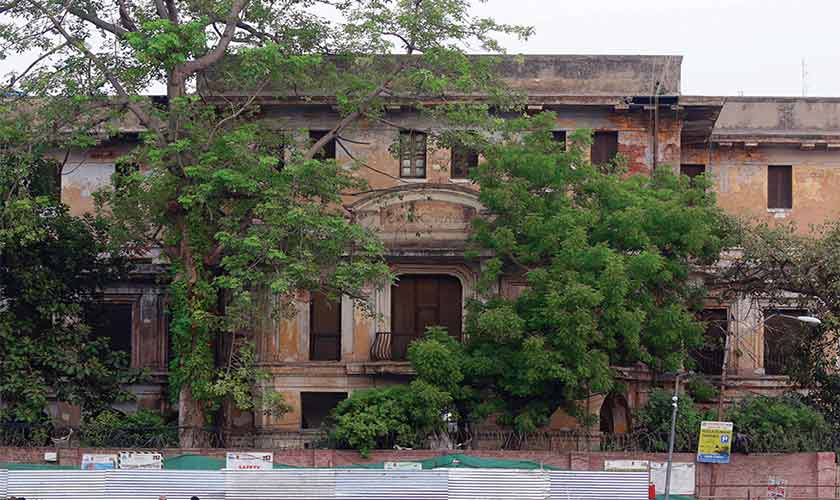
growing controversy surrounds the historic Ewing Hall as a legal and public battle unfolds between Forman Christian College and provincial authorities.
The dispute has sparked widespread concern among alumni and heritage enthusiasts. Syed Hashim Ali Hasan recently launched an online petition titled: Save Ewing Hall, protect FCCU’s historic legacy. It has already garnered over 100 signatures. The petition says that the historic structure faces demolition or severe neglect. It says the building is “more than bricks and mortar,” a repository of decades of memories for countless students and educators.
The building sits on land originally leased to the FCC in 1915. According to Fatima Atta, a spokesperson for the Lahore Heritage Areas Revival, the property was leased specifically to serve as student hostel but had been lying vacant for an extended period during which the accumulated rent owed to the government crossed Rs 100 million. Following multiple unheeded notices, the Board of Revenue, issued a show-cause notice in March this year. By April, after hearing both the FCC and the Higher Education Department, the colonies member passed a legal order in favour of the provincial government.
Following the takeover, Atta says, demolition is not on the cards. “It’s a beautiful piece of heritage. The [LHAR] board intends to restore it to its original form,” she says.
The FCC paints a starkly different picture. University spokesperson Badia Raza says concern for student safety was the primary reason the building was vacated, as the university awaited a comprehensive engineering assessment. Progress was subsequently stalled by the Covid-19 pandemic.
Under its current administration, the FCC spent nearly Rs 5 million on a detailed study that was completed in March, to map out a restoration plan. Raza says that the university is collaborating with the Walled City of Lahore Authority on conserving the building’s façade.
Raza also maintains that following the denationalisation of educational institutions, the government had approved a lease extending beyond 2018, backed by directives from the then chief minister and endorsements from the BoR.
Despite submitting a detailed reply to the show-cause notice and a direct appeal from the FCC rector, Dr Jonathan Addleton, to the chief minister, the university claims, it was kept in the dark. A hearing took place on April 27, but Raza says that the final decision was never officially communicated to the varsity.
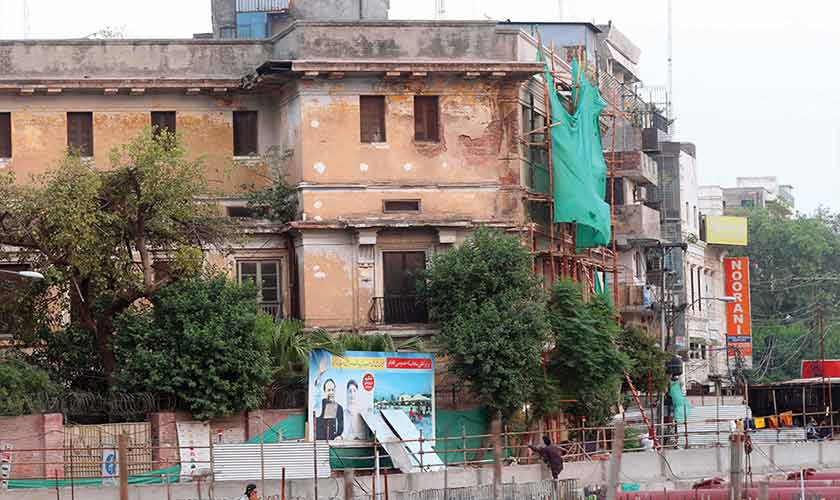
On June 10, an assistant commissioner informed the FCC registrar via telephone that the government would take possession of the Ewing Hall the following day. No written order from the Deputy Commissioner’s office was provided.
On June 11, authorities officially took over the building. The FCC was given a 24-hour window to evacuate all movable property, including generators, furniture and historic artifacts.
On June 13, Dr Addleton issued a statement asserting that the lease had been repeatedly renewed since 1915 and that the latest agreement stretched into the 2040s. He urged civil society and minority communities, for whom the FCC holds deep historical significance, to press the government to return the hall.
| T |
he dispute is now before the Lahore High Court). According to a court order dated June 17, the FCC filed a constitutional petition challenging the April 27 eviction order.
Key legal arguments raised by the FCC are:
The eviction order violates the Colonisation of Government Lands Act, 1912, as the university was not granted a fair opportunity to respond;
The claim that the land was not being used for educational purposes is arbitrary and lacks a proper physical site inspection.
The LHC has issued notices to the respondents, ordering them to submit a comprehensive report in two weeks. The court has also barred the authorities from taking coercive measures against the university while the matter is sub judice.
For now, Ewing Hall stands at the centre of a tense standoff — caught between a university fighting for its legacy and a government body insisting it is simply enforcing the law. The ultimate fate of this century-old landmark now rests with the judiciary.
Ahsan Raza is the editor of an English daily. He can be reached at [email protected]