Print Story
X




As the volume of vehicular traffic grows by the day, the city is faced with the toughest challenge of the time
| D |
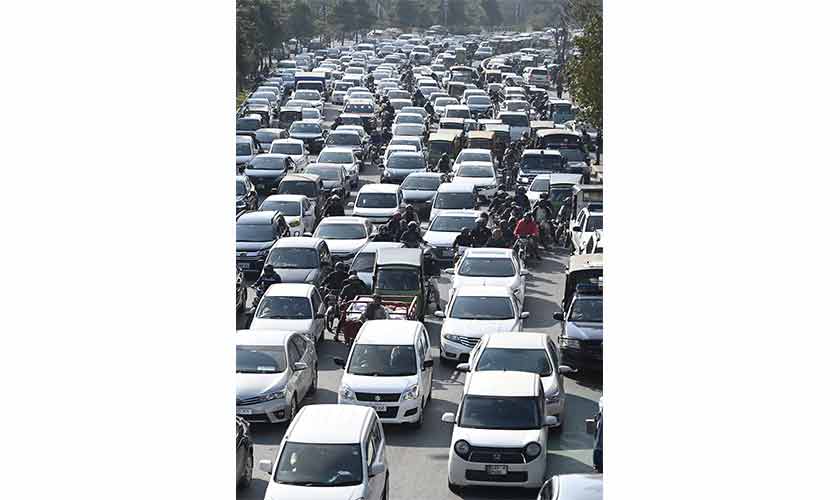
ata shows that Lahore’s road network is under unprecedented pressure. Reason: an exponential rise in vehicles — most notably, motorcycles.
City Traffic Officer of Lahore, Abdul Rahim Shirazi says, “This city of over 13 million people is serviced by a road network that stretches roughly 4,485 kilometres. It is now host to approximately 8.1 million registered vehicles. Of these, a staggering 6.8 million are motorcycles.”
This vehicle-to-population dynamic sets Lahore apart from megacities like New Delhi, Mumbai, Dhaka and Ho Chi Minh City, he adds.
“What makes our job more challenging is that approximately 300,000 new vehicles are added to the city’s roads every year,” the CTO notes. “This means around 1,000 new vehicles per day. Broadly speaking, [Lahore has] a vehicle for every three to four people — a ratio comparable to cities in the developed world.”
For everyday commuters, these numbers translate into lost time and daily frustration. Fauzia Naqvi commutes from her home in Gulberg to her office in Johar Town via a pooled rickshaw. During peak hours, the journey takes her 50 minutes. On weekends, however, that travel time is cut by half, proving just how severely weekday congestion paralyses the city.
While some people assume that the traffic police can penalise the city out of the gridlock, Shirazi stresses that enforcement has its limits. Though traffic wardens regularly remove encroachments, clear illegally parked vehicles and issue challans (fine slips), structural deficiencies remain the root cause of congestion.
“Enforcement alone cannot solve the problem of congestion,” Shirazi says. “In most busy areas of Lahore, roads are too narrow for the traffic volume. Even strict action cannot eliminate traffic jams as long parking spaces and road design are not adequate.”
He points to bustling commercial hubs like Anarkali, where traffic pressure remains unrelenting throughout the day.
Infrastructure data backs up his narrative: the Lahore Parking Company is authorised to operate stands at 254 locations. However, only about 155 parking sites are fully operational. Left with no choice, drivers park on roadsides, narrowing the drivable space and slowing traffic to a crawl.
To counter the chaos, the City Traffic Police recently launched a pilot project across four “model roads,” drawing on international best practices to improve traffic flow and safety.
A core focus of the project is strict lane discipline. Motorcyclists — who account for up to 60 percent of the traffic volume on these model corridors — are being encouraged to stick to the extreme left lane, mirroring international traffic models. To reinforce this, the police have significantly stepped up fines for lane violations along these routes.
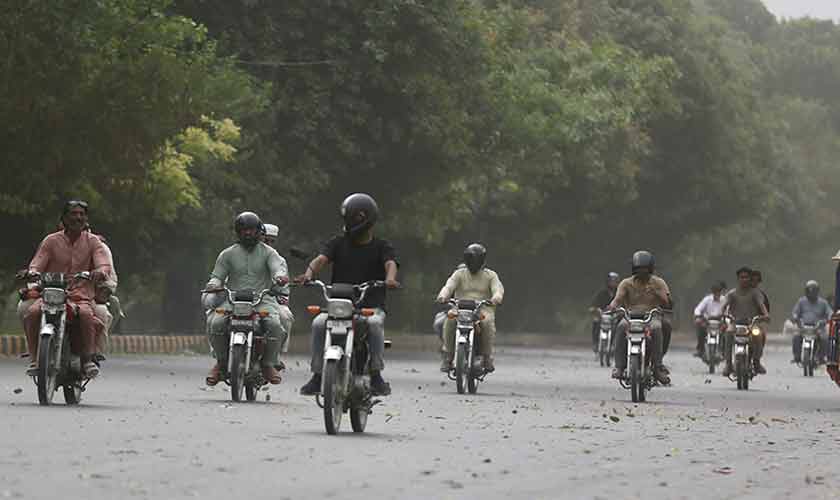
Because between 180,000 and 240,000 vehicles traverse just one of these model roads daily, even a minor driver error can trigger a massive bottleneck. To ease the transition, enforcement is being paired with an aggressive public awareness campaign. The department has turned these test routes into what Shirazi calls “speaking roads,” deploying around 450 banners, flags and educational signs. Furthermore, a specialised public-address squad has been stationed at high-traffic intersections, such as Liberty Roundabout and Faisal Chowk, to verbally guide motorists on proper lane usage.
Traffic engineering fixes are also under way, specifically targeting public transport bottlenecks. Shirazi identifies bus bays and public transport stops as major disruptions along these corridors.
According to traffic studies, when a local transport vehicle stops for passengers in an improperly designed bay, it blocks traffic for 60 to 70 seconds. The ripple effect slows down the entire traffic stream for nearly two minutes. Traffic engineers are currently redesigning these bays so that buses can pull entirely out of the driving lane to pick and drop passengers.
The project also includes reclaiming and reorganising under-utilised roadside spaces to carve out additional lanes. Authorities expect these tweaks to yield smoother commutes, fewer accidents and reduced fuel consumption.
| W |
hile official efforts focus on engineering and enforcement, civic voices and urban experts urge a deeper look at Lahore’s developmental trajectory.
Artist and conservationist Dr Ajaz Anwar questions the transparency of the city’s vehicle data and registration management. He notes that while authorities cite millions of registered vehicles, ordinary citizens have little way of verifying these figures. He also points out a flaw in the latest practice: whereas registration plates previously displayed a vehicle’s city of origin, the current computerised plates do not. This makes it harder to track regional traffic distribution.
Dr Anwar looks to international models for a long-term solution, noting that in some European countries, public transport and bicycles are the norms rather than exception. This helps lower pollutant emissions and reduces traffic volume.
Turning his attention to urban planning, Dr Anwar observes that while modern highways and motorways have boosted travel speeds, they have altered the fabric of the city’s historical spaces. Ultimately, he argues, macro-economic realities might force a cultural shift.
With even economy cars now costing millions of rupees in Pakistan, car ownership has become prohibitively expensive for the masses. The sustainable way forward for Lahore, Dr Anwar suggests, lies not in building more asphalt for cars, but in relying on robust public transit.
Ahsan Raza is the editor of an English language daily. He can be reached at [email protected]