Print Story
X




The true test of Pakistan’s criminal justice system is not how it performs in exceptional cases but how it functions in the ‘ordinary’ ones
| O |
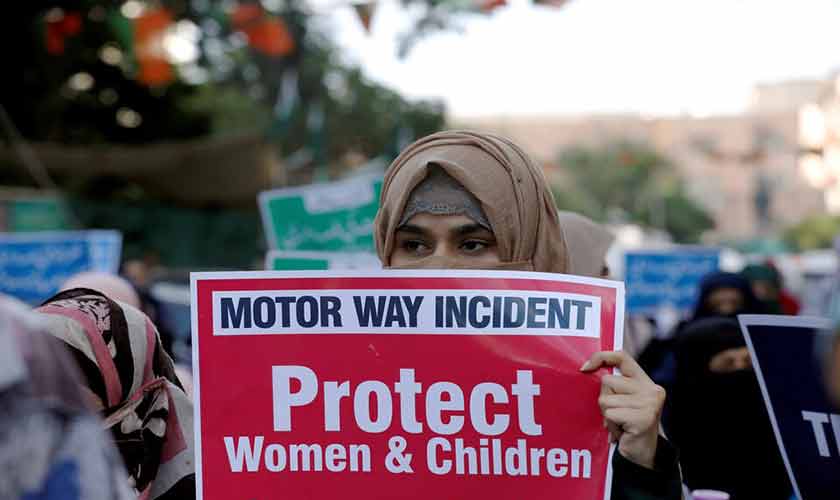
n June 3, a UK-based news outlet posted on X (formerly Twitter) the news regarding the decision of the Lahore High Court dismissing the appeals against capital punishment of the men convicted of the gang-rape of a “French tourist” in front of her three children after her car ran out of fuel on a highway. This caught the attention of Elon Musk who celebrated this verdict, praised Pakistan and expressed desire for the West to be doing the same in similar cases. It didn’t take long for some users on the platform to weigh in with their reflections. Some pointed out that the survivor in question was not a “French tourist.” They took it on themselves to fix the misconception about her identity. Fact checks were set in motion reminding us that the case in question was actually the infamous Motorway Rape incident that shook the entire nation. Some people went as far back as September 2020 and said that the victim was a Pakistani, who also had a French nationality; and that she was not a tourist.
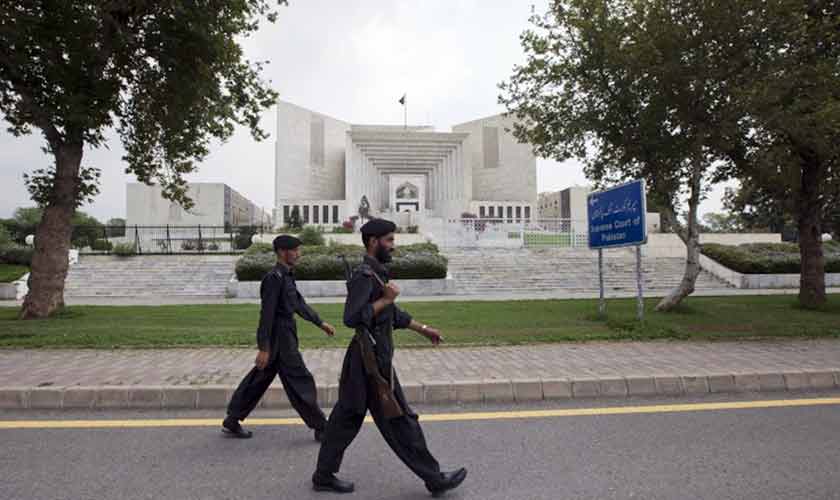
A day later, the Supreme Court of Pakistan dismissed the review petition of Zahir Jaffer, the convict in the Noor Mukadam rape-and-murder case from 2021. This dismissal gave finality to the death sentence against the convict in the judicial realm.
These decisions brought these two high-profile cases back on our timelines. Despite the verdicts being celebrated as the right sentences for such crimes by global leaders like Musk, there is a lot to unpack when it comes to the criminal justice system when it deals with gender violence in Pakistan.
On the one hand, these verdicts might signal a triumph for the criminal justice system but a closer look, especially at the timelines and the narratives around such cases reveals profound systemic tensions and patriarchal notions that still place the burden of blame on victims.
In the Motorway Rape incident, a police official appeared to blame the victim for driving alone late at night. In the Noor Mukadam matter, the additional note of Justice Ali Baqar Najafi, while upholding the death sentence for the murder, went on to describe the victim’s ordeal as, “a direct result of a vice spreading in the upper society which we know as living relationship in which societal compulsions are ignored so as to defy not only the law of the land but also the personal law under Islam.” A review petition was then filed but dismissed. The death sentence was upheld by the Supreme Court on June 4.
Do these verdicts—the LHC verdict in the Motorway Rape incident and the Zahir Jaffer sentencing in the Noor Mukadam case—pink-wash the criminal justice system when it comes to gendered violence simply because they uphold the death sentences? Is more required of the criminal justice system to be truly considered gender sensitive?
To begin with, we must remember that these two cases received a lot of media and political attention. There was support from civil society as well as public pressure. Yet, it took half a decade for the Zahir Jaffer sentence in the Noor Mukadam case to attain judicial finality. A mercy petition before the president is still an option.
Although, trials in both these cases were relatively swift and concluded within six to seven months, the appeal process took four to five years. The human cost of this delay cannot be overstated. For the families involved, the period between a trial court conviction and the dismissal of the final appeal is one of agonising uncertainty.
Survivors frequently encounter scepticism, victim-blaming, pressure from families to remain silent and fears of social stigma.
For the broader public, the message is mixed: the state can catch and convict you quickly but it may take years to carry out the sentence.
It would be a mistake to treat these outcomes as representative of the ordinary experience of women seeking justice in Pakistan. High-profile cases often benefit from factors unavailable in most cases such as extensive media coverage, public pressure, political attention and significant institutional resources. These conditions create incentives for law enforcement agencies and prosecutors to prioritise investigations and ensure procedural compliance.
For many survivors, justice encompasses a broad set of concerns: being heard; being believed; receiving protection from retaliation; access to support services; and participating in a rehabilitative process that treats them with dignity.
A system that imposes severe punishments after half a decade and is frequently inaccessible, intimidating or re-traumatising for victims cannot be called fully responsive to gender-based violence.
Across Pakistan, many women continue to face significant barriers at every stage of the criminal justice process. Reporting remains a challenge. Survivors frequently encounter scepticism, victim-blaming, pressure from families to remain silent and fear of social stigma. Where complaints are lodged, investigations may suffer from inadequate evidence collection; delays; insufficient forensic support or a lack of specialised training among investigators.
The problem is not merely one of law. Pakistan has witnessed substantial legislative reform over the past two decades. Laws addressing rape, domestic violence, workplace harassment, acid violence and other forms of gendered harm have significantly expanded the legal framework available to victims.
However, the existence of laws does not automatically translate into meaningful protection. The implementation gap, delays and certain mindsets remain persistent challenges in addressing violence against women. Viewed through this lens, the true test of Pakistan’s criminal justice system is not how it performs in exceptional cases but how it functions in the ‘ordinary’ ones.
There are, nevertheless, reasons for cautious optimism. The growing role of forensic evidence; increasing judicial engagement with gender-sensitive reasoning; the establishment of specialised mechanisms in some jurisdictions; and greater public awareness of women’s rights reflect gradual institutional progress.
The recent judgments should be viewed not as the conclusion of a story but as an opportunity for reflection. They demonstrate that accountability is possible. They show that courts can uphold convictions in serious cases of violence against women. They also remind us, however, that the justice system cannot be evaluated solely through its response to a handful of highly visible crimes. The measure of its success lies in whether the same commitment to accountability extends to all cases—including those that never trend on social media, never receive prime-time coverage and do not become symbols of a nation-wide movement. A criminal justice system genuinely responsive to gender-based violence is one that works not only when the entire nation is watching but also when it is not.
The writer is a diversity and inclusion advocate. She can be reached at [email protected].