Print Story
X


| I |
n early June, Lahore does not so much wake up as it begins to simmer. The cool breeze of late April is a forgotten luxury by this time of the year. A heavy, golden haze settles over most of the city. For school-going children, the final days of May usually promise a slow and deep release. This means weeks of afternoon cartoon binges in darkened drawing rooms with the AC units humming on high and half-eaten mangoes staining old T-shirts.
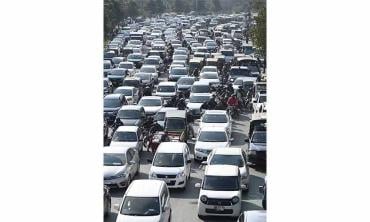
However, modern childhood in the metropolis rarely tolerates months of stagnation as such. Instead, early June triggers a different kind of routine entirely. If you stand at any major intersection like the turning near the Liberty Roundabout or the choked arteries connecting DHA Phase 5 to the rest of the city, you will see these routines being shaped by people I like to call the summer camp commuters.
The city around them is in its usual state of morning frenzy. Orange Line trains clank overhead, water tankers wet the dusty edges of under-construction flyovers and bike riders navigate the traffic with flimsy masks pulled up to their noses to ward off the dust. Amidst this chaotic adult choreography, the children are being dispatched to their respective temporary sanctuaries.
There is a red-brick sports complex near Gulberg where the cars dropping off these kids are mostly heavy SUVs, their tailpipes puffing cold air into the humid morning before doors fly open. Out step the athletes-in-training: boys and girls no older than 10, drowning in oversized neon pinnies and carrying footballs nearly half their size. They are accompanied by protective, slightly exhausted mothers wearing dark sunglasses, or drivers carrying heavy thermos flasks filled with iced water.
On the baked grass of the field, a coach with a whistle clamped between his teeth is already shouting instructions over the drone of nearby traffic. The children look drowsy, their eyes squinting against the glare of a sun too intense for eight in the morning. Yet, the moment the ball is dropped, the lethargy vanishes. There is a frantic, uncoordinated scramble, dust kicks up, small sneakers stomp on the parched earth. A collective cheer goes up as the ball misses the makeshift goal post. For these parents, the camp is an expensive insurance policy against screen addiction; for the kids, it is a sweaty, breathless battle against the clock before the midday sun forces them back into lockdown.
A couple of kilometres away, the texture of the summer camp is different entirely. Tucked into a quiet lane off Jail Road, is an old, residential bungalow converted into an Islamic learning centre. The vehicles parked outside are a mix of small sedans and family motorcycles. The children arriving here walk at a deliberate pace. Little girls in brightly coloured, floral headscarves hold the hands of their brothers who wear crisp white shalwar qamees, their small, velvet-covered qaidas tucked securely under their arms.
Inside the gated courtyard shaded by a neem tree, the air feels slightly cooler. The soundtrack here consists of the rhythmic, melodic cadence of children reciting Arabic alphabets in unison. The mothers dropping them off linger by the gate for a moment, adjusting a strap or whispering a quick reminder to stay well-behaved. There is a distinct sense of generational continuity here. While the sports camps look towards a globalised, active future, these spaces are about anchoring identity, offering a structured, spiritual grounding during the unstructured wilderness of the summer holidays.
By midday, the heat peaks, turning the city into a kiln. This is when the third tribe of summer campers emerges — the specialists. In a slick, glass-fronted software academy on the main Ferozpur Road, the environment is synthetic. Inside, the ambient temperature is kept at a shivering sixteen degrees Celsius. The children here are slightly older, mid-to-late teens, and they arrive alone, stepping out of ride-hailing cars with an air of profound self-importance. They carry sleek backpacks containing laptops plastered with tech stickers.
These are the kids who have bypassed the traditional summer altogether. They are here for robotics, coding or advanced digital animation. Sitting in rows under harsh fluorescent lights, their faces are illuminated by the blue glow of monitors. A 15-year-old boy, wearing headphones around his neck, explains a line of Python code to his friend with the seriousness of a seasoned engineer. Outside the window, a lone fruit vendor sits under a frayed umbrella, desperately splashing water on his fading bananas to keep them from rotting in the 43-degree heat.
The contrast is jarring: the raw, exhausting reality of a Lahori summer happening just inches away from a climate-controlled digital sandbox where the youth are prepping for a borderless tech economy.
By 1:30 pm, the grand reversal begins. The city’s roads are now terrifyingly bright, the heat rising from the tarmac in visible, wavy lines. The summer camps are letting out all at once.
The coming back is much less dignified than the going. At the Gulberg sports complex, the neon pinnies are now soaked through with sweat and hair plastered to their foreheads. Their cheeks are flushed a deep crimson. The children drag their sports bags like heavy anchors, collapsing into the air-conditioned backseats of cars, instantly demanding juice boxes. Outside the Jail Road centre, children pile onto the backs of motorcycles, three to a seat, their small hands gripping their fathers’ shirts as the bike weaves through the suffocating fumes of the midday traffic. From the Johar Town academy, the young programmers step out into the blinding light, blinking like owls waking up in the daytime, instantly adjusting to the heavy, hot reality of the city they had temporarily forgotten.
Lahore’s summer camps are less about extra-curricular enrichment and more about how a fractured city compartmentalises its youth. As the cars disperse into the dusty afternoon glare, leaving the streets temporarily quiet before the evening rush, it becomes clear that these camps are mini-universes. Each one is a different version of what Lahore expects its children to become: a star athlete, a devout believer or a tech prodigy.
They are all fortresses built by an anxious city to protect its young from the most terrifying thing a modern Lahori child could face: a long, hot, un-curated afternoon with nothing to do.
Nadia Ahmed Uqaili is a content strategist with over five years of global agency experience. She also writes short fiction on Substack. She can be reached at [email protected]