Print Story
X




A festival in Lahore becomes the starting point for a reflection on Kathak’s place in contemporary culture
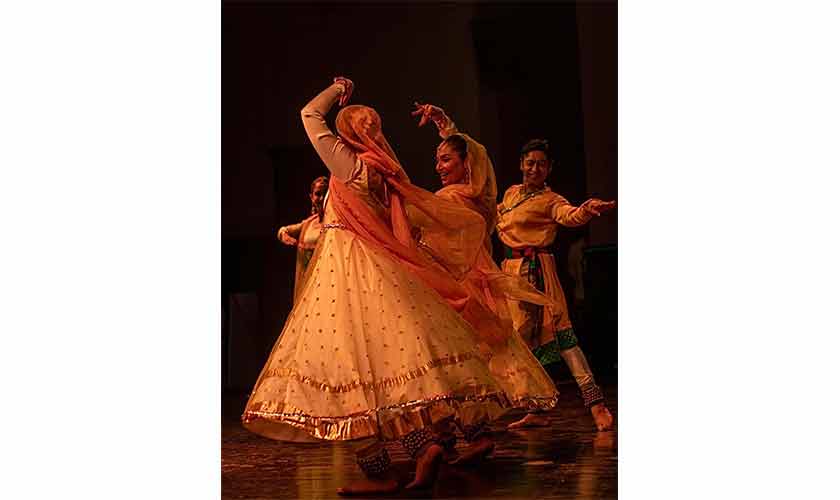
Dance is a corporeal art and a profession in which the body, physical appearance, fitness and social acceptance form the core requirements, especially in a proscenium context. In any discussion of Kathak as a major dance form, several questions arise. The style evolved gradually over centuries, imbibing diverse influences. So, what is its chronological place in relation to other styles? Does it share the Hindu myths and legends of the other South Asian dance forms? Did it originate in the Mughal court?
In recreating the history and milieu of Kathak, the classical distinctions between lasya and tandava were maintained by its exponents even when the dance was performed before rulers and princes in the courts of Awadh. The pure, “abstract” designs that this dance created through rhythm were certainly conditioned by the courtly milieu, in which technical virtuosity was at a premium. In the very process of transforming interpretative dance into abstract design, the abstract was almost always an invocation of God.
Kathak, as the name suggests, originated in the Indo-Gangetic belt, where Brahmins, while recounting stories, would reach a point of ecstasy in their devotion that manifested itself through the medium of dance. Kathak derives from katha (story); a storyteller is known as a katha-kar.
The approach to Kathak as a religious offering by Hindus was not entirely in conformity with the Islamic principles. Therefore, under the patronage of NawabWajid Ali Shah of Awadh, who was not only an accomplished poet but also a student of Kathak, the dance form underwent a transformation.
In this process, courtesans proved an invaluable link between the court and society. Particularly notable was the purdah system, which eventually took the form of ghunghat in dance. During Muslim rule, traditional Kathak performers increasingly resorted to displays of rhythmic virtuosity and rhythmic patterns such as sawal-jawab between the dancer and the percussionist as jugalbandi between artistes evolved.
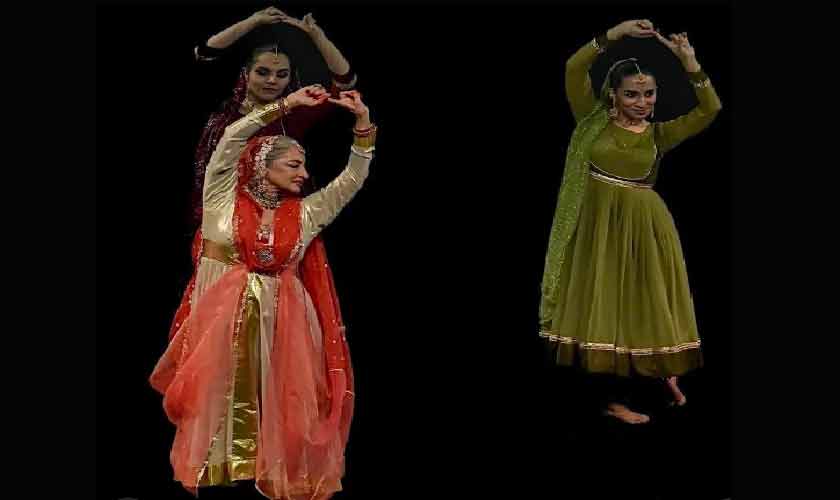
The history of Kathak in Pakistan begins with Maharaj Ghulam Hussain, who was born in Calcutta and trained under the legendary AchhanMaharaj of the Lucknow gharana in Rampur. After he moved from Karachi to Lahore, he mentored Nahid Siddiqui, one of the foremost Kathak maestros of our time.
As a tribute to their guru, Maharaj Ghulam Hussain, two young Kathak practitioners, Maan Sayeed and Momina Farooq Khan, made a little dance history by organising the Lahore Kathak Festival 2026. Rendered theatrical and timeless through workshops, recitals, talks and intense performances, the two-day festival was held at Alhamra, Lahore.
The dream, which neither solicits nor receives financial support from the government, flourished in a country where dance receives little encouragement and has not been a staple of the performing arts agenda. One of the keys to the festival's success was the organisers' ability to balance the programme while refusing to underestimate the community's receptiveness.
“There’s a growing openness to learning the arts here. There’s a desire among audiences to experience and support what they feel enhances their lives,” said Sayeed.
The first day of the festival began with an introduction by Bina Jawad (Amma to her students), who is regarded as an icon and revered not only for her grit and tenacity but also for her lifelong commitment to music and dance. It was only fitting to pay tribute to her guru, the late Maharaj Ghulam Hussain, in a medium-sized room hidden away in the basement of the 149,000-square-foot cultural complex named after him.
Bina Jawad shared with the audience, seated on the floor, moments from the Ustad’s life, his perception of dance, his final days in the hospital, and the robes that became his hallmark.
Alhamra has long served as a venue for promoting young talent. Events such as music and dance festivals provide a platform for encouraging amateurs. Christopher Riaz, who learned the pakhawaj in merely five months of training, displayed his raw talent in the next session, making it sound as effortless as reciting a multiplication table.
This was followed by a robust rendition of TirwatTarana in Raga Kalawati by Kaleem Raza. The highlights of the day-long programme were two workshops conducted separately: one on thaat by Maan Sayeed and the other on abhinaya by Hammad Rasheed.
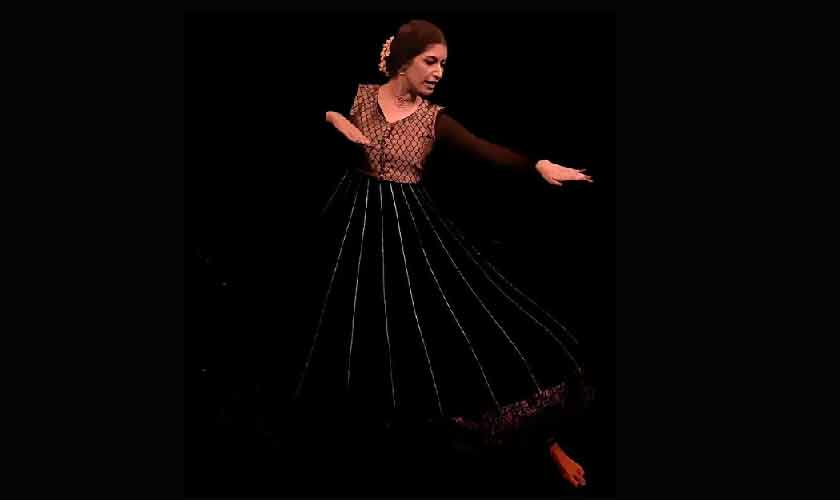
Kathak, like miniature painting, is two-dimensional in character. It conceives of space only in straight lines; there is only a front-back treatment of space. Even when chakras are executed, they follow a central vertical axis from which no shifts or deflections occur. The weight of the body in the initial stances of the dance is equally distributed and the knees are not flexed.
Thaat refers to the posture or pose that a dancer assumes as an overture to the dance, serving as a baseline. Sayeed’s grace and quicksilver articulation, coupled with youthful energy, defined his tonal palette. In abhinaya, the art of storytelling through bodily expression, Hammad Rasheed, within his strong rhythmic style, made it feel like sailing on an invisible wind. He displayed a continuous and restless search for the right gesture, the absolute essence.
On the second day of the festival, the medley of performances began with a mix of amateur and professional acts woven into a rich patchwork. Starting with a debut performance by students of Harsukh School, and followed by amateur performances from Aliza Khalid and Faisal Shahzad, the evening gradually progressed towards impassioned performances by Hammad Rasheed, Jessica Zakaria Iqbal and Adnan Jahangir.
These were interspersed with performances by Mohammad Hanif on the flute and Akbar Ali Khan’s vocal rendition of UstadBaray Ghulam Ali Khan’s thumri, Naina Morey Taras Gaye, in Raga Sindhu Bhairavi. While the flautist, Mohammad Hanif, who cannot quite be compared to UstadSalamat Hussain, remained restrained, Akbar Ali Khan, trained under Mubarak Ali Khan of the Jalandhar Nalangharana, was remarkable.
Kathak employs a series of gestures to interpret the varied richness of creation. The body is regarded as the primary medium of expression. In imparting training in gestures, the form has evolved a unique system.
In a performance based on gat, gat-nikas and gat-bhav, Hammad Rasheed assumed the stance appropriate to the hastasymbolising a young woman at the bank of a river or stream, poised to fill the pitcher balanced on her head. In gat-nikas, he moved forward, adopting a gait and posture appropriate to the character being portrayed. Through gat-bhav, a condensed form of storytelling, he enacted a brief narrative of a young woman through varied use of expressions, embellished with carefully crafted stances.
The pangs of flirtation between the nayak and thenayika were conveyed most poignantly. The dancer carried off the performance with aplomb and immense lyricism. Rasheed improvised a sequence of decorative gestures in a paran that concluded with multiple tihais.
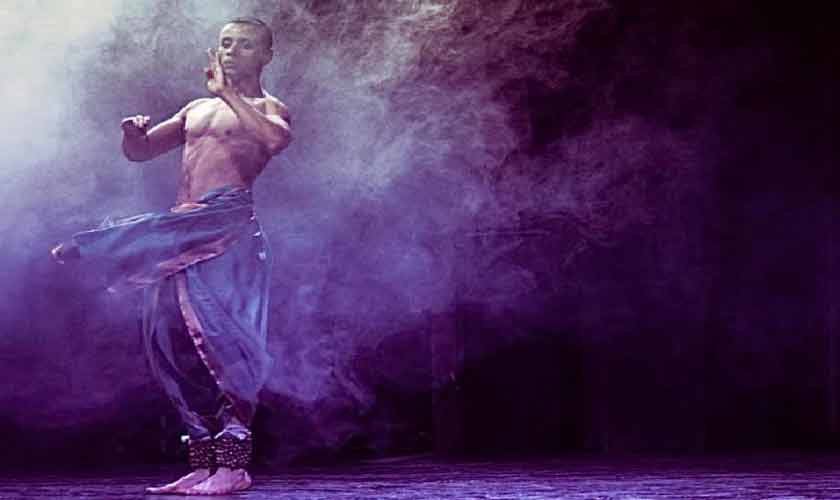
Maan Sayeed’s two performances - one a duet and the other a solo - presented in dramatic beams of light and plumes of smoke à laAkram Khan, posed important questions. Is there a need for contemporary experimentation in dance? What is its relationship to rigour, meaning-making and the idea of the ‘new’?
Strangely, despite its unabashedly hybrid identity, which has perennially revelled in cultural cross-pollination, the rhetoric of “purity” continues to pervade critical discourse.
Some of these questions continue to engage dancers and audiences drawn to the possibility of transcending the boundaries established by the strict grammar of classical dance pedagogy. The idea of freedom, it appears, has been one of the immediate attractions for Maan Sayeed, who views contemporary dance as a space for individual assertion, creative expression and engagement with new ideas and possibilities.
That said, the term contemporary is often erroneously applied to work rooted in classical forms. Contemporary or not, Sayeed presented a traditional-modern blend that defied easy categorisation. For that alone, he deserves commendation.
A classical production is a discursive enterprise. The vocabulary is simultaneously descriptive and categorising. It is difficult to maintain that SheemaKirmani’s performance of Amir Khusrau’sRang with her troupe was Kathak in the narrow sense.
Kathak, a combination of nritya (dance) and abhinaya (mimetic exposition), has never been Kirmani’s forte, despite the fact that she trained briefly in the form under Ram Mohan. Her repertoire comprises primarily of Bharatanatyam and Odissi, which she learnt from Leela Samson and MayadharRaut, respectively.
She appeared on stage to thundering applause, surrounded by a troupe of dancers who swirled and galloped around her like a group of spinners, reminiscent of the whirling dervishes of the tekkehane. Revelling ecstatically to the soundtrack Aaj Rang Hai’ Ae Maa Rang Hai Ri, the ensemble moved energetically while the principal dancer largely relied on arm movements to convey the bhavs.
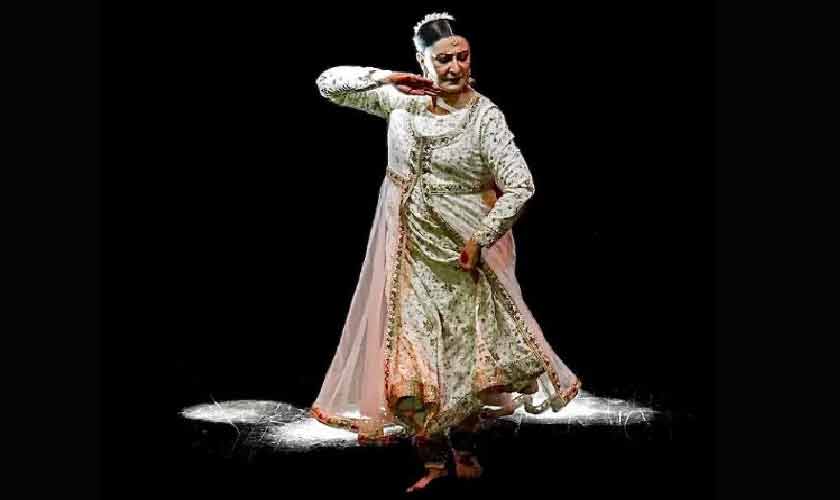
The finale performances by Nighat Chaudhary - a blend of the Lucknow and Jaipur styles - were the highlight of the evening. In choosing to open with Guru Vandana rather than Salami, she appeared to reject the binaries of secular and religious, as well as regional and national.
In presenting highly ornamental pieces such as Tarana and KhanditaNayika (the enraged heroine), she treated movement as raw material for its expressive quality rather than for the abstract patterns that might emerge from a geometric motif.
NailaRiaz, the Kathak dancer and teacher who passed away recently, was fondly remembered and celebrated. However, some other Pakistani Kathak virtuosos, such as Faseeh-urRehman, were not even mentioned. JahanaraAkhlaq, whose career was cut short by her untimely death, was also overlooked.
Is this a case of cultural amnesia?
Is Kathak mere entertainment? It is popularly likened to, compared with and often equated with mujra, primarily because mujra (a dance performed to entertain male patrons) is more often than not modelled on the classical presentation of Kathak. As a result, mujra, performed in the mujraang, is regarded as a vulgarised version of Kathak, whose sole purpose is to attract a wide audience and maximise entertainment value.
Kathak’s appeal as a popular form of entertainment was enhanced by its emergence on the mainstream cinema screen, particularly in films such as Mughal-i-Azam and Pakeezah (choreographed by LachhuMaharaj), UmraoJaan (KumudiniLakhia), and, more recently, BajiraoMastani, whose mujra sequences were choreographed by the inimitable BirjuMaharaj.
Strangely, despite its unabashedly hybrid identity, which has perennially revelled in cultural cross-pollination, the rhetoric of ‘purity’ continues to pervade critical discourse. We continue to speak of an age when dance was cleaner, less vulgar, more original, less Westernised, less manic and less robotic. We forget that ‘antiquity’, as Voltaire reminded us long ago, “is always full of eulogies of another more remote antiquity.”
Nostalgia can be a great fictionaliser. This is not to suggest that mediocrity should be accepted as the norm. We may wince at its incongruities, scoff at its overblown fantasies or grimace at its gyrations and theatrical antics, but the fact remains that the mujraangis a distinct genre of dance, developed not as an art form but as a mode of popular entertainment.
The need to preserve the tawaif tradition is often at odds with the desire to make dance a respectable profession. At times, this tension resulted in the exclusion of respectable communities from the modern stage. The evolution of middle-class respectability and ideals of masculinity also meant that it became more socially acceptable, and therefore more ‘valuable’, for women to perform and the presence of men on stage was viewed less favourably.
The classicism, shaped in part by Western influences for the proscenium stage, nevertheless had its roots in a much broader popular tradition. Dance is not confined to the auditorium or the screen. The tradition cultivates the body through complex choreographies practised in open spaces. Streets become stages during wedding processions. Village squares and shrines serve as sites for narrating sacred lore, where dance functions either as a celebration or as an expression of devotion.
The guru-shishyaparampara, recognised as the foundational instructional model for a range of artistic practices, has long been active in the sub-continental system of inter-generational, artistic transmission of knowledge. This parampara (tradition) functions as a regulatory system governing the dissemination of knowledge and control over the art form, its practitioners and its patronage.
Traditionally, the guru, or learned master, accepted only a few apprentices and trained them over an extended period. Each shishya (pupil) underwent a formal initiation ceremony. Once one was admitted to the gurukul, one’s life revolved around a deep commitment to the art form. The title of guru implied not merely a teacher but a person with whom the shishya lived, learning not only the art but also a way of life.
The guru was entrusted with determining the future of young apprentices and was invested by the system with the authority and expertise to evaluate their progress in various ways. This ensured a fragile yet widely accepted framework of artistic and occupational responsibility. The parampara thus served both as a means of preserving tradition and a mechanism for its continued transmission.
In turn, the guru was expected to impart all that he knew until his pupils had developed the mastery required to perform independently. For a guru, it was a matter of pride and reputation to present a pupil to the public only when the pupil was considered ‘ripe’ for the stage.
In our part of the world, this tradition has unfortunately weakened. In the absence of dedicated gurus and committed students, the system has witnessed a marked shift towards indiscriminate enrolment of pupils, many of whom remain mere dabblers rather than serious practitioners.
Today, children’s busy academic schedules do not allow them to spend considerable time with a guru in an informal setting to receive artistic knowledge in a holistic manner. Instead, they attend fixed, short-duration classes.
In the rapidly changing landscape of institutionalised and formalised knowledge transmission, the traditional system is under threat. Formal certifications from recognised institutions are increasingly replacing the guru’s embodied expertise that reflected an assimilation of knowledge inherited through lineage. The long-term dedication and immersive learning demanded by the guru-shishyaparampara are endangered, particularly in the transmission of dance pedagogies.
At a time when the concepts of guru, shishya and parampara are becoming increasingly difficult to reconcile with changing educational paradigms, institutional modes of knowledge dissemination have largely replaced personalised, ability-based learning. Consequently, the traditional implications and understanding of Kathak must be re-examined and reinterpreted.
The writer is an art critic based in Islamabad.