Print Story
X




Nature-based solutions as Pakistan’s most credible climate bet
| I |
n a recent discussion, a senior government official described nature-based solutions as the “latest fad” and a mechanism for non-governmental organisations to attract funding. The remark reflects a scepticism that is common in Pakistani planning circles. This needs to be taken seriously and answered on its merits.
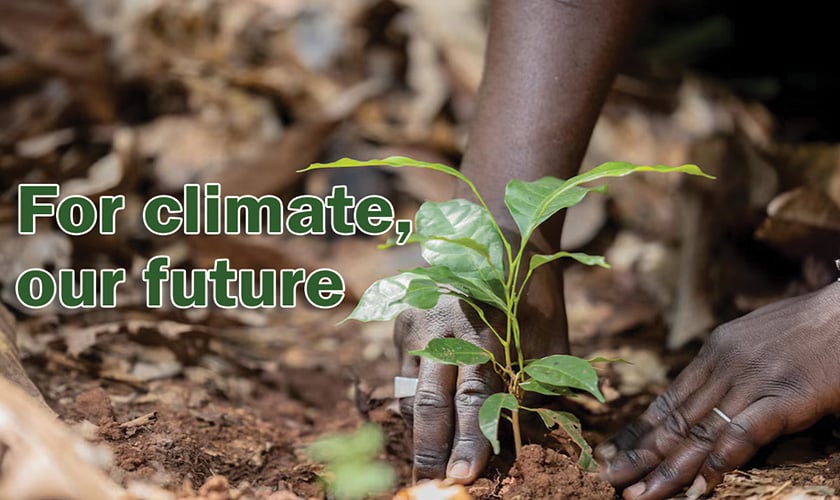
Pakistan’s most recent Nationally Determined Contribution—its official climate pledge under the Paris Agreement—takes a different position. It commits the country to nature-based solutions as a priority adaptation strategy, with explicit emphasis on watershed rehabilitation, riverine and mangrove restoration, rainwater harvesting and ecosystem-based programmes across the Indus Basin. World Environment Day 2026—under the banner: Inspired by Nature. For Climate. For Our Future—is an invitation to ask whether these commitments will stay confined to policy documents or begin to shape how our land, water and ecosystems are actually governed.
Long before the term “nature-based solutions” existed, communities were already drawing inspiration from local ecosystems to manage climate and water risks. In the Potohar plateau, earthen ponds and stone embankments captured monsoon rainfall, held soil moisture and sustained shallow groundwater through dry months. Along the Indus Delta, mangrove forests absorbed storm surges, retained coastal sediments and supported marine fisheries. In Balochistan and parts of Khyber Pakhtunkhwa, karez systems carried groundwater to the surface through gravity-fed underground channels under governance arrangements that allocated water and organised maintenance across generations. These were practical, community-led responses to variability and extremes, rooted in a close reading of local landscapes.
Over time, policy and investment choices weakened this relationship with nature. Subsidised tube wells made karez economically difficult to maintain. Many have now silted up or collapsed. Village ponds in Potohar have filled or degraded as land-use patterns shifted and settlements expanded. Mangrove cover declined for decades as upstream water diversions reduced Indus Delta flows and coastal communities lost the institutional arrangements that governed access to fisheries and fuelwood.
The result is a socio-ecological system more exposed to floods, droughts and land degradation. To be inspired by nature in this context necessitates rebuilding some of the functions that earlier systems provided, under very different climatic and demographic conditions.
The IUCN Global Standard for Nature-based Solutions offers a structured way to think about this rebuilding. It defines NbS as actions that protect, manage or restore ecosystems to address societal challenges while supporting biodiversity. It sets criteria for inclusive design, biodiversity outcomes, long-term economic viability, participatory governance, trade-off management, adaptive management and integration into regulatory and planning systems.
For Pakistan, this provides a way to connect the logic of karez, village ponds and mangroves to contemporary planning and climate finance and to test whether proposals that invoke nature actually deliver climate and development outcomes.
International practice illustrates how this can work in settings that resemble Pakistan’s own.
In Bangladesh, a community-based coastal afforestation programme has established extensive mangrove belts along the Bay of Bengal with community members involved in nursery preparation, planting and maintenance. The programme has reduced cyclone damage, coastal erosion and saline intrusion while creating new income sources through timber, non-timber products and integrated “forest, fish, fruit” models. Governance runs through co-management committees where government officials, civil society representatives and local women share decision-making authority.
This is a concrete example of being inspired by coastal ecosystems to protect climate-exposed communities and future livelihoods in a way that could translate directly to the Indus Delta and Makran coast.
In the Peruvian Andes, a coalition led by a local mountain institute worked with the Miraflores farming community to restore pre-Inca, ancestral water-management systems in glacial catchments affected by rapid ice melt. The project rehabilitated stone dams and earthen channels dating back centuries, alongside wetland restoration, grazing rotation and native grassland recovery. Interventions on a relatively small area triggered improved rangeland management across a much larger landscape as the community adopted better livestock practices. Communities, scientists and engineers designed the interventions together. Community members began presenting these priorities in participatory budget negotiations with local government.
The work treats high mountain ecosystems as a guide for managing flows, soils and vegetation under new climate realities. This shows how future water security can be built by reconnecting traditional practice and modern science.
A growing body of work on agro-forestry and agro-ecology plays a similar role for food security. Integrating trees, shrubs and ground cover into smallholder farms improves soil structure, increases infiltration, moderates microclimates and diversifies food and income sources.
Farmers in dryland regions and some parts of Latin America report more reliable harvests under drought and intense rainfall, reduced crop losses and greater access to fruits, fodder, fuelwood and other products that buffer shocks. These systems are increasingly framed as nature-based solutions for agriculture because they use ecological processes to stabilise production as agroecological zones shift.
For Pakistan’s barani (rain-fed) agriculture and irrigated areas where planting calendars, pests and water availability are changing, this represents a practical way to align climate adaptation with long-term food and livelihood security.
Long before the term “nature-based solutions” existed, communities were already drawing inspiration from local ecosystems to manage climate and water risks.
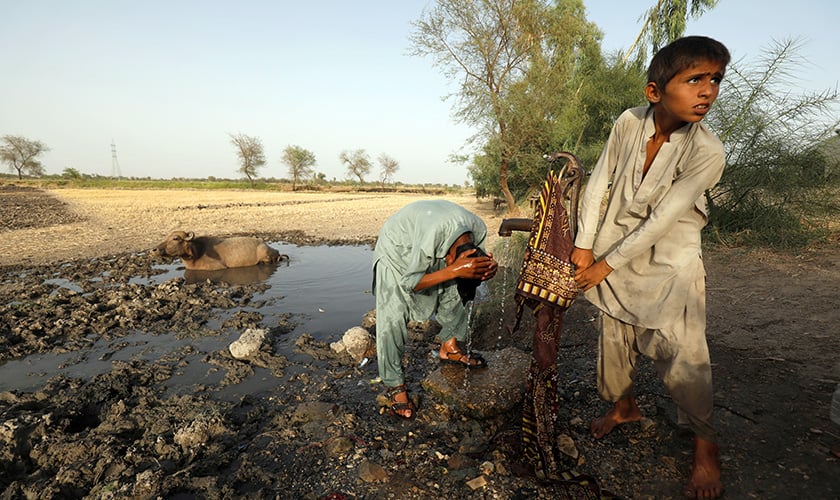
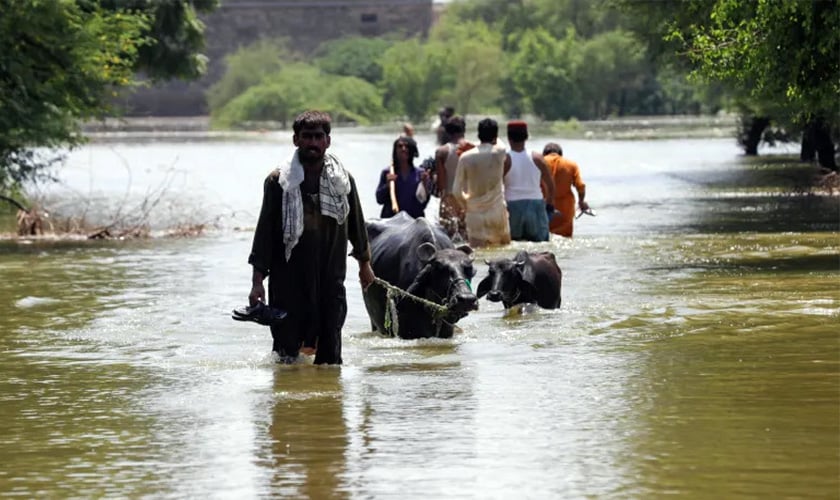
The urgency of this alignment is visible across Pakistan’s landscapes. Groundwater storage in the Indus Basin has declined sharply over recent decades and groundwater levels in much of the Punjab are falling year on year. Glacial lake outburst floods in Gilgit-Baltistan are becoming more frequent as high-altitude temperatures rise. Prolonged droughts in Balochistan, Sindh and south Punjab are reducing agricultural productivity and deepening dependence on already stressed aquifers. Urban heat stress in cities such as Lahore, Karachi and Peshawar is intensifying as tree cover and permeable surfaces disappear while soil degradation across agricultural lands reduces infiltration and converts rainfall into surface runoff and flood peaks instead of stored moisture.
Climate and future are already colliding in the way land and water are managed.
These pressures interact in ways that single-sector responses do not resolve. Deforested upper catchments generate faster and more erosive runoff that raises flood peaks while reducing dry-season base flows. Degraded wetlands lose their capacity to moderate seasonal extremes. Compacted soils channel rainfall into flood damage instead of aquifer recharge. Evidence from multiple regions indicates that nature-based solutions tend to be most effective when they improve ecosystem condition at catchment scale because the interactions between vegetation, soil, water and community behaviour are what determine how a landscape performs under climate stress.
Within Pakistan, the WRAP Catalytic Fund, implemented by the Oxford Policy Management under England’s FCDO-funded Water Resource Accountability in Pakistan programme, provides one of the clearest test cases. The fund supports locally adapted nature-based solutions across the Khyber Pakhtunkhwa, the Punjab and Gilgit-Baltistan, with a defined pathway toward provincial government adoption.
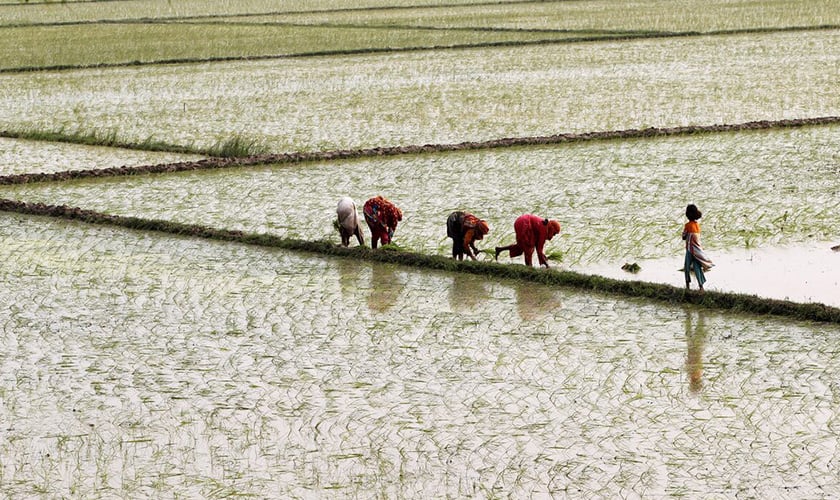
The WWF-Pakistan has led field implementation in the Khyber Pakhtunkhwa and Gilgit-Baltistan, including check dams, irrigation channel restoration, community fisheries, afforestation and water filtration works. The International Water Management Institute has worked primarily in the Punjab, generating groundwater management data, water accounting frameworks and monitoring evidence that underpins regulatory reform. Oxford Policy Management has provided technical leadership across the portfolio and has managed the process by which pilot results are being used for government-owned PC-1s with active provincial participation. These are practical steps toward bringing nature-based approaches to the routines of government planning.
Pakistan’s water and environment legislation already contains language on community participation and ecosystem-based approaches. The gap between that language and operational authority is substantial. Irrigation committees in canal-command areas often reflect patterns of land ownership more than patterns of water need. Customary water user associations in Gilgit-Baltistan and parts of Khyber Pakhtunkhwa hold managerial authority in practice but rarely appear in provincial regulatory instruments.
Women manage household and small-farm water across rural Pakistan yet occupy almost no formal roles in the bodies that allocate it. Institutional responses frequently describe this as a technical capacity problem. The examples from Bangladesh, Peru and agroforestry suggest a more demanding interpretation: governments that are serious about our future share information, tools and formal decision space with communities that already manage land and water every day.
Three priorities follow from this evidence and from current CF-WRAP experience.
First, local ecological knowledge should form a primary input to planning across whole catchments and agroecological zones. Provincial nature-based solution cells in the Khyber Pakhtunkhwa and the Punjab can support district-level mapping of traditional water harvesting sites, historic flood pathways, soil and vegetation management practices and community-identified indicators of ecological change, working with district government, farming communities and local universities.
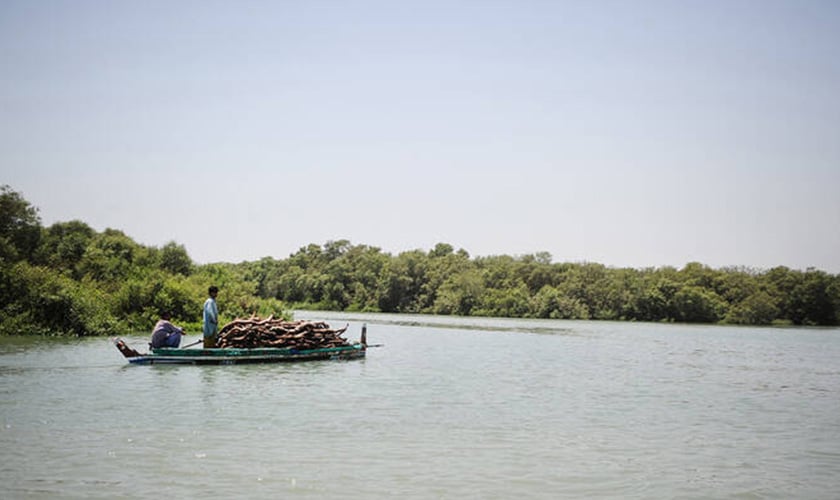
In water-scarce rangelands, this means documenting how communities have managed grazing and vegetation to retain moisture. In canal commands, it means understanding farmer-led drainage, recharge and soil practices that already respond to waterlogging and salinity.
Second, the ongoing conversion of CF-WRAP pilots into PC-1s should be used as a platform for institutional learning. Oxford Policy Management’s work can generate PC-1 formats that district planning officers adapt for other districts, but it can also be designed as a capacity-building process for community institutions behind each pilot. That implies involving water user groups, forest committees and farmer organisations in the PC-1 drafting and approval process, exposing them to basic budgeting and appraisal tools and including their representatives when projects are defended at planning forums.
Third, approaches to monitoring nature-based solutions increasingly combine field measurements with satellite-derived assessments of vegetation cover, soil moisture and water levels, alongside indicators of institutional health.
Provincial NbS Cells, supported by technical partners under WRAP, are well positioned to adopt these approaches so that each intervention generates evidence that speaks to planners, Finance Departments and regulators. Monitoring that captures changes in groundwater trends, soil condition, crop reliability, household incomes and the functioning of local institutions provides the basis for adaptive management and for justifying sustained nature-based allocations in future budget cycles.
The World Environment Day 2026 offers a useful lens for Pakistan’s choices. The country has the historical and indigenous experience, the current pilots and the institutional entry points to move decisively toward serious nature-based solutions. Whether that happens now depends less on finding new language and more on how existing institutions choose to use the examples, knowledge and tools already in front of them.
The writer works on the intersection of climate, water, ecology and society. He is part of the Technical Assistance Team for WRAP Programme’s Catalytic Fund at Oxford Policy Management.