Print Story
X




Leveraging climate education for sustainable environmental action
| T |
he global environmental crisis has emerged as one of humanity’s most consequential and challenging problems, becoming the main focus of policy and intervention discourse at the international level. The crisis has been attributed to anthropogenic activities driven by the rapid rise of industrialisation, energy consumption and urbanisation causing severe damage to the environment. The ecological degradation is reflected as global warming, biodiversity loss, deforestation with extreme climate events being directly or indirectly associated with human activities.
Individual citizens have an obligation to conserve, protect and restore the Earth’s ecosystem. As Jay Inslee has said, “We are the first generation to feel the impact of climate change and the last generation that can do something about it.”
A collective climate action behaviour is crucial because human activities drive a substantial portion of global greenhouse gas emissions. A comprehensive shift in daily behaviours and civic engagement can significantly reduce global emissions. Climate change awareness is a catalyst for behavioural shifts. It builds the public support necessary for governments to enforce critical environmental and sustainability policies. Individual action drives climate mitigation through daily habits and civic engagement. Individuals adopting sustainable habits become essential agents of change in reducing emissions and fostering local environmental resilience.
Environmental educators can lead the way to altering environment-related behaviours and inspiring collective action. The most effective way to tackle a collective concern is the education of societies. Climate education bridges the gap between awareness and real-world behaviour by teaching actionable skills and equipping learners with tools necessary for mitigation and adaptation.
Education can help up-and-coming age cohorts understand and address the impacts of the climate crisis. The acquisition of knowledge and skills results in green force development and accelerates the transition to a green economy. The essential knowledge of the nature and interplay of various contributing factors can help in determining the most effective and most efficient strategies.
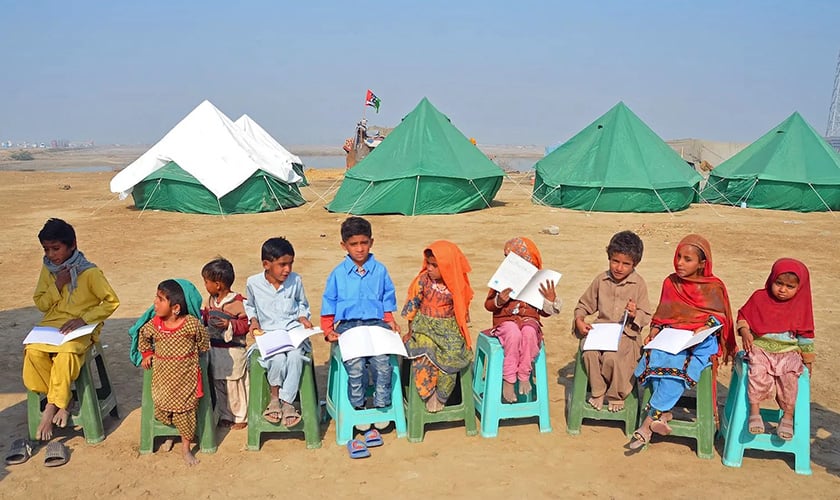
Environmental education fosters sustainable behaviours and equips individuals with the necessary knowledge required to combat climate crisis and contribute in building resilient communities. A structured and institutionalised learning, therefore, provides significant leverage and has a pivotal role in addressing the global environmental crisis. Institutes and organisations like the UNICEF advocate leveraging education in emergencies.
Environmental education in the EU and the US now integrates climate change and sustainability concepts directly into teaching of core science subjects like mathematics and social studies at all levels rather than teaching them as standalone subjects. It focuses developing environmental literacy and equipping young minds with the skills required for a sustainable economy.
Universities have a critical role in combating the climate emergency by generating vital research and empowering future leaders and elevating public awareness. Graduate education builds deep, long-term knowledge, critical thinking and applied skills. The environmental education at institutes of higher learning integrates research and practical experience to address key challenges.
Previously, universities offered environmental science programmes. However, given the urgency of climate action, universities are now transforming learning environments to a mandatory, interdisciplinary approach by integrating climate mitigation and adaptation strategies to prepare future leaders with actionable solutions.
Climate education bridges the gap between awareness and real-world behaviour by teaching actionable skills and equipping learners with tools necessary for mitigation and adaptation.
Professional bodies, too, are pushing physical science programmes toward sustainability literacy. Consequently, physical sciences departments are moving to embed climate and sustainability literacy into core curricula. This includes launching initiatives like Green Chemistry Commitment to align teaching of chemistry toward systems thinking for sustainability and establishing baseline climate knowledge for all.
Integrating sustainability and systems thinking into required courses will enable physical sciences graduates to gain practical climate knowledge rather than learning it only in electives.
The trend
In many developed countries, institutes of higher learning are adding environment literacy across disciplines because climate issues permeate everything. Environment education is no longer limited to science, technology, engineering and mathematics (STEM). New disciplines relevant to environment and climate change are emerging. These include circular and sustainable finance; AI and environmental intelligence; climate resilience and hazard mitigation; and green biotechnology. Political scientists now study climate migration and policy; and media/ literature courses incorporate climate narratives.
Leading business schools are redesigning programmes around sustainability by embedding sustainability across subjects (strategy, finance, marketing, supply chain) rather than offering them as electives. In the wake of mandatory auditable environmental, social and governance (ESG) reporting, employers increasingly demand graduates who understand environmental risk and sustainability.
The new trends in environmental education span a multidisciplinary mix of engineering, climate science, urban planning and policy rather than a standalone environmental science major. Top institutions in the EU offer interdisciplinary degrees that connect ecology, policy and economics. Leading programmes focus on green transition, sustainability management and global climate governance.
Challenges
Barriers to environmental science education initiative include crowded curricula, limited faculty and resources. Investment in faculty training and resources is required to strengthen faculty capacity and update instructional materials so that instructors can connect theory to real world mitigation/ adaptation tools like systems thinking, carbon accounting and materials life cycle analysis and provide practical climate solutions across disciplines.
Environmental issues are highly specific to individual communities and ecosystems. Their causes, impacts and solutions are directly shaped by the unique geography, climate and infrastructure of a given region. Tailoring strategies to specific areas ensures cultural relevance, fosters community ownership and directly addresses local challenges. Effective local solutions for environmental issues focus on community-driven actions that address specific regional challenges and available resources to address these issues.
Relevance
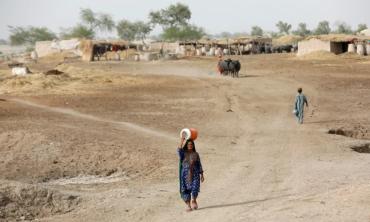
Pakistan is highly vulnerable to climate impacts, facing worsening droughts, melting glaciers and super floods that have disrupted agriculture, drinking-water access and livelihoods. These climate stresses interact with geopolitical risks (for example, tensions over the Indus Basin after India suspended parts of the 1960 Indus Waters Treaty), which could further strain Pakistan’s already water-scarce system.
The intersection of these vulnerabilities is a threat multiplier for public health, economy and daily life. Severe air pollution and smog in metropolitan areas, soil erosion and mass deforestation are additional immediate environmental challenges.
Being a signatory to the Paris Agreement on climate change, Pakistan must reduce its emissions by 43 percent by 2030 and reach net-zero by 2050. This demands an immediate, radical transition across energy, industry and finance. This only makes our environmental agenda more formidable.
Strong and meaningful academic programmes in environment science and climate change related areas are therefore essential in all disciplines. These should be equipped with state-of-the-art technology and supported by research and development programmes that are charged with catalysing institutional innovation. An action-oriented programme focusing on national environmental issues can alleviate these vulnerabilities.
The writer teaches at SZABIST, Islamabad. He can be reached at [email protected].