Print Story
X

| S |
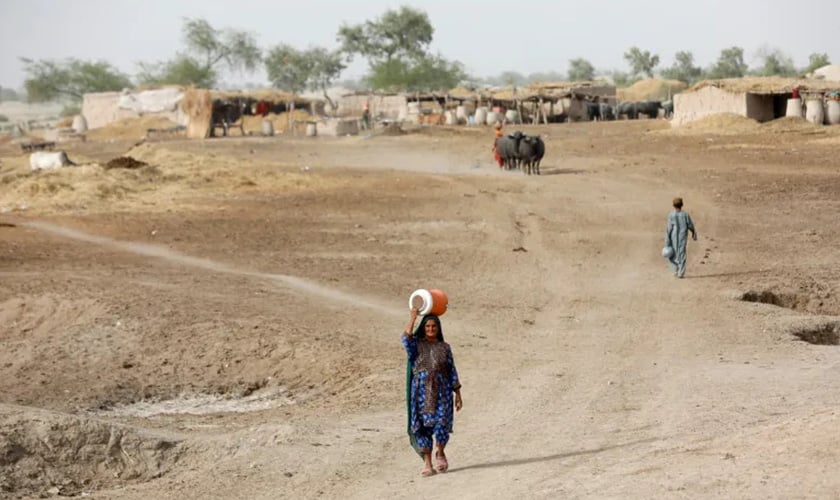
indh is reeling under an intense heatwave. Its cities look deserted; its rural areas appear devoid of life. Maximum temperature in shade recently reached 51.5 degree Celsius in Dadu, breaking previous record for the district. Several parts of the province are experiencing similar extreme conditions, pointing to a broad and worsening climate crisis that has left Sindh sizzling.
The extreme heat has severely disrupted daily life, particularly for the class that depends on outdoor labour and informal economic activity. Intense heat makes it hard for daily-wage earners to work in the scorching sunlight. It poses serious threats to the income-generating capacity of the vulnerable and their mental and social wellbeing.
48-year-old Saud Lashari is the sole breadwinner of a family of four. He sells vegetables in Wahi Pandhi, a small town in Dadu. Speaking to The News on Sunday, Lashari says that rising temperatures bear an economic cost for him. On one hand, he has to pay high fee due to fuel hikes to transporters for delivering vegetables to his shop; on the other, he says, fresh vegetables are prone to rapid spoilage in the extreme heat. At the end of the day, he is forced to pay for vegetables that he has to discard as they rot easily in extreme temperatures.
Sakina Shaikh’s story is no different.
Mother of three, the 62-year-old earns her living by working as a domestic help in her village in the Bakrani tehsil of Larkana. With temperatures rising sharply, it has become harder for her to go out and work.
Despite the elevated health risks that worsen in hotter temperatures, she says her family would starve if she discontinued working. Her life has been reshaped by the climate crisis over the past few years.
In the 2022 floods, she lost her house. Despite the initiation of the Sindh government’s housing scheme, she says she remains without a house. “In the 2022 floods, I lost my house. Now I am losing my health,” she says.
Naseer Memon, an independent climate expert based in Islamabad, says that two key sectors—industry and agriculture—are seriously affected by rising temperatures. He says that it is hard for farmers and labourers to work in intense heat. “Extreme heat threatens the health and economic wellbeing of vulnerable segments of our society,” he says.
In some cases, hot weather creates significant health hazards for workers who risk sunstrokes or other health problems.
Tania Shahjahan, a climate activist, says that the intensity of heatwaves in Sindh has been increasing. “Summers are becoming hotter and lasting longer than before. The situation is even more challenging on account of issues such as electricity shortage, lack of green cover and cooling facilities,” she says.
Memon notes that Sindh is currently facing a 20 percent shortage of river water. “The intense heatwave can cause further freshwater losses through rapid evaporation,” he says. “This can aggravate the water situation for farming and affect the productivity of rice, millet, cotton and other seasonal crops in the province.”
Shahjahan agrees.
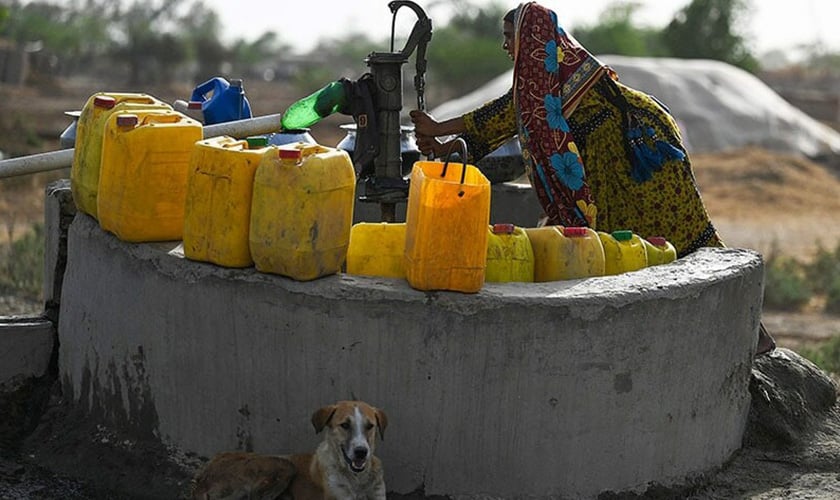
Rising temperatures are not only worsening the freshwater situation for agricultural needs, she says, but also for drinking and other household purposes in urban and rural areas. “Intense heatwaves increase hardships of local women as they manage the water needs for the households,” she adds.
Shahjahan warns that climate-related hardships are increasing poverty, forcing some families to migrate in search of better living conditions. “In vulnerable populations, economic pressures linked to climate change also contribute to social malpractices such as child marriages, as families struggle to cope with financial constraints.”
Although Pakistan contributes minimally to global greenhouse gas emissions, it remains among the countries most severely affected by climate change impacts. The current heatwaves in Sindh underscore this global imbalance, where populations least responsible for climate change are bearing the harshest consequences.
Experts say that climate crisis requires concerted policies, strategies and adaptation plans at local, regional and international levels to tackle climate change induced impacts.
Memon recommends a state-supported massive tree plantation campaign, ensuring proper monitoring and care of saplings until they grow into trees. “It is a scientific fact that as the number of trees is increased, the intensity of the heatwaves decreases.”
Shahjahan suggests greater awareness at both the community and policy levels. She emphasises the need for planting suitable native trees—neem, shisham and peepal—across Sindh.
Experts also call for better water management, investment in renewable energy, protection of natural resources and community education for climate adaptation to reduce the adverse impacts of rising temperatures and climate change.
Robust climate change policies and on-ground climate adaptation plans can help control temperatures and create green spaces, so that people like Saud and Sakina can at least go out and make a living.
The writer is a PhD scholar in the integrative conservation and anthropology programme at the University of Georgia, US. His X handle: @AsifSandeelo.