Print Story
X




Climate rhetoric dominates politics but meaningful action remains elusive
| A |
s climate change intensifies across Pakistan, political rhetoric on the issue has become increasingly visible in public discourse. Yet, despite frequent references to climate challenges by political leaders, serious policy measures and action to address environmental degradation and climate vulnerability remain limited.
A review of the manifestos of major political parties over recent election cycles suggests that climate change has gradually entered mainstream political discourse. At least on paper, major national political parties have acknowledged the phenomenon and proposed measures aimed at mitigating its effects.
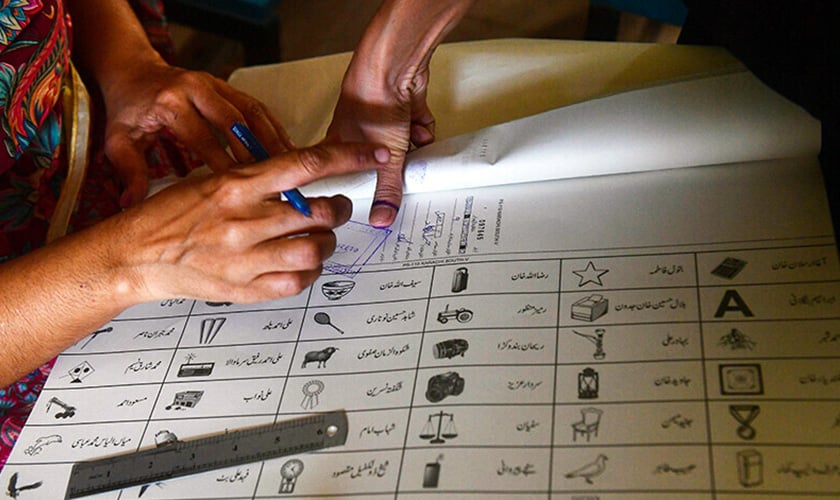
While political parties have included a range of environment and climate-related commitments in their manifestos, the issue has rarely featured prominently in election campaigns or public debates. For instance, climate action was notably missing as a major campaign issue during the 2024 elections.
“Though climate change is increasingly recognised in Pakistan’s mainstream political discourse, it has yet to become a central electoral agenda that meaningfully reflects the urgency felt by climate-vulnerable populations of Pakistan,” says Zainab Naeem, a climate change expert at the Sustainable Development Policy Institute in Islamabad.
She notes that most major political parties, along with several regional parties, have incorporated climate-related commitments in their manifestos. These include afforestation, renewable energy, water conservation, disaster management and environmental protection. However, these commitments often remain broad policy statements rather than measurable and time-bound actions linked to local realities.
“Climate change has not yet become a development and fiscal priority in the country,” she adds.
A review of the 2024 election manifestos by the Public Interest Law Association of Pakistan, a non-political organisation working to promote and protect constitutional rights, highlights a range of climate-related measures proposed by three largest political parties of the country.
The Pakistan Muslim League-Nawaz, which currently heads the federal government and rules the Punjab, pledged to strictly enforce environmental quality legislation to green industries; legislate against the burning of municipal waste and crop residue; and upgrade traditional trench brick kilns into zig-zag brick kilns to reduce emissions by up to 70 percent.
The party also promised to reform and restructure the Green Pakistan Programme to prioritise clean air, clean water, protected area management and climate adaptation; implementing a comprehensive National Plastic Policy and Plastic Action Plan; and introducing incentives for the use of low-sulphur fuels.
The Pakistan Peoples Party, which governs Sindh and Balochistan and is part of the coalition government at the Centre, pledged to establish solar-powered Green Energy Parks capable of generating up to 300 units free electricity for the poorest households. The party also proposed exploring carbon markets to generate climate financing and establishing a Climate Fund for Pakistan to attract green investment in community adaptation, disaster preparedness, risk mitigation and clean energy transitions.
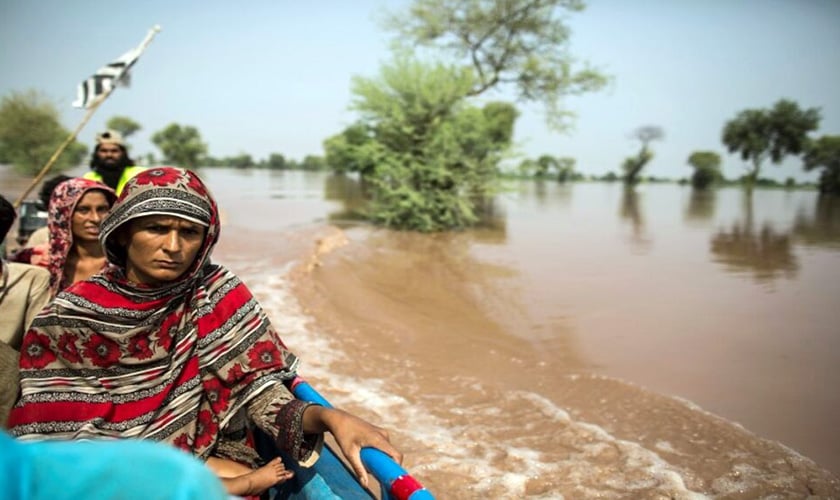
Its manifesto also promised to address technical barriers preventing access to international climate financing; utilise the Loss and Damage Fund to respond to climate-related disasters such as the 2022 floods; maintain and expand international partnerships to secure support for Pakistan’s climate agenda; and strengthen participation in global initiatives aimed at managing climate risks through insurance and preventive strategies.
The PPP pledged to support the United Nations’ call for recognising early warning systems as a fundamental right and to leverage multilateral assistance to reduce climate-related risks at all levels.
The Pakistan Tehreek-i-Insaf, which currently governs Khyber Pakhtunkhwa, promised to introduce a carbon tax on fossil fuels; promote renewable energy through small dams and run-of-the-river hydropower projects; and expand solar and wind power projects in Balochistan and Sindh.
Its manifesto also proposed higher taxes on highly polluting industries; expansion of the Billion Tree Tsunami project; measures to address the Indus Delta crisis; integration of the Power and Petroleum Divisions under the Ministry of Energy; and a unified framework for pricing energy alternatives.
Other commitments included electrification of public transport and two-wheelers; solarisation of tube wells; promotion of solar geysers to reduce natural gas consumption; transparent carbon emissions reporting by industries; support for recycling and waste-to-energy technologies; and enabling industries to participate in carbon credit markets.
Referring to the ongoing elections in Gilgit-Baltistan, Naeem says that the PML-N’s manifesto appears more detailed than those of the PPP and the PTI in terms of climate-related commitments.
“They are focusing on renewable energy,” she says.
There’s another dimension to the issue.
Despite Pakistan being among the countries most vulnerable to climate impacts, Naeem says climate change rarely influences voting behaviour in the same way as inflation, employment, energy prices and governance and security concerns.
“As a result, political incentive to prioritise climate action remains limited,” she says.
She adds that climate discussions at the national level often focus on international climate diplomacy and financing. Community-level concerns such as urban flooding, heatwaves, water scarcity, crop losses, air pollution and climate-induced displacement receive comparatively less attention.
Senator Sherry Rehman, the PPP vice president, recently said that addressing climate change was a collective responsibility requiring active participation from citizens. She urged people to contribute through small but meaningful changes in their daily lives.
Similarly, Federal Minister for Law and Justice Azam Nazeer Tarar recently described the challenge as a “lack of will” to tackle the climate crisis. “We have been hearing that plastic bags are banned but we still see them everywhere,” he remarked while discussing the implementation gap in environmental policies.
Although climate-related challenges faced by local communities increasingly feature in political discourse, observers believe that political priorities still do not reflect the urgency with which ordinary people are experiencing climate impacts.
There also remains a significant gap between policy commitments and implementation, says Naeem. Urging political parties to institutionalise climate budgeting through annual development plans, she suggests preparing district-level adaptation strategies, establishing climate accountability frameworks and publishing annual reports on climate outcomes.
“The next generation of politicians in Pakistan must be judged not by promises made after disasters strike but by actions taken before they impact communities.”
The writer is a staff reporter. He can be reached at [email protected]. His X handle: @waqargillani.