Print Story
X




K2 Squash takes a decisive step forward as women’s squash finds a powerful new stage
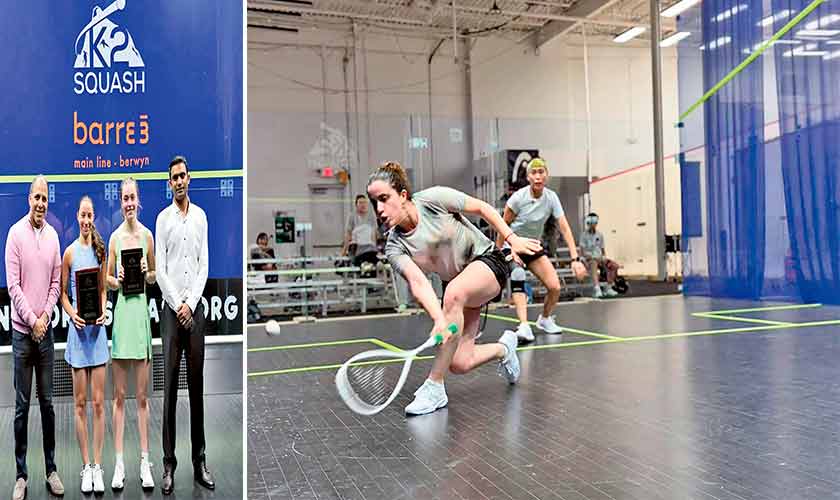
Egypt’s Zeina Zein did more than just lift a trophy at the K2 Squash PSA Women’s Challenger 6K Championship 2026, she underlined why emerging talents from traditional squash strongholds continue to dominate the global narrative. Her composed yet assertive 3-1 victory over America’s Lucie Stefanoni was not merely a final; it was a statement of control, maturity, and tactical clarity.
Zein dictated the tempo from the outset, absorbing pressure when needed and accelerating at decisive moments. Even when Stefanoni threatened to extend the contest, Zein’s response was emphatic, particularly in the fourth game where she closed out the match with authority. The scoreline reflected more than just points, it revealed a player increasingly comfortable with expectation and capable of delivering under it.
Her win, however, carries broader implications. It reinforces Egypt’s continued pipeline of elite squash players while also highlighting the widening competitive gap that other regions must urgently address. For Zein, this title is a stepping stone; for the sport, it is yet another reminder of where excellence is being cultivated.
Beyond the final, the tournament itself offered a compelling mix of dominance and drama, underscoring the depth of talent present in the women’s game. With players representing 13 countries, the event achieved what many emerging tournaments strive for, genuine international relevance.
The opening rounds were particularly telling. While several matches were one-sided, reflecting disparities in experience and ranking, others delivered gripping contests that showcased resilience and tactical nuance. The five-game battle between Korea’s Jihyun Lee and Ecuador’s Maria Moya stood out as a defining encounter, embodying the unpredictability and endurance that make squash such a demanding sport.
Equally noteworthy were the clinical performances by players like Allie Stoddard and Elisabeth Ross, who demonstrated how precision and consistency can dismantle opponents efficiently. Meanwhile, a handful of surprising results hinted at the shifting dynamics within the lower tiers of the PSA circuit, where emerging players are beginning to challenge established names.
Taken together, the matches painted a picture of a sport in transition, where dominance still exists, but the margins are narrowing, and the hunger to break through is palpable.
What sets this tournament apart is not just the quality of play, but its significance as K2 Squash’s first-ever women’s international championship. In a sporting landscape where women’s events often struggle for equal visibility and investment, this initiative deserves recognition, but also scrutiny.
Yes, the $6,000 prize purse and 24-player draw represent a modest start. But they also raise an important question: is this enough to sustain momentum? For women’s squash to truly flourish, such events must evolve beyond symbolic milestones into consistent, well-funded platforms that attract top-tier talent regularly.
Still, the importance of this inaugural edition cannot be overstated. It provided a professional stage, fostered international competition, and, perhaps most importantly, signaled intent. The presence of a diverse field, including rising juniors and seasoned professionals, created a competitive ecosystem that is essential for growth.
If anything, this maiden event should be seen as a foundation rather than a culmination. Its success must now translate into continuity, expansion, and greater ambition.
K2 Squash is positioning itself as more than just a venue, it is attempting to become a catalyst for the sport’s development, particularly in regions where squash is still carving out a stronger identity. Hosting back-to-back international tournaments, including this landmark women’s event, reflects a strategic vision that aligns with the broader goals of globalizing squash.
However, ambition must be matched with consistency. The real test for K2 Squash lies not in hosting a successful tournament, but in sustaining and scaling it. Increasing prize money, attracting higher-ranked players, and ensuring regular PSA events will determine whether this initiative becomes a cornerstone of the international calendar or remains a one-off success.
There is also a larger narrative at play. By investing in women’s squash, K2 is contributing to a gradual but necessary shift in the sport’s ecosystem, one that prioritizes inclusivity and equal opportunity. Yet, this effort must be part of a long-term commitment rather than a short-term highlight. In many ways, this championship represents both an achievement and a challenge. It proves what is possible, but also sets expectations for what must come next.
Zeina Zein’s victory may headline the story, but the real significance of the K2 Squash PSA Women’s Challenger 6K Championship lies in its broader impact. It showcased emerging talent, delivered competitive matches, and, most importantly, marked a step forward for women’s squash on an international stage.
The question now is not whether such events can succeed, they clearly can. The question is whether stakeholders like K2 Squash are prepared to build on this momentum and transform promise into permanence. Because in sport, as in progress, one successful chapter is never enough.