Print Story
X

| T |
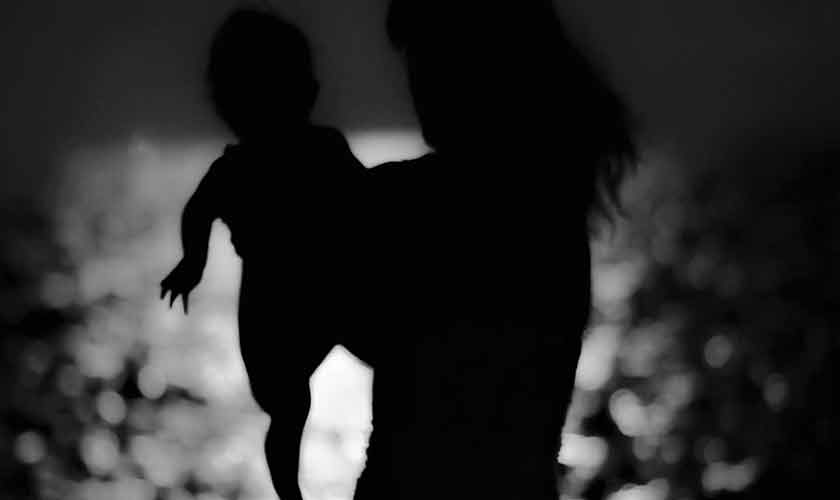
he murder of three children in Ichhra, Lahore, on April 26, allegedly at the hands of their mother, has sent shockwaves across the country. It is a crime that defies easy comprehension, challenging our most deeply held assumptions about family, the sanctity of motherhood and domestic safety.
Beneath the first layer of shock and outrage lies a complex web of social pressures, investigative shortcomings and legal ambiguities that demand urgent scrutiny. While investigation remains in flux, the shifting narratives and conflicting police statements have transformed this tragedy into a grim litmus test for the criminal justice system.
On the morning of the incident, the residents of Ichhra woke up to a nightmare. Three young siblings were found brutally murdered at their home. The nature of the crime — suggesting deliberation rather than impulse—triggered a high-level investigation.
Suspicion soon centred on the mother. She was taken into custody after investigators noted inconsistencies in her statements. In a society where motherhood is culturally sanctified, the allegations have triggered a mix of emotional fury and profound disbelief.
One of the most troubling aspects of the case is the absence of a coherent motive. Investigators have floated three distinct theories. The police first suggested that the suspect intended to leave her husband for another man and saw her children as an obstacle to a new life. A second narrative suggested severe psychological stress stemming from marital conflict, including a suggestion that her husband had questioned the children’s paternity. A third scenario explored financial and digital links to a suspected accomplice, suggesting that the crime may have been premeditated and collaborative.
The co-existence of such disparate theories underscores a critical weakness. While identification of motive is not always a legal requirement for a homicide conviction, in cases built on circumstantial evidence, a fractured narrative can be a blessing for the defence.
Waheed Ashraf, a criminal law practitioner at the Lahore High Court, warns that the evidence made public so far — call records, CCTV footage and an alleged confession — has significant limitations.
In a society where motherhood is culturally sanctified, the allegations have triggered a volatile mix of emotional fury and profound disbelief.
“Confessions are notoriously problematic in Pakistan’s legal system,” he says. “Courts require them to be voluntary and corroborated. Without independent forensic reports, a confession alone rarely sustains a conviction.”
Ashraf notes that while digital records can establish contact, they do not necessarily prove intent. The “backbone” of the prosecution case, he says, remains the pending forensic evidence. A delay or mishandling at this stage could irreparably weaken the case.
| T |
he Ichhra case has once again exposed the systemic fragility of Pakistan’s investigative framework. Rao Khalid, an advocate of the Supreme Court of Pakistan, says that there is a dangerous over-reliance on expedient investigations rather than scientific methods.
Reports of potential tampering and delayed forensic processing highlight a lack of standardised protocols.
Khalid suggests that the investigation may have prematurely narrowed its focus, failing to fully explore the involvement of potential accomplices.
When investigators present multiple, conflicting motives, it creates confusion and opens the door for the defence to challenge the prosecution’s credibility, he adds.
Beyond the courtroom, the tragedy raises uncomfortable questions about the state of mental health in Pakistan. Dr Ejaz Warraich, a psychiatrist, points to a vacuum in support systems for women facing domestic abuse or extreme psychological distress.
“Social stigma discourages seeking assistance, and the pressures of ‘honour’ and family structure can create an environment where individuals feel trapped,” Dr Warraich notes. He also highlights the absence of proactive child protection mechanisms that could intervene in high-risk households before a tragedy strikes.
At the time of filing this report, the suspect was in police custody under physical remand.
Ahsan Zia is a print and broadcast journalist