Print Story
X




Global attention shifts to Pakistan as it plays the role of a mediator between the East and the West
| M |
uch has already been said and written about the recent US-Israel war against Iran and the ongoing conflict. The important question here is what will happen after this. What direction will the regional situation and the international politics of the Middle East take? What lessons can be learnt from this ongoing episode? And how can the people and governments of these countries work together to ensure peace and stability?
Allama Iqbal once said:
“Tehran ho gar aalam-i-mashriq ka Geneva
Shayed kurra-i-arz ki taqdeer badal jaye“
(If Tehran becomes the Geneva of the eastern world, perhaps, the destiny of the entire planet will change.)
What this means is that Tehran could become the Geneva of the Eastern world. This was Iqbal’s dream. He wanted to see a city in the East to serve as a hub for peace, diplomacy and global cooperation.
What is it that makes Geneva so special? What did Geneva do to achieve such a high standing in the world? Did Geneva build the world’s most powerful army? No. Did it create NATO? No. So why is Geneva so famous and influential? The answer is simple.
Long before the creation of the League of Nations and the United Nations, Geneva was a major centre for peace. Many important conferences were held there. International laws were debated and shaped there. The people of Geneva desired a rules-based international order. Numerous international organisations were born there. Diplomatic efforts for global peace began in Geneva. This is why Geneva became a symbol for diplomacy.
For example, how did the Red Cross movement begin? From the era of the Enlightenment onwards, some people were opposed to the idea that war should be fought with complete brutality. But the first real effort to act upon these objections came in the 1860s.
This effort emerged with the founding of the Red Cross movement. Henry Dunant, who was deeply moved by the human suffering he witnessed at the Battle of Solferino in 1859, was at the forefront of this mission. In 1863, he assembled a committee of Swiss humanitarian figures that later became the International Committee of the Red Cross.
The ICRC encouraged other countries to establish their own national Red Cross societies. These groups provided relief to the wounded on the battlefield. The ICRC also convened a diplomatic conference in 1864 that resulted in the adoption of the first Geneva Convention.
As mentioned in the Encyclopedia Britannica, the 1864 convention was ratified within three years by all the major European powers and several other states. It was later amended and expanded through the Second Geneva Convention in 1906. The Hague Conventions of 1899 and 1907 extended these provisions to naval warfare. The Third Geneva Convention of 1929, which concerned the treatment of prisoners of war, required that warring parties treat prisoners of war humanely, provide information about them and allow representatives of neutral states to officially inspect prison camps.
Long before the creation of the League of Nations and the United Nations, Geneva was a major centre for peace. Many important conferences were held there. International laws were debated and shaped there.
Because some warring parties had violated the principles of the previous conventions during the World War II, an International Red Cross conference held in Stockholm in 1948 further expanded and codified the existing regulations. This conference developed four major conventions, which were adopted in Geneva on August 12, 1949:
(1) The Convention for the Amelioration of the Condition of the Wounded and Sick in Armed Forces in the Field,
(2) The Convention for the Amelioration of the Condition of Wounded, Sick and Shipwrecked Members of Armed Forces at Sea,
(3) The Convention relative to the Treatment of Prisoners of War, and
(4) The Convention relative to the Protection of Civilian Persons in Time of War.
An important point here is the role of the ICRC. The ICRC helped draft these conventions. It also persuaded governments and military leadership to accept these rules.
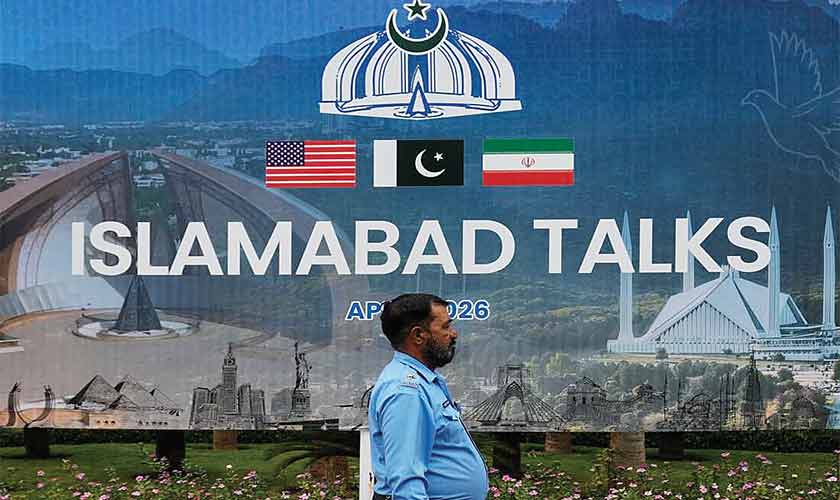
Here is something encouraging: Islamabad, has started taking important steps in the same direction. Islamabad has hosted high-level peace talks between the United States and Iran. The world has been watching our capital become an important hub for dialogue.
Our leaders and diplomats have worked tirelessly for this purpose. After 47 years, they have brought two opposing sides to the same table. This is no small achievement. In fact, many countries have tried but failed to achieve such progress. Islamabad is gradually but surely moving towards becoming the Geneva of the East. It is our hope that Islamabad and Tehran become twin cities for the promotion of global peace.
Pakistan has proven itself as a peacemaker. It helped stop a war, and it is now taking important steps to make Islamabad a global centre for diplomacy. This is a moment of pride for all of us. We must not stop here. We must continue our efforts for peace. May Pakistan always remain a beacon of global peace.
Dr M Azam has a PhD in politics and international relations and is currently an assistant professor in the Department of Political Science at the University of Sargodha.
Dr Muhammad Abrar Zahoor heads the History Department at University of Sargodha. He has worked as a research fellow at Royal Holloway College, University of London. He can be reached at [email protected] His X handle: @AbrarZahoor1