Print Story
X




A conversation with the writer, Dur e Aziz Amna
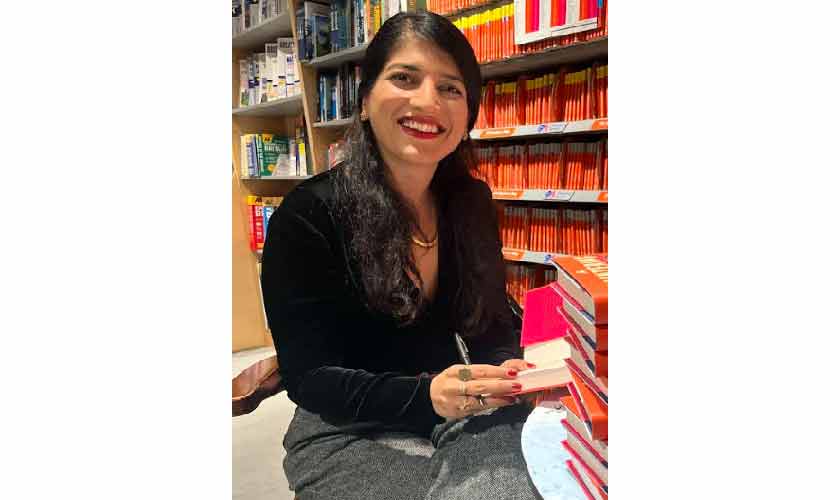
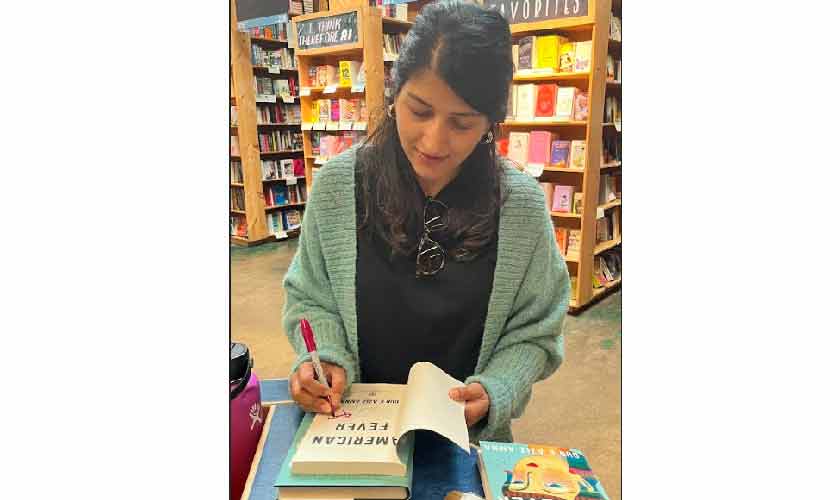
Dur e Aziz Amna is a Pakistani writer based in the US. She first emerged as a promising Pakistani voice with her debut novel, American Fever, a story about finding identity and selfhood as a young adult. Her second novel, A Splintering (2025), won the 2026 Edward Stanford Travel Writing Award and was recently named a finalist for the 2026 Nota Bene Prize.
Amna does not write easy-to-admire women. Her women want more: more freedom, more money, more dignity; more life than is handed to them. In a literary moment still full of tidy moral lessons, that feels radical. Like American Fever, her recent novel, A Splintering, is about escape. This time the journey is not across borders but through the fractures within home. Set between a fictional town in central Punjab and Rawalpindi, the novel follows a woman trying to rise beyond the life she was born into, only to discover some harsh realities.
In an interview with The News on Sunday, Dur e Aziz Amna speaks about writing women in all their contradictions, the politics of language and belonging, motherhood, the fear of female ambition and why fiction is often the strongest when it refuses easy answers. Excerpts.
The News on Sunday: In both A Splintering and American Fever, patriarchy doesn’t arrive through dramatic acts, but through small acts of control or remarks people make as if they are completely normal. A casual line like “culture and tradition look best on a woman’s body” says so much. How do you notice and write these subtle ways a system sustains itself?
Dur e Aziz Amna: In A Splintering,
there’s a lot of overt misogyny. There is, for example, the brother, who’s
almost a stereotypical villain. The reader gets more colour on him as he moves
to the city. Towards the end, you get a slightly more nuanced version of him,
but for the most part, he’s like that bad dude. I was sort of modelling him
after [villains in real-life] stories that you hear, like Qandeel Baloch’s
brother, who killed her – his sister – a very stereotypical, honour-driven,
very misogynistic, controlling older brother.
But then systems are so obviously huddled up by the consent of so many of us. So there’s that overt misogyny of the brother, but then there are people, including Tara, for what it’s worth, who have also obviously internalised a lot of misogyny. It is apparent in the way she feels about the other women in her life, particularly her sister-in-law, who comes back at the end of the story in a very important way. Then there is Tara’s mother-in-law, who has very specific ideas about what women should do.
The point is to show that this is a system upheld by maybe not every single one of us, but most of us.
TNS: You’ve said that you do not write from an activist point of view or try to create a corrective stereotype of women. That is interesting, because so much fiction and television coming out of Pakistan these days can seem eager to tell audiences exactly what to think. Do you think stories lose something when the writer’s own beliefs become louder than the character’s inner world?
DAA: I would obviously never say that there is no space for activist storytelling. It has a very important part in our lives. It’s just that, in my mind at least, there is this separation [between the two], because I have very strong political beliefs and I try to stand up for them, but a lot of that melts away or compartmentalises when I turn to fiction.
The point of fiction seems to me to be to fully inhabit the worldview of the person you are writing about. Of course, that can depend. [For example], if you’re writing a story with an omniscient narrator who can go in and out and provide commentary on what is happening, that is a separate thing. But in A Splintering, it’s such a close perspective on this character, who is such a specific character. She is not a socialist. She’s not trying to change the world for the better.
She’s a very, very ruthless, ambitious woman who’s just trying to get rich. It was funny because so many of the things she says, I would disagree with. Like, there’s this part where she says she has no desire to propagate her culture or her language to her children.
The point of fully actualising this character on the page is to lose yourself, or to sublimate yourself, into that character. I think with Tara, it was also just very easy to do that because she’s such a forceful character. When she appeared to me, she was already fully formed. I already had this instinct of, okay, on every single thing, this is what she’s going to think.
TNS: Do you think that fiction can do better when it leaves room for contradiction and ambiguity?
DAA: Absolutely. I think it’s funny because I was talking to someone about plays yesterday and how they’re very skeletal. And I thought that was such a great word. And I’m also thinking about how fiction can also be that, where you provide this skeleton, and then there is room for the reader to fill in the gaps.
I also believe that once I’ve written the book, my job is sort of done. Then that book belongs to the reader, to interpret as they want. Because I think that the more, as you said, contradictions there are, the more interpretations there can be for that work.
TNS: Both American Fever and A Splintering are, in different ways, about women who want more from life. In your novels, that desire leads women into choices that can be read as transgressive or morally uncomfortable. Why do you think female desire still has the power to unsettle readers so much?
DAA: You know, it’s so funny, because I just launched my book in New York last night, and there was a question along the same line. It was funny because, since it was in New York, the question was about Muslim female sexuality and how it’s still sort of a taboo, or feels provocative to talk about.
When I was writing the book, everything I wrote in there felt like a natural progression of what Tara would do. I mean, the specific choice that she makes halfway through the book, we can’t really talk about it without giving spoilers, but that was a very specific choice.
I had to grapple with that, like, okay, am I actually going to let her go down this path? So that was a decision I had to make. I pondered on it for a while. There was always this worry that, oh, what if it does become too transgressive?
Alhamdulillah, so far no one has [objected]. It’s a very self-selecting crowd, obviously, that will read serious literature in English in Pakistan. What is actually funny, and I was talking about this last night too, is that when I wrote the book, I was very worried about the Pakistani reception. I’ve actually seen Western readers struggle more with the morality of the book than Pakistanis.
TNS: This is interesting. Tell us more.
DAA: I mean, my running theory is that there’s such a romantic idea of marriage in Western societies, where you marry for love. There’s a specific romantic ideal attached to marriage that exists in Pakistan too, but here we have also, for generations, thought of marriage as a social contract and an obligation.
So I think what people really struggle with is the fact that she’s doing what she’s doing as a married woman.
That's one theory. Generally, I've just found it very interesting that many of the readers who say things like I don't know if I can really… like support what she's doing, have been American or British readers. It just goes to show you that readers surprise you all the time.
TNS: Your women are not written to be neatly admirable or conventionally likeable. To Tara, for example, you’ve given a freedom and rage many women might feel but rarely express. Tell us more about that.
DAA: Tara just felt so… not symbolic, but I say she came to me fully formed. Obviously, any character that comes on the page is sort of an amalgamation of characters, like people that you’ve met throughout your life. No one ever fully makes anything up, even in fiction.
So I feel like Tara represents to me so many women that I’ve known in my life, except that because it’s fiction, I was able to give her a certain kind of freedom and rage that most of those women will not exercise. She makes choices, obviously, that no woman that I know has. But it’s still that rage that I feel simmers inside a lot of women. And it’s allowed to erupt.
TNS: Tara wants to move beyond the life she inherited, and she is not always apologetic about that. In the novel, that becomes even more complicated once she becomes a mother. Do you think female ambition still unsettles people, especially in mothers?
DAA: I don’t know if I am learned enough to solve this big sociological question. But I don’t think this fear of female ambition has boundaries. It manifests in different ways, but it is a problem everywhere in the world. I’m sure a lot of it feels threatening to the people already in power, who primarily happen to be men.
What’s interesting is Tara’s relationship with her husband. In the beginning, she feels like they’re almost partners. It’s obviously an arrangement, but she's slowly starting to get to know him. Then she has kids, and she feels like things have shifted. It becomes very clear who’s waking up at night and who’s doing all the diapers. Things become very segmented.
I think there’s also something about the fact that Tara’s a mother. I almost wonder if people would have given her more leeway if she hadn’t been, because once you become a mother, there’s this further selflessness expected of you, even outside of your children.
One of the things I did want to show is that Tara is kind of a good mother. She’s trying to do the best by her children. She’s trying, sometimes failing, but mostly trying not to pass on this legacy of violence that she grew up with in her household.
TNS: There’s that line in the book: “If you were a mother, a mother was the most you’d ever be.”
DAA: Yeah, exactly. That’s this idea that once you’re a mother, you should be selfless in every aspect.
TNS: You also touch on postpartum depression through Tara’s sister-in-law, something many women experience but few openly discuss, especially in our part of the world.
DAA: Yeah. And it’s crazy because I live in the US, where it’s one of the first things they tell you when you get pregnant. I mean, I was never pregnant in Pakistan, so I don’t know how it is there.
I know first cousins who went through this, and because they were in the village, everyone just thought, jin aaye huye hein, taweez karao, and there was no way to explain it. All of this language is so foreign that people would just say, okay, whatever it is, let’s take her to the peer or something.
The book can’t really correct that. But I did want to bring it up, particularly in that village context. When it happens to Tara’s sister-in-law, and she is immediately blamed by Tara’s mother for being lazy and not moving around, even though it’s so clear to the reader that what she’s going through is just a classic case of PPD.
TNS: An interesting thread in your novels is the way language becomes tied to class and aspiration. We see characters feeling embarrassed to speak in Punjabi in front of wealthier or more polished people. It’s such an accurate observation of how hierarchy enters everyday life in the form of language. What drew you to that dynamic?
DAA: A big difference between the two novels is that there’s almost no Urdu in A Splintering, whereas there’s a good amount of untranslated Urdu in American Fever. Language is something I’ve spent a lot of time thinking about, especially in the very multilingual society we come from. I sometimes envy a mono-gloat who’s never learned or lived around other languages.
In American Fever, there’s a lot of association with the Urdu language; it also stands in for the longing that Hira feels for home. In A Splintering, I didn’t want that at all. I almost set myself a goal not to have Urdu in the novel.
But, for example, in Tara’s situation, there are questions that she is constantly going to be facing when she moves away from the village. She feels like she almost has to wash the accent off her mouth. Here’s a character who says that she doesn’t want to pass on her language. For her, her mother tongue is a source of shame, whereas Urdu and English are aspirational.
I also see this in the US. I very rarely hear Pakistanis or South Asians speaking to their children in their mother tongue, even when they’ve moved only recently. There is this aspiration to move onwards, which can mean giving up [what is seen as] the lesser tongue for the higher one.
TNS: Something I found really interesting in both books is the role of daydreaming and private fantasy. For Tara and Hira, imagination feels like a hidden space of freedom, yet in those dreams, they often imagine themselves as men. What made you want to explore that?
DAA: Yeah. It’s funny because I was speaking about it last night too, and I said I specifically wanted women to talk to me about this. I did that a lot as a kid. Daydreaming is something everyone does, but this thing where you inhabit the male perspective. I remember doing that and not understanding why.
It may be that being a man gives you the freedom to be the looker, to look out and not be worried about how you’re being perceived or objectified. Perhaps also the power of being the person who looks out at the object, which is always the woman.
I’m curious – does that strike you as something that happened to you, too?
TNS: Yes. When I read it in your novels, I recognised it as something I used to do as a child. I think it came from the sense that men had more freedom and more room in the world. Reading about Hira and Tara, I realised that it was not such a strange thing after all.
DAA: There’s also this line in American Fever, where Tara is thinking about her younger days, when her father was always worried that she wanted to be like the heroines in some Bollywood movie. It goes: “I didn’t want to be a heroine, Father. I wanted to be Shah Rukh Khan.”
I mean, anytime you look at those movies, he is the cooler one, the one who can just waltz in and out, who has all the fun lines, who has actual personality.
TNS: You once said fiction can take a national event and make it personal. In your novels, political upheaval, changing media cultures and environmental disasters do not feel distant; they shape ordinary lives and relationships. Is a personal story sometimes the best way to understand history?
DAA: Yeah. I mean, I think that’s where fiction comes in. If you’re interested in the actual history of a place, there are history books for that. My goal was never to educate a reader and say: here is two decades of Pakistani history; this is that happened.
That might happen anyway. For example, some reviews have said they learnt about Benazir Bhutto or that period, which is great, but that was never the goal.
My high school years roughly coincided with the late 2000s, when the repercussions of the War on Terror had really tumbled into the cities. There were bombings in Rawalpindi, Islamabad and other big cities. There was this constant feeling of not wanting to stop at a red signal because you were worried something might go off.
That is why what I wanted to explore in A Splintering was the very prosaic, almost bland ways these things affect ordinary people. Tara is not a decision-maker in any of this. She is a nameless provincial woman with no power over any of it. She thinks she doesn’t need to care, and even says she doesn’t care; she’s just trying to get rich. But of course, all of it affects her. Towards the end, the events unfolding in the country directly impact her decision-making.
TNS: Some of the most memorable figures in your novels are mothers who have both internalised patriarchy and are equally trapped by it. How do you approach writing about such women?
DAA: Hira’s mother is quite benign. She is what we might expect of a good, liberal-minded mother in urban Pakistan. Tara’s mother is different. She has five children, grew up in the village and is shaped by very specific ideas about what women should and shouldn’t do.
At the same time, she is the reason Tara can get ahead in life. In her own flawed way, she is trying to make things happen for Tara. She insists that she keep going to school. I think that is an incredibly generous because women can certainly have the attitude: it was hard for us, why should it be easy for you?
With Tara herself, there’s a scene where she acts with her daughter in a certain way. Her posture towards her sister-in-law also carries this idea that there are not enough seats at the table, so you have to push other women out to get yours. Tara is complicit in that, too.
TNS: Migration, in your work, is never a simple escape. Your characters move, but carry class and gendered expectations with them. Still, in both books, there is the hope that a fresh start might change everything. Do you think this idea remains powerful, especially for women, considering the reality is more complicated?
DAA: Yeah. It makes me think back to the nostalgia we were talking about. There’s this beautiful book by the Daghestani poet Rasul Gamzatov about his homeland, the mountains and how the people there are so different. My father loves it.
So many men I know in Pakistan adore the book. And yet I remember reading it and thinking that the nostalgia in it is so masculine. I don’t know a single woman who wants to go back to the good old days.
Which is curious to me because I’m sure there are women who cherish the old days. But for the most part, most women I know feel that their lives are better now than they were in the village, or when they were raising children, or living with a susral.
It almost feels like, maybe, women are more forward-thinking than men, particularly as they grow older. Men are more prone to nostalgia.
I think this idea of a clean slate is powerful, that if you fully change your life, you will suddenly become a different person, which also, obviously, is not true. I think Tara is unable to see that she is who she is, and she will remain haunted by her village life.
Even if she thinks that she's moved past it, that is still her past. She wants to rub off all the imprints of that place. But I don't think she's successful.
TNS: Your male characters are as nuanced as female ones. They are not simply villains or heroes. At a time when many stories lean towards easy binaries, does it matter to you to write men with the same complexity?
DAA: Yes. Tara’s husband was someone I struggled with a lot. I had to find a way to make him believable. He’s a very passive man, but there are shocking things he allows.
It’s funny; I made my mother read the book, and I was so nervous. I was watching her face the whole time, but she has a great poker face, so I couldn't tell what she was thinking while she was reading it. At the end, my two questions were: will I get in trouble for this? and, is the husband believable? She said he was a very strange man, but that she could believe that a guy like that could exist.
What I really wanted was to give him redemption. I didn’t want him to be so bad that Tara’s actions became justified. I wanted her choices to come from who she is. So I wanted to give him redeeming qualities.
He is, for the most part, a good father: he is present; not a womaniser; and helps out somewhat. A lot of his political positions are honourable. He is a socialist; he believes in the masses. He is still part of that [system]. There are scenes where he is deeply misogynistic towards Tara, too. That feels true not just of Pakistani men, but men in general, people in general: they are complex and complicated.
TNS: You began writing quite young and have spoken before about the writers who shaped you early on. Tell us a little about your own journey to becoming a writer and the voices that influenced you.
DAA: When I was a teenager, I wrote for Us magazine and later for The News. When I went to college, I majored in English and took a lot of creative writing classes. Later, I was lucky to get into a fully funded master’s programme. It gave me three years of living expenses and the time to write. That was when I really worked on American Fever. Before that, I was working during the day and writing in the evenings or on weekends.
One of the first formative things I read was Faiz’s poetry. I’ve heard so many people say this, and I didn’t use to get it when I was younger. There comes a time when people start rereading the old books. I agree. They feel they get more out of that than reading a new book they’ve never read. I did not understood that earlier. I used to think we have such limited time, why would one not want to read something new?
Now I get it. I’m starting to understand why you have to do that, and why it can sometimes be more informative than reading a new book. You can track how much you’ve changed as a person between one reading and the next.
With Faiz, that feels very true to me. I think that’s where I learnt so much about language, the power of language and poetry. People tell me my writing feels lyrical. I have a hard time seeing it myself, but I do wonder if that comes from Faiz, and more generally from reading poetry.
Then, of course, Jane Austen. I remember reading all her books one summer.
On the flip side, I tried rereading The God of Small Things. I had first read it when I was far too young. I didn’t even understand the ending. That’s how young I had been.
Later, someone said to me, “You know, there’s incest at the end?” And I was like, “What are you talking about?”
I tried rereading it, but ten pages in, I thought, this is so sad. I refuse to do this to myself again. I just couldn’t commit to it.
TNS: When readers come to your work now, what do you hope they recognise in it?
DAA: I don’t really write with any kind of noble intention. Maybe that sounds bad, but that’s just not how I think about fiction. With essays or nonfiction, it can be different. I’ve written things that are very political. But I think with fiction, it just feels different. It feels much more about inhabiting the character you’re writing.
What I have been thinking about a lot is how Pakistan, as a nation-state, is still quite young. We often forget that many of our problems come from history. What I’m excited to see more of, and what I was trying to do a little in A Splintering, is stories that are not only character studies. Most of the book is about Tara, and it is a character study, but it is also about the country.
And it is also about these large historical shifts: women entering the workforce in massive numbers, the economic boom of the early 2000s and the real-estate bubble. That is something I really thirst for in our storytelling, especially when I watch our dramas, for instance.
I’m not saying stories need to mention who the prime minister is or become overtly political, but the social and cultural landscape of the country is often absent. I’m sure that will change. Younger writers will [begin to] see a trajectory of where the country started and how it has evolved; the big shifts and trends; the way it affected people and their stories.
The interviewer is a staff member