Print Story
X




Pakistan leads diplomatic efforts to restore dialogue between United States and Iran
| F |
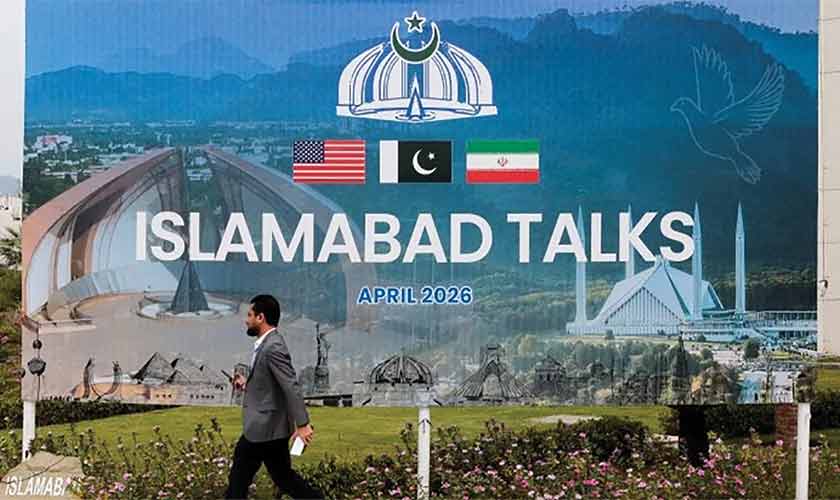
or a few days, Islamabad was in the global spotlight. Diplomats, expectations and quiet speculation seemed to converge around what came to be known as the ‘Islamabad talks.’ There was a sense that something substantial might emerge. When the first round ended without a clear breakthrough, disappointment was palpable. But diplomacy rarely delivers on demand. Pakistan’s role in these talks is not as simple as that of a host or mediator. Islamabad has to keep its footing steady. Major powers such as the United States, China and its Gulf partners are watching closely and, in different ways, shaping the outcomes.
Its balancing act keeps Pakistan’s role relevant as well as limited. It can bring people to the same room - no small achievement - but it cannot make them agree. The latter part was never in its control. Part of the problem lies in how these talks were perceived. There is often an expectation that the first round will produce something substantial: a ceasefire, a signed document, at the very least a strong joint statement. Actually, early rounds are usually quieter than that. They are about testing the waters, figuring out who stands where, and whether there is enough trust to keep talking. By that measure, the Islamabad talks did what first rounds are supposed to do; but that rarely makes headlines.
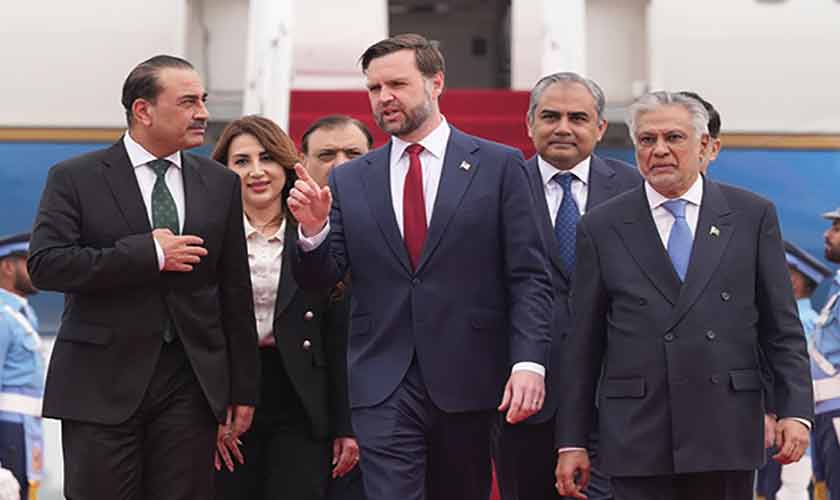
The parties did not walk in with a shared objective. One was looking for security guarantees, the other for political legitimacy. External players had their own strategic calculus.
Beneath all that there is the issue of trust - or the lack thereof. Years of broken agreements and shifting alliances have made everyone cautious. Even when leaders agree to sit across from one another, there is hesitation. No one wants to concede too much, too quickly or without certainty that the other side will follow through. Pakistan can host the conversation, but it cannot manufacture trust between those at the table. Domestic politics do not make things easier either. Leaders do not negotiate in a vacuum; they negotiate with one eye on audiences back home. Any concession can be framed as a sign of weakness. That reality often leads to vague language, slow decisions and participation that is more symbolic than substantive.
The global backdrop added another layer of complexity. These talks came about at a time when major powers were already competing for influence with multiple conflicts around the world competing for attention.
It would be unfair to call the talks a failure. Getting the stakeholders to show up, sit down and talk without escalation was progress. Pakistan managed to provide that space. In doing so, it reinforced its relevance in a complicated diplomatic landscape.
There are limits to what it can do. It must constantly balance relationships and not push any side too far. Its role is, and will likely remain, that of a facilitator rather than a decision-maker.
Treating a round of talks like a one-time event is probably the big mistake. The dialogue did not have to succeed or fail in a single round. That is not how conflicts like these are resolved. They typically unfold slowly, through repeated engagement, small steps, and, eventually, a degree of trust keeps building. Seen that way, the first round in Islamabad was not an endpoint; it was a beginning: quiet, imperfect, but necessary.
There is often an expectation that the first round of talks will produce something concrete: a ceasefire, a signed document, at the very least a strong joint statement. Actually, early rounds are usually quieter than that. They are about testing the waters, figuring out who stands where and whether there is enough trust to keep talking. By that measure, the Islamabad talks did what first rounds are supposed to do; but that rarely makes headlines.
What comes next? There are several possible trajectories. The most realistic projection is that technical committees and backdoor diplomacy will continue. Even a minor agreement can pave the way for further negotiation.
Pakistan can continue to play a crucial role, hosting more meetings and remaining a facilitator cum mediator. However, there is always the threat of things getting stagnant. This can manifest in too many meetings without progress. Such outcomes are likely when political will is lacking or if the external players exercise too much influence.
On the other hand, a favourable alignment among key external players can also create pressure on both sides to reach an agreement. In such cases, Pakistan’s role as a facilitator-mediator will become much more important. Agreements could then lead to greater stability in the region. However, if tensions continue to escalate, or if trust deteriorates, these talks might suffer complete collapse. That would not only frustrate diplomatic efforts but also lead to heightened tensions in the region and reduce Pakistan’s ability to mediate any further.
To avoid this scenario from developing, continuous efforts are needed even if the progress appears to be slow. To move forward and making the talks more meaningful, Pakistan needs to ensure complete neutrality to preserve its credibility as a mediator. It also needs to expand diplomacy, engaging global and regional stakeholders.
Pakistan must remain committed to peace and conflict resolution. It should urge the parties to forgo maximalist demands and build trust through verifiable structured actions.
Support from the international community can help a sustained dialogue. International actors can also provide economic and diplomatic incentives.
Also, in fairness, success needs to be measured differently. Diplomacy does not guarantee immediate transformation. It is about opening pathways where there was none.
Pakistan has played an important role and become relevant to the regional geopolitics. However, future likely has more challenges in store. The peace process will require more than one meeting. Consistency, patience and strategic alignment of key players will be crucial.
In a situation that has been defined in the past by solely mistrust and conflict, even the start of a dialogue can be considered progress. The aim now should be to keep the momentum going so that the dialogue leads to peace accords and commitments eventually leading to stability.
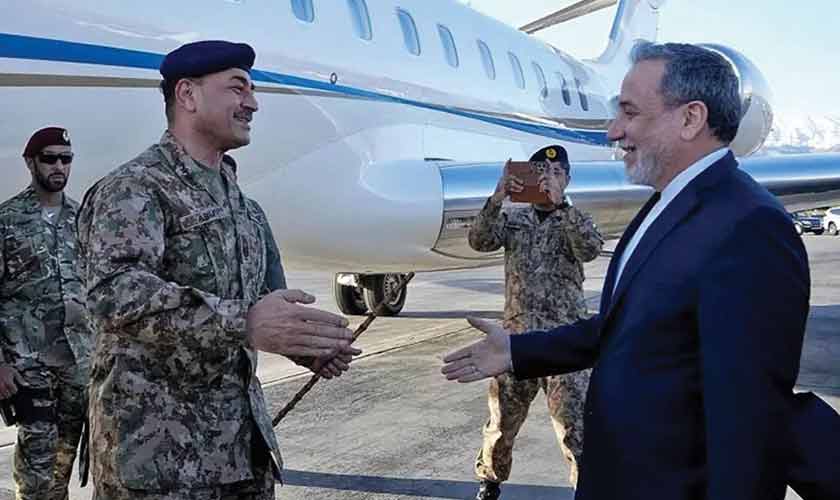
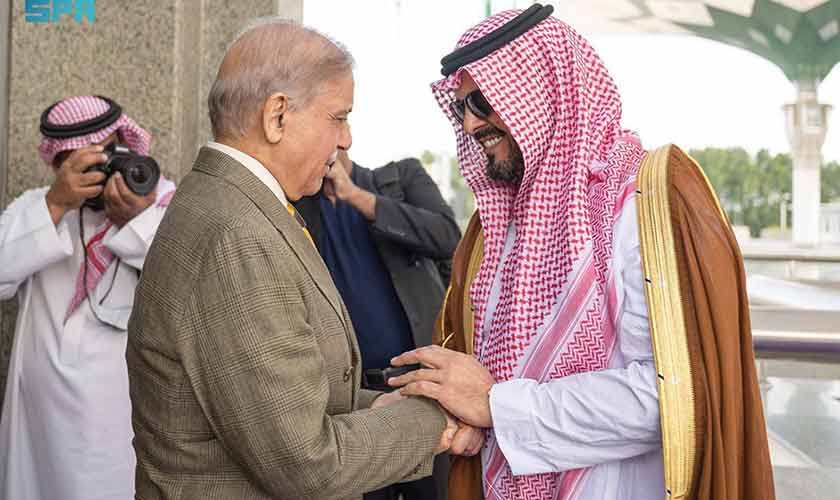
Islamabad talks may not have delivered a tangible result so far. However, a door out of the regional conflict has opened up. Prime Minister Shahbaz Sharif is visiting Saudi Arabia and other regional countries. Field Marshall Syed Asim Munir was in Tehran to deliver a message from the US to the Iranian leadership.
Dr Ejaz Hussain is a foreign policy expert with a PhD from Heidelberg University and post-doc experience in the University of California, Berkeley. He can be reached at [email protected].
Waqas Asmat is a research fellow at the Center for Democracy and Climate Studies, Islamabad. He can be reached at [email protected].
Zunab Zehra is pursuing a bachelor’s degree at the University of the People, USA. She can be reached at [email protected].