Print Story
X




The Gulf economic model is evolving. Oil will remain an important factor but it will no longer stand alone
| T |
he Gulf has faced crises in the past. Each one comes with a new lesson. The current tensions involving Iran are no exception. A regional conflict is having far reaching effect beyond the region, affecting energy and global trade.
The US-Israel war on Iran is not just another geopolitical event but a wakeup call. The disruption of energy supplies, the instability of oil and the strain on regional economies underscore the question: are traditional state-centric approaches adequate to the complexities of the crisis?
There is a growing feeling that they are not.
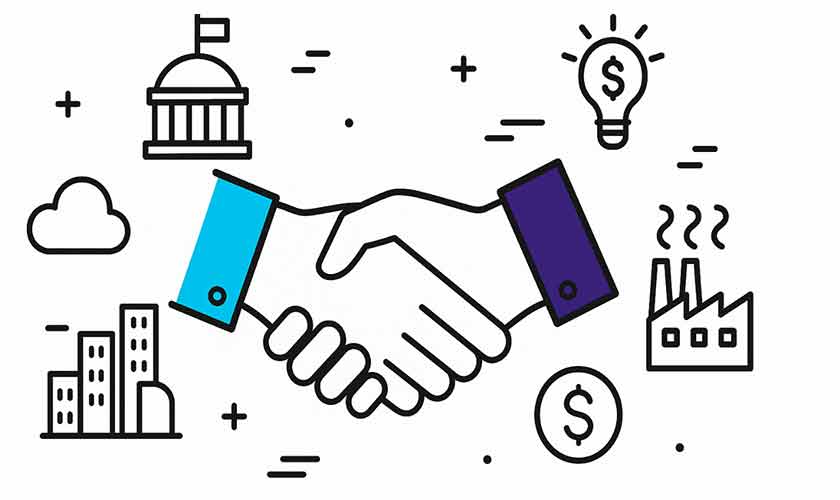
It is in such moments that key concepts like public-private partnership need to be revisited. For most countries in the region, public private partnerships are no longer an option; they are becoming a necessity.
Oil trade
The Gulf’s location at the heart of global energy trade has always been a strength as well as a vulnerability. The Strait of Hormuz is a major conduit for the world’s oil supplies. Any disruption in trade, even a temporary one, can send immediate shockwaves through international markets.
The latest tensions have again reminded us how fragile this system can be. Uncertainty in shipping route and surge in the insurance cost has produced pressure on energy importing countries overnight. The stakes for Gulf countries are even higher. Thus, the issue is not just to ensure security of supplies but also to manage the uncertainty.
Governments, understandably, are focused on immediate stabilisation by ensuring security and taking diplomatic initiatives to address tensions in the Gulf. These actions, though necessary, often struggle to keep pace with the rapidly evolving nature of disruptions in modern times.
The private sector’s agility and unique capabilities make it an effective ally in this context if the right partnerships are in place.
Beyond crisis
management
Public-private partnerships are typically linked to highways, airports and power plants. In the current context, the possibilities for public private partnerships extend much further.
Take the energy infrastructure. The first lesson learned from the current crisis is about the danger of self-reliance on a chokepoint. Exports through alternative routes - whether pipelines or shipping - require massive investments. It is not possible for any government to face this challenge alone.
Private companies working in energy and logistics sectors have enormous capacities. Through structured public-private partnership, they can help accelerate projects that might otherwise take decades to complete.
The same applies to energy diversification. Gulf countries have made enormous progress in renewable energy, but the current context demands more urgency. PPP models can attract international investors to spread financial risk and to bring innovation for faster transitions.
Rebuilding
Conflict not only disrupts markets but also destroys infrastructure and institutions. Even after the guns fall silent and rebuilding begins, aftershocks may continue for years. Public private partnership can be most effective in the reconstruction phase.
In rethinking the relationship between government and private sectors, the Gulf has the opportunity not only to rebuild what has been affected but also to build more flexible, more diverse and more resilient systems.
Instead of strictly rebuilding what existed before, there is an opportunity to build better, more resilient system capable of withstanding future shocks. Partnership with private sector can introduce efficiency, technology and accountability into this process. This reduces the financial pressure on government facing revenue losses and increased spending needs.
The human dimension
Rising prices, displacement and disruptions to basic necessities affect ordinary people first. The private sector role can expand in this situation. Logistic companies can deliver aid in more efficient manner. Financial technology companies can assist in direct transfer of cash to those who need it and healthcare companies can support overstretched public systems.
These partnerships are no substitutes for effective governments but they can augment the efforts. In many cases, they may make the difference between a functioning system and a struggling system.
Trust
For all their promise and potential, PPPs always face certain challenges. These are even more daunting in a region with heightened uncertainty. Investors may be reluctant on account of security issues and regulatory framework may not always be clear or consistent. Moreover, there is always a gap in trust between public institution and private sector.
All these issues have to be addressed. The government must provide a stable and predictable environment. At the same time, the private sector must be ready to make long-term commitment to undertake complex projects.
This is not easy; but it is necessary.
Transformation
The Gulf economic model is evolving. Oil will remain an important factor but it will no longer stand alone. Diversification, adaptability and resilience are becoming critical.
Public private partnerships naturally fit into this evolution. These can can help governments leverage external expertise while retaining strategic direction. This is not about reducing the state’s role but to strengthen it by working alongside capable partners.
The opportunity
Crisis by their very nature expose weaknesses but they also bring opportunity. Tensions in Gulf have underscored the weaknesses in global energy systems and regional economies. They have also demonstrated the speed at which stability can be affected and the degree to which various issues are now interconnected. They have also pointed out potential solutions.
In rethinking the relationship between government and private sectors, the Gulf has the opportunity not only to rebuild what has been affected but also to build systems that are more flexible, more diverse and more resilient.
The question is not whether cooperation is needed - that is already clear. The real question is whether this is an opportunity to rethink what has been done, or whether it will simply be another moment in time that will pass, leaving the vulnerabilities in place. The answer matters way beyond the Gulf.
The writer, an independent consultant on sustainable public private partnership projects, holds a PhD degree on the subject. He can be reached via [email protected]