Print Story
X




What we urgently need is what the League of Nations once attempted: sustained dialogue aimed at understanding how to finally end war
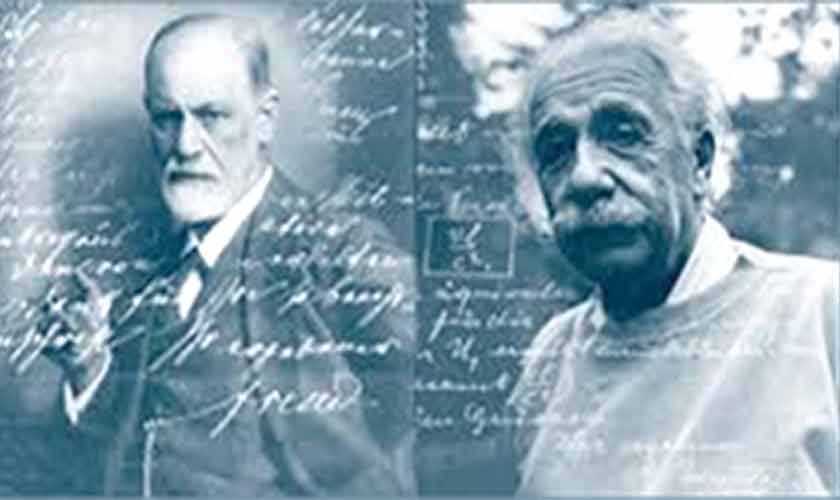
In the early 1930s, as Europe trembled at the rise of fascism and the trauma of World War I still lingered, the League of Nations attempted something extraordinary. Through its International Institute of Intellectual Cooperation, it invited some of the world’s most influential minds to exchange letters on humanity’s great dilemmas. Henri Bergson, Rabindranath Tagore, HG Wells, Romain Rolland, Paul Valéry, Miguel de Unamuno and Salvador de Madariaga were among those asked to reflect on nationalism, democracy, culture and the fragile future of peace.
Such an effort - an international forum convening non‑partisan intellectuals to confront the causes of war - has never been undertaken again. Today, decisions about war are largely shaped by business interests advanced through political agents. Intellectuals are often hired to justify conflict, not to prevent it. In this sense, the League’s experiment remains unique and coveted.
From that exchange, one correspondence stands out. Albert Einstein was invited to choose any interlocutor; he insightfully selected Sigmund Freud. Their letters, published in 1933 under the title, Why War?, are among the most penetrating efforts to understand the roots of human conflict.
Reading them today, amid the war in Ukraine; the devastation in Gaza; the unending violence in Sudan, Yemen, Libya and Lebanon; and the Iran-US/ Israel conflict, their relevance feels undiminished. The questions they asked - why wars happen, what drives nations toward violence and can humanity escape this cycle – still confront us today. Yet we inhabit a world they did not fully foresee: one in which war has become not only a political act, but also a profit-making industry and a mechanism of hegemony.
Einstein and Freud approached the problem from different directions. Together they produced a framework that still illuminates both past and present conflicts.
Einstein believed that war was not inevitable. He located its origins in a defective international system in which states served as sovereign islands, guided by fear, mistrust, the pursuit of power, financial domination and hegemonic ambition. Peace, he argued, required a supranational authority strong enough to enforce collective decisions, something far more robust than the League of Nations, which he already saw as politically paralysed.
His structural analysis helps explain many of the Twentieth Century’s catastrophes. The World War II did not erupt solely because of Hitler’s ambition; it became possible because the international system lacked a mechanism to restrain it. Treaties were violated without consequence, rearmament went on and the League of Nations had no enforcement power. The structure failed and war filled the vacuum.
This pattern has been repeated across modern history. The post‑1945 international system, including the United Nations, was designed to prevent precisely these failures. Yet it carried some of its critical flaws from inception. The wars in the Balkans in the 1990s followed the collapse of institutions faster than new ones could be built. The 2003 invasion of Iraq bypassed international consensus and gravely damaged the credibility of global governance. The ongoing genocide in Gaza has found no meaningful resolution. The war in Ukraine reflects the inability of existing institutions to deter aggression or resolve territorial disputes. The Iran-US/ Israel conflict has unfolded in a region lacking a trusted security framework. International law has been selectively invoked and rarely enforced.
Einstein would immediately recognise this landscape: a system in which escalation was easier than restraint. When states believe that their survival depends on self‑help, stockpiling weapons, pursuing pre‑emptive strategies and beating the drums of war, the power becomes the sole currency. In such conditions, war ceases to be a choice and becomes a perceived necessity.
Freud approached the question from a deeper psychological register. For him, aggression was not simply an instrument of policy but an intrinsic feature of human nature. He called it Thanatos, the death drive. Civilisation restrains this impulse through law, culture and social norms, but never quite abolishes it. When institutions weaken and identities harden, aggression resurfaces with alarming force.
Freud warned that violence reproduces itself. Retaliation satisfies deep instinctual impulses, turning revenge into a moral duty. The punitive peace imposed after the World War I helped sow the seeds of World War II. The cycles of strike and counter‑strike in the Middle East follow the same emotional logic.
Freud explained the emotional engine of war. Aggression, he argued, often arises from fear. Groups that feel existentially threatened tend toward absolutism, interpreting compromise as a sign of vulnerability. Collective trauma shapes national consciousness. The Holocaust, the Iran-Iraq war, colonial histories and generations of displacement continue to influence how societies interpret threat and legitimise violence.
Freud also warned that violence reproduces itself. Retaliation satisfies deep instinctual impulses, turning revenge into a moral duty. The punitive peace imposed after World War I helped sow the seeds of World War II. The cycles of strike and counter‑strike in the Middle East follow the same emotional logic. Societies facing economic hardship, political fragmentation or legitimacy crises often externalise conflict. Leaders discover that war can unify populations, deflect internal discontent and manufacture consent. For Freud, the motive behind war was not only strategic but emotionally rooted in fear, wounded identity and unprocessed trauma.
A century later, which of them offers greater clarity? The uncomfortable answer is that both do. Einstein exposed the machinery of war: alliances, deterrence failures, arms races and the paralysis of international institutions. Freud revealed the emotional fuel: fear, humiliation, rage, identity, and a persistent instinct toward aggression. Unfortunately, both are relevant with additional factors.
There is now a third layer that neither fully anticipated: war as industry and as an instrument of hegemonic control.
Today, war sustains millions of livelihoods. Entire economies are bound to defence production, arms exports, surveillance technologies and private military services. Military budgets underwrite jobs, innovation and regional economies. Conflict generates endless markets for drones, cyber warfare tools, missile systems and data‑driven security platforms. War has become a stable line item in national accounts.
This industrialisation of conflict has altered its logic. Decisions about war and peace are no longer driven solely by security or prestige; they are entangled with contracts, supply chains, shareholder value and corporate profits. Einstein warned that where institutions fail, power prevails. He did not live to see how deeply that power would merge with profit.
War has also become a tool of political hegemony. Powerful states use force or threat of tis use to shape regional orders, secure resources and coerce weaker nations. Proxy wars allow influence without accountability. Arms transfers, sanctions and security guarantees become mechanisms of control. From Vietnam to Afghanistan; from Iraq to today’s proxy confrontations, war has functioned not merely to resolve disputes but to signal dominance. Freud’s psychology of aggression still applies, but aggression today is often manufactured, managed and monetised by institutions that benefit from its continuation.
Technology accelerates every dimension of this dynamic. Einstein feared the destructive potential of modern science. Today, drones, cyber operations and long‑range missiles compress the time for de‑escalation. Social media amplifies fear, outrage and dehumanisation at digital speed. Psychological and structural forces converge faster than ever. Economic incentives for prolonged conflict have never been stronger.
The deeper question, then, is not simply why wars occur, but why humanity repeatedly chooses war despite knowing its costs. The Einstein-Freud correspondence offers layered answers: states pursue security in a dangerous world; leaders seek dominance and legitimacy; societies respond aggressively when threatened; nations fight to defend who they believe they are; historical wounds shape present behaviour; violence becomes morally self‑justifying; and when institutions collapse, force fills the void. To this, we must now add: war persists because it pays and serves those who gain profit from instability rather than from peace.
Einstein and Freud offered no easy prescriptions but they offered something more enduring: a refusal to simplify. Their exchange reminds us that wars emerge from the interaction of structure and psychology; power and fear; history and identity; and now industry and hegemony. Peace, they suggested, required far more than ceasefires and treaties. It demanded strong institutions, psychological literacy, economic systems not dependent on conflict and political cultures capable of imagining security without domination.
Nearly a century later, we still have to answer the question raised in Why War? Until we do, the old and new motives for war will continue to shape our world. What we urgently need is what the League of Nations once attempted: sustained, serious dialogue among independent intellectuals; aimed not at justifying war, but at understanding how to finally end it.
The writer is a principal clinical psychologist in the Republic of Ireland.He can be contacted at [email protected].