Print Story
X

| E |
mpires are often imagined as vast swathes of land shaded on a map, but their true significance reaches far beyond geography. As the sociologist Karen Barkey observes, “Empire denotes differentiation, inequality and hierarchy,” reminding us that imperial power is not merely about expansion but about structuring societies—deciding who rules, who benefits and who is marginalised. Historians have long debated how best to measure the “greatness” of an empire—whether by land area, population, longevity, administrative sophistication, or cultural influence. Each measure reveals a different facet of how empires shaped human history. The historian Fernand Braudel, associated with the Annales School, adds yet another dimension by urging us to look beyond events and rulers to the deeper structures of history—geography, environment and long-term economic patterns. For Braudel, empires were not just political constructs but parts of what he called the longue durée, shaped by enduring forces, such as trade routes, climate and the rhythms of everyday life. In his words, history unfolds on multiple levels. Empires must be understood within the “structures of everyday life” that persist beneath the surface of political change.
By sheer geographic reach, the British Empire stands unrivaled. Beginning in the 16th Century and accelerating through maritime exploration, trade and conquest, Britain built a global network of colonies spanning the Americas, Africa, Asia and Oceania. By the early Twentieth Century, it governed nearly a quarter of the Earth’s land surface and a similarly large share of its population. This vast system was held together not only by military power but by naval dominance, commercial networks and technologies such as the telegraph and steamship, which compressed distances and enabled centralised control. From Braudel’s perspective, such expansion was inseparable from the rise of global capitalism and the integration of world economies, what he described as the emergence of a “world-economy” centred on Europe. This expansion came at immense human cost—through exploitation, economic restructuring and cultural disruption in colonised regions. Eric Hobsbawm aptly described imperialism as “the most spectacular expression of the growing power and ambition of the capitalist world,” emphasising how empire and industrial capitalism worked hand in hand. The British Empire also spread institutions such as parliamentary governance, the English language and global trade systems, leaving legacies that still shape international relations today.
If continuity of land is the measure, the Mongol Empire represents a different kind of imperial achievement. Founded in the early Thirteenth Century by Genghis Khan, it united nomadic tribes and rapidly expanded across Eurasia, stretching from Eastern Europe to East Asia. What made the Mongol Empire remarkable was not only its size but its ability to maintain cohesion across vast, contiguous territories. Its rulers established systems of communication, such as relay stations for messengers, and promoted trade across the Silk Road by ensuring relative security—a period sometimes referred to as the Pax Mongolica. William H McNeill noted that this era saw “an unprecedented intensification of contacts across Eurasia,” enabling the exchange of goods, technologies and ideas; even diseases. From a Braudelian perspective, the Mongol Empire revitalised older trans-continental trade networks and linked regional economies into a broader system, reinforcing the importance of geography and long-distance exchange in shaping historical change. While the Mongols are often remembered for their brutality in conquest, their empire also facilitated cultural transmission on a scale rarely seen before, linking previously distant civilisations into a more interconnected world.
Population offers another lens. By this measure, the Qing dynasty of China stands out. At its height around 1800, it governed roughly a third of the world’s population—an extraordinary demographic concentration. Established by the Manchu rulers in the Seventeenth Century, the Qing dynasty expanded China’s borders significantly and incorporated a wide range of ethnic, linguistic and cultural groups. Governing such diversity required administrative flexibility and innovation. As historian Mark Elliott has argued, the Qing developed a “flexible, multi-ethnic mode of governance,” blending Chinese bureaucratic traditions with Manchu political practices. The state invested heavily in infrastructure, agriculture and population management, helping sustain economic growth and relative stability for long periods. Braudel’s emphasis on agrarian economies and demographic patterns is especially relevant here, as the Qing Empire rested on a vast agricultural base and intricate markets that sustained its enormous population. The scale of the population also posed challenges, contributing to internal pressures that later weakened the dynasty in the face of foreign intervention and domestic unrest.
Longevity tells a quieter but equally compelling story, exemplified by ancient Egypt. Emerging around 3100 BCE and enduring despite interruptions for nearly three millennia, Egyptian civilisation displayed an extraordinary continuity of political authority, religious belief and cultural expression. Centred along the Nile River, its stability was closely tied to predictable agricultural cycles that supported a centralised state ruled by pharaohs regarded as divine figures. Monumental architecture, such as pyramids and temples, symbolised both religious devotion and state power. Toby Wilkinson has described this long duration as “one of the most extraordinary examples of stability in world history,” highlighting how deeply rooted traditions and institutions can sustain a civilisation across vast stretches of time. Braudel would interpret this perpetuity as a classic example of geography shaping history: the Nile’s regular flooding created a stable agricultural foundation that underpinned Egypt’s enduring social and political order. Unlike rapidly expanding empires, Egypt’s strength lay in its ability to preserve a coherent identity and worldview over generations.
Cultural legacy provides yet another measure. Here the Roman Empire holds a unique place. Originating as a republic in the Italian peninsula, Rome expanded to dominate the Mediterranean world and beyond, creating a complex system of governance that integrated diverse peoples through law, citizenship and infrastructure. Its roads, aqueducts and cities were not merely symbols of power but practical tools of administration and integration. Even after the fall of the Western Roman Empire, its eastern counterpart—often called the Byzantine Empire—continued for nearly a thousand years. The enduring influence of Rome can be seen in legal systems, political ideas, architecture and languages derived from Latin. Mary Beard has emphasised that Rome’s importance lies in how it “created frameworks of thought and governance that outlived the empire itself.” Braudel, who wrote extensively on the Mediterranean, viewed the Roman Empire as part of a larger, long-term Mediterranean system shaped by trade, ecology and cultural exchange. In this sense, Rome’s legacy was not just political but deeply embedded in the enduring structures of regional life. The spread of Christianity, which became the empire’s official religion, further amplified its long-term cultural and spiritual impact across continents.
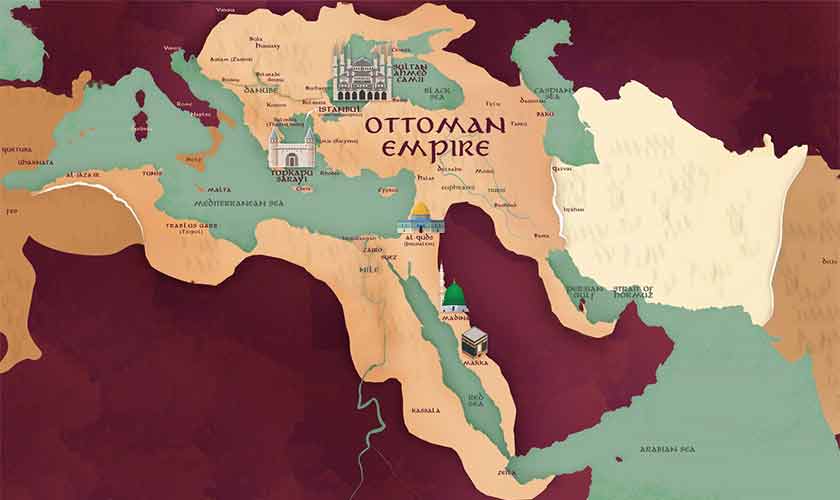
Adaptability, finally, emerges as a crucial factor in the endurance of empires such as the Ottoman Empire. Founded around 1300 and lasting until the early Twentieth Century, it spanned parts of Europe, Asia and Africa, encompassing a wide range of cultures and religions. Rather than enforcing rigid uniformity, Ottoman rulers developed systems that allowed subject communities a degree of autonomy, particularly through institutions like the millet system, which permitted religious minorities to govern their own internal affairs. This approach reflects Barkey’s insight that empires function through negotiation as much as domination. The Ottomans relied on local elites, merchants and administrators to maintain order and facilitate economic activity, creating a dynamic and flexible system of rule. Braudel regarded the Ottoman Empire as a central actor in the Mediterranean world, shaping and being shaped by long-term economic and geographic forces, particularly in its control of key trade routes between Europe and Asia. Their ability to adapt to changing political and technological circumstances contributed to their remarkable longevity.
Taken together, these empires demonstrate that no single measure can fully capture what makes an empire significant. Each represents a different way of organising power: the British Empire’s global reach, the Mongol Empire’s continental unity, the Qing dynasty’s demographic scale, ancient Egypt’s endurance, Rome’s cultural legacy, and the Ottoman Empire’s adaptability. Braudel’s insight encourages us to see all of them not as isolated political entities but as expressions of deeper historical currents—economic systems, environmental constraints and patterns of human interaction that unfold over centuries. As historian John Darwin has argued, empires are “unfinished projects,” constantly evolving in response to internal dynamics and external pressures. Ultimately, the study of empires is not just about comparing their size or strength, but about understanding how human societies have grappled with power, diversity and continuity. These vast political formations, for all their inequalities and contradictions, have profoundly shaped the world we inhabit today, leaving legacies that continue to influence institutions, identities and global connections.
The writer is a professor in the Faculty of Liberal Arts at the Beaconhouse National University, Lahore.