Print Story
X




Lahore reveals a growing divide between what it has been and what it is becoming
| I |
t is said that if you have not seen Lahore, a city famous for its rich history and its Mughal architecture, you have not truly been born. I was born in Lahore but have come to wonder if the city I was familiar with is still there. My childhood memories include travelling on horse carts, watching the sky filled with colourful kites and standing among crowds listening to street performers. The city has been known for its way of life and its distinctive atmosphere.
There is a wealth of books, writings and poetry about Lahore. It is Pakistan’s second-largest city by population. I have often heard Pakistanis living abroad repeat the phrase, Lahore Lahore ae, suggesting that the city has no parallel. Writers have described characters inhabiting streets filled with life, art and architecture. Historical accounts record the many events the city has witnessed, as well as the succession of rulers who sought to control it.
Some historians trace Lahore’s origins back thousands of years, to settlements along the River Ravi. Its architecture and culture reflect the presence of many religions. Their influence remains visible in its forms and practices. From Buddhist to Muslim to Sikh periods, the city has passed through several empires. Today, it faces the pressures of rapid, often unplanned, modernisation.
I spent my early years in the city. Then I had to leave to pursue higher education. Living away now, I have started seeing Lahore differently and have found a new affection for it. Whenever I visit Lahore, I go to visit its old streets, sometimes in the early hours of the day, sometimes late at night. Sometimes I feel that it is losing what once made it stand out from other cities. Lahore is changing, and not entirely in ways that align with the expectations of those who come to experience its culture. The city of myriad stories is disappearing rapidly. For someone like me, that is not a welcome sign.
It seems that Lahore is two cities, one emerging from the other. For one thing, Lahore continues to expand. The limitless growth is one reason for the change, but there is more to it than just that. I was born in a part of Lahore where one could walk across rooftops to the end of the street. There were no barriers between houses or between people. Although it lay outside the Walled City, life felt the same. The streets, pathways, doors and courtyards carried the character of that older way of living. Living close to Shalamar Gardens in the eastern part of the city added to its appeal. In our neighbourhood, older men would gather to play chess, ludo or cards at street corners or under large trees in a central square. Children played other games, hopscotch, hide-and-seek and rope-skipping. There was a culture of the thara, the small raised platform formally outside a home or shop, where people would sit and talk. For a typical Lahori, these spaces were central to everyday interaction. Muharram, Shab-i-Barat and Eid were mostly outdoor events, celebrated in the streets rather than homes.
Over time, however, I have begun to notice the emergence of a different Lahore. This newer city consists of modern housing schemes and colonies, each governed by its own authority, with rows of isolated houses and villas. The architecture often draws on Gothic, Roman and Greek styles. These homes are separated from their neighbours by walls and fences, even electric wires. The streets are quiet. Many people cannot name their neighbours. There is a sense of emptiness and a feeling of distance.
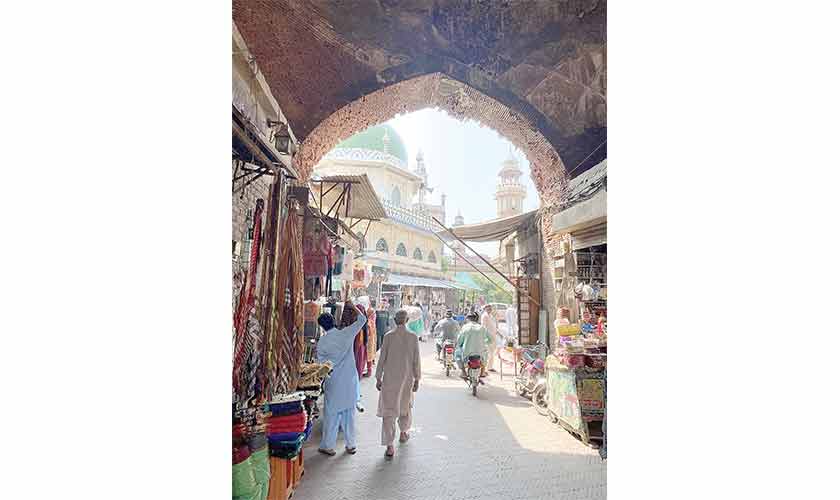
Entrance to the compound of Wazir Khan Mosque in the Walled City of Lahore, showing the narrow passage with shops all around
As I scroll through social media, most of the content about Lahore still centres on the older city—the Lahore that is recognised and remembered. Images of the Walled City, its streets and its crowded life appear alongside traditional music. Terraces and balconies from older architecture feature prominently. Numerous content creators, vloggers, and travel guides present these scenes to attract visitors. Even the food associated with old Lahore is highlighted. Official tourism material follows a similar pattern, focusing on historical sites and architecture to present a city defined by culture and vitality.
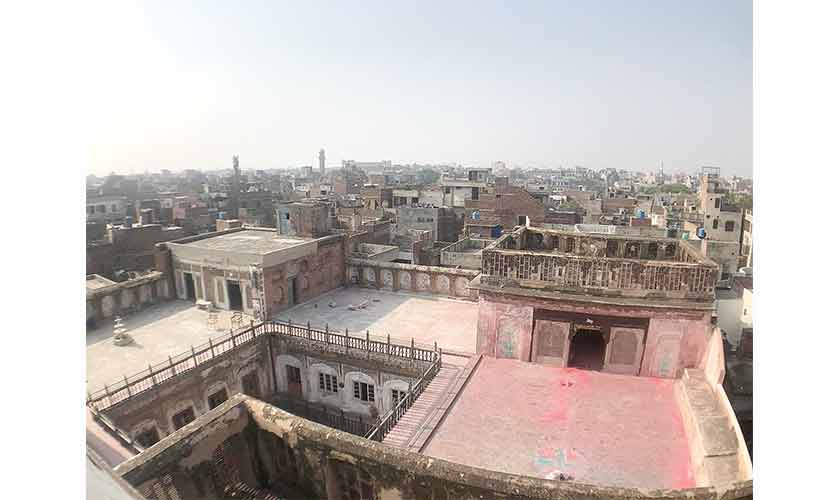
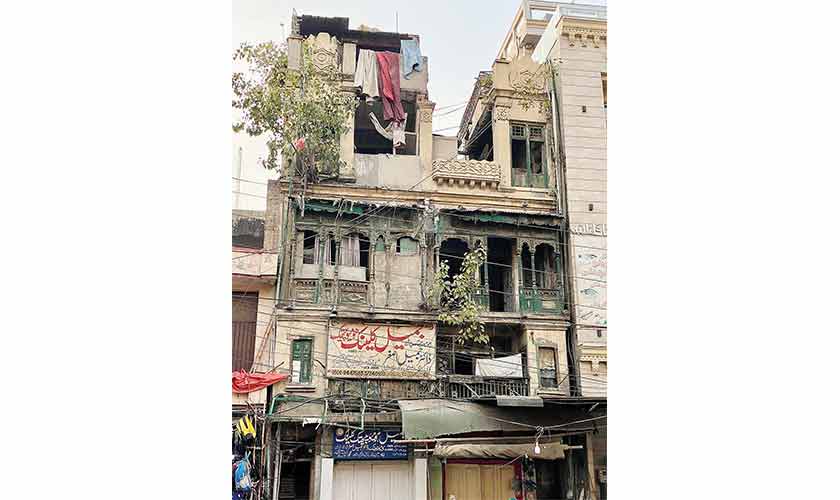
For me, spending time in the old city, surrounded by traditional buildings and bazaars, remains a joy. Yet things are changing in ways that are difficult to ignore. A new Lahore is emerging within and around the old one. Buildings with intricate designs are hard to maintain. Many have deteriorated to the point that, on each visit, I find that some of those have either collapsed or been replaced by structures with little aesthetic value - bare brick, cement and raw paint. The change is gathering pace. The Orange Line train project accelerated the change. I regularly travel by train, and for much of the journey, I see the old and the new side by side, the newer city steadily taking over.
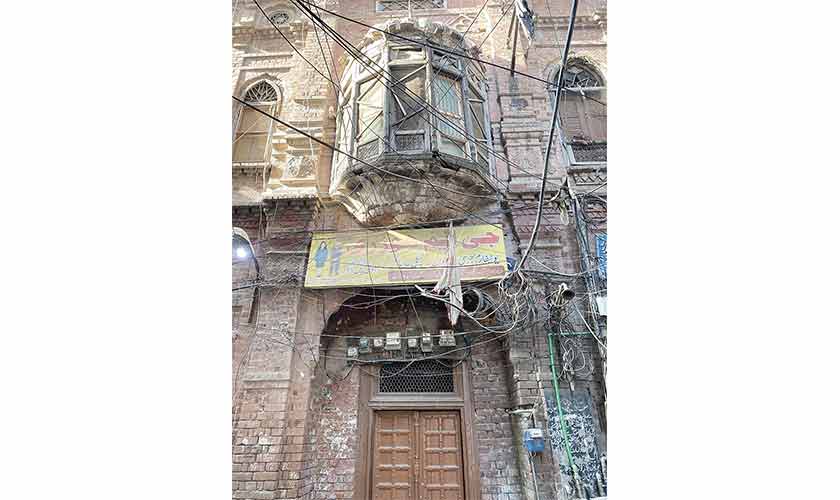
Cities like Paris, London and Amsterdam treat their histories as something to be preserved. There are laws and regulations to ensure that changes are made with care. Even colours permitted on building facades are regulated. Older structures are maintained in a way that allows visitors to experience a sense of continuity. In Lahore, the situation is different. History has come to feel like a burden. The city appears close to losing its connection to it. Regulations are either weak or not enforced. Preservation is not only about paint or signage; it concerns the wider cultural fabric. Power lines hanging in tangled clusters sometimes obscure the very details that should be framed. Although there have been efforts to restore parts of the old city, one often feels as though the damage has already gone too far. Neon signs, panaflex banners and uneven modern construction continue to encroach. There is talk of dividing Lahore administratively to improve governance, but in many ways, the city already feels divided.
A striking feature of the new housing schemes in Lahore is the presence of replicas of Egyptian columns, the Eiffel Tower and some other European landmarks. An artificial history is apparently being constructed even as the city’s own past recedes to failing memory. None of the newly developed areas draws on Lahore’s traditional forms. Children are growing up with little exposure to the city’s cultural and linguistic inheritance. Houses in this newer Lahore follow a modern, Western style that is not always suited to the local climate. Verandas, courtyards, balconies and terraces have largely disappeared. Even parts of the old city are being altered along similar lines. What I recognise as Lahore is fading, even as its images circulate online.
The new Lahore is associated with brands; the old with taste. The new Lahore is marked by light; the old by a certain depth of experience. One is louder; the other rests on people and their ways of living together. Lahore will continue to be remembered as a city of tradition. If seeing Lahore is to feel a sense of arrival, then watching it change in this way carries its own quiet weight. The city does not need to compete with elsewhere; it needs to retain what has long defined it, its human centre rather than its expanding roads.
The writer is a professor at the National University of Sciences and Technology.