Print Story
X




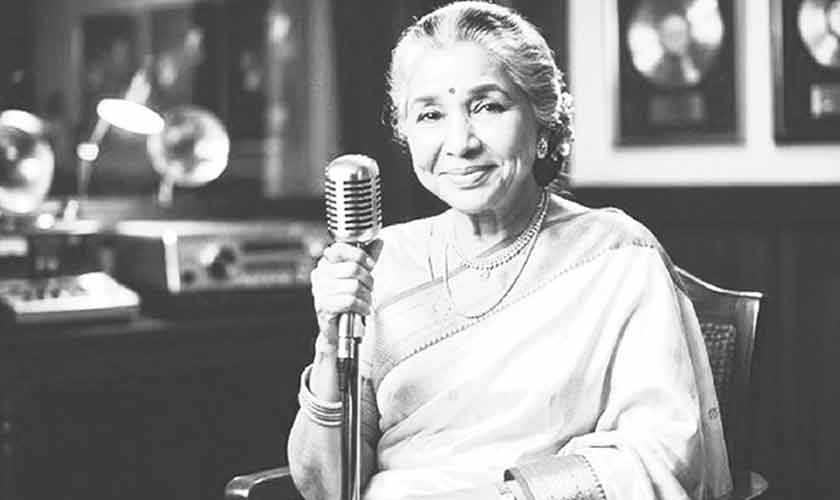
Asha Bhosle reinvented the sound of Indian cinema across generations
| A |
sha Bhosle, who died last week, was one of the defining voices of Indian film music. She shared that rarefied space with her elder sister, Lata Mangeshkar, though the road she travelled was more complicated. To enter the same profession as a sibling already treated as peerless would have overwhelmed many artists. In Asha’s case, it became the pressure that forged her individuality.
The two sisters came to shape the sound of the female playback voice for generations of listeners across South Asia. But they did not sound alike, nor did they occupy the same emotional territory. By temperament or circumstance, they came to represent different possibilities within the same tradition. In the early years, songs Lata declined or could not fit into an impossible recording schedule, often went to Asha. What looked like leftovers became openings. In those spaces, she built herself.
If Lata’s voice suggested purity, poise and devotional grace, Asha’s carried movement, sparkle and surprise. She was perhaps the more flexible singer. When composers wanted mischief, sensuality, wit, speed or a touch of the unexpected, they often turned to her. She could sing rhythm-driven songs, western-inflected arrangements and playful numbers without ever sounding as though she were borrowing from elsewhere. She made experimentation feel native.
That mattered because film music was always the most open of forms. It borrowed freely from jazz, folk, cabaret, ghazal, qawwali, Latin rhythms, and later, pop. It responded quickly to changing cities, changing fashions and changing desires. The artists who flourished in this world were not always the most protected. They were often the ones willing to evolve. Asha did more than evolve; she stayed long enough to make reinvention part of her identity.
There was also her astonishing stamina. Great singers, like athletes, are eventually touched by time. Voices lose some of their sheen, breath shortens and notes become harder to sustain. Even Lata Mangeshkar, in later years, no longer held a note with quite the same effortless radiance that had once defined her. Asha seemed to last longer. She continued to sing, record and perform deep into old age. For audiences who had grown up with her, that continuity was deeply moving.
She was born into a family of musicians, but inheritance does not guarantee equal ease. Much has been written about Lata’s training and early discipline. Asha’s story was more unsettled. She grew up in the shadow of extraordinary success. Her first marriage distanced her from the family; and recognition came slowly. Yet she kept working, kept singing; and waited for the right moment.
What looked like leftovers became openings. In those spaces, she built herself.
When that moment arrived, she was ready for it. OP Nayyar understood the vitality in her voice and used it brilliantly in songs shaped by swagger, rhythm and modernity. Later, RD Burman recognised in her an artist who could match musical innovation with instinctive intelligence. As Hindi film music changed, Asha was not left behind. She was one of the people changing it.
Still, it would be wrong to categorise her with novelty or modern style alone. Whenever she sang in a more classical or traditional mould, she could be extraordinary. There were songs in which even the most loyal admirers of Lata had to acknowledge her command. Her talent was never just technical; it was interpretive. She knew how to enter the emotional life of a song and animate it from within.
That may be why her appeal endured across generations. She could sing flirtation, heartbreak, longing, celebration, melancholy or mischief; and each felt inhabited rather than performed. She did not merely deliver songs; she gave them character.
It is rare enough for a family to produce a major artist. For two sisters to dominate an entire era is rarer still. Their careers were often contrasted, sometimes unfairly, but together they changed the emotional vocabulary of cinema. Through their voices, millions learned how love could sound, how sorrow could sound, how desire, nostalgia and joy could sound.
Their lives, of course, were not free of difficulty. The early years were hard for both. Later, Lata seemed more sheltered from ordinary burdens while Asha appeared more entangled in them. It is tempting to draw a neat line between suffering and creativity, but life is never that tidy. Both women transformed experience into art that outlived them.
Awards, honours and acclaim followed, as they should have. But these alone do not explain Asha Bhosle’s place in memory. She came to represent resilience, adaptability and the freedom to remain curious. If Lata often seemed to belong to an almost sacred idea of playback singing, Asha felt more contemporary: urbane, playful, adventurous and alive to the present.
She will be remembered not as anyone’s counterpart, but as herself: a singular artist whose voice refused to stand still.
The writer is a culture critic based in Lahore.