Print Story
X




Jirga calls for dialogue to resolve outstanding issues between Pakistan and Afghanistan.
| O |
n April 8, China’s foreign ministry said that Pakistan and Afghanistan had agreed during peace talks in Urumqi to explore a comprehensive solution to the conflict that broke out between the two countries last October.
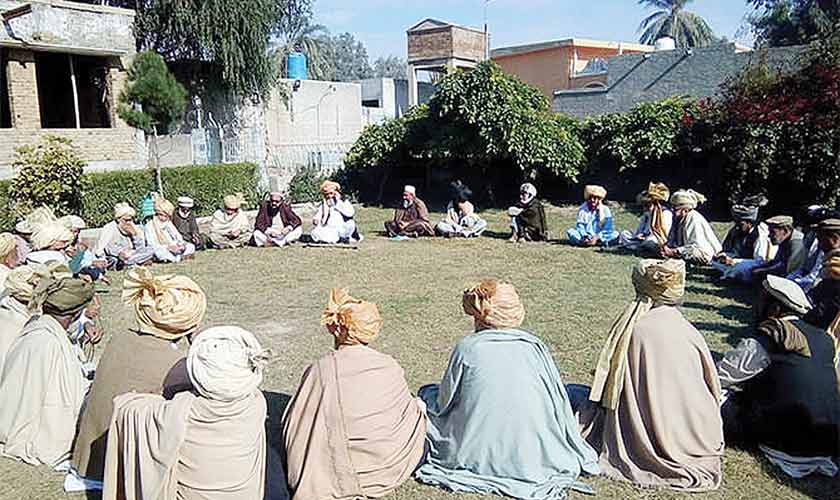
On March 31, another significant effort to promote dialogue and de-escalation was made in Peshawar, where Pak-Afghan Peace Jirga convened at the Area Study Centre of the University of Peshawar.
The gathering brought together more than 50 political leaders, religious scholars, tribal elders, former bureaucrats, ex-governors, political leaders and members of civil society from across erstwhile FATA and Khyber Pakhtunkhwa, reflecting a collective urgency to address the deteriorating situation along the shared border with Afghanistan.
Organised by KP Inspire in collaboration with the National Reform Movement, the jirga took place against the backdrop of sustained cross-border hostilities.
In recent weeks, artillery exchanges, airstrikes and armed clashes have escalated tensions, leading to civilian casualties, displacement and damage to infrastructure. The fragile security environment has further strained already limited diplomatic engagement between the two neighboring countries.
In this context, the jirga sought to provide an alternative platform centred on dialogue, mutual understanding and constructive engagement. At its conclusion, the participants issued a joint declaration calling for an immediate ceasefire, emphasising that it must be implemented in both letter and spirit to effectively reduce tensions and prevent further escalation.
The declaration underscored the necessity for both Pakistan and Afghanistan to ensure that their territories are not used against each other. The participants said that this requires not only political commitment but also robust state control and effective monitoring mechanisms.
A central theme of the jirga was the rejection of war as a means of conflict resolution. Speakers, including former governors Ghulam Ali and Shaukatullah Khan, emphasised that sustainable peace can only be achieved through diplomacy and negotiations. This perspective was reinforced by a broad consensus among the participants that dialogue must be prioritised over confrontation.
Arbab Shahzad Khan, the former chief secretary and president of KP Inspire, described the initiative as both timely and essential. He noted that the deep-rooted cultural, religious and linguistic ties between Pakistan and Afghanistan provide a strong foundation for reconciliation.
“War cannot resolve issues between societies that are so closely connected,” he said. Haji Sohrab Ali Khan, the president of the National Reform Movement, echoed similar sentiments, emphasising the need to counter extremism and promote regional stability through cooperative efforts rather than unilateral actions.
The jirga sought to provide an alternative platform centred on dialogue, mutual understanding and constructive engagement. At its conclusion, the participants issued a joint declaration calling for an immediate ceasefire, emphasising that it must be implemented in both letter and spirit to effectively reduce tensions and prevent further escalation.
Former KP governor Shaukatullah Khan proposed a three-month ceasefire to create space for meaningful negotiations. He also raised concern regarding the treatment of Afghan refugees, calling for a more humane and balanced policy approach.
Pakistan Tehreek-i-Insaf’s Senator Noorul Haq Qadri also addressed the Jirga. He stressed the need for policy revision and a renewed focus on strengthening bilateral relations with Afghanistan. Qadri said outdated approaches to conflict resolution must be reconsidered in light of new realities. He said that both countries should work toward rebuilding trust through consistent engagement and cooperation.
Maulana Sheikh Idrees called upon both governments to extend and reciprocate ceasefire measures. Referring to his recent interaction with Afghan leaders, including meetings with Taliban authorities, he highlighted the importance of direct communication in addressing mutual concerns.
The urgency of these discussions is underscored by recent developments along the border. Over the past five weeks, intense clashes have resulted in casualties and displacement, further complicating the already fragile relationship between the two nations. While Pakistan has raised concerns about militant groups operating from Afghan territory, Afghan authorities have denied these allegations.
A temporary ceasefire during Eid al-Fitr provided a brief respite and hope for sustained peace. The resumption of hostilities soon afterward demonstrated the need for a more durable and structured approach to conflict management.
In this regard, the jirga’s proposal to establish a permanent joint platform for continuous dialogue is significant. The participants said that such a platform could facilitate regular communication, enable timely resolution of disputes and enhance mutual understanding.
Confidence-building measures were also highlighted as essential components of any long-term peace strategy. The jirga’s recommendations, while not binding, are intended to inform policy and encourage a shift toward more constructive engagement. The organisers called upon Afghan authorities to convene a similar forum. They said sustainable peace required simultaneous efforts on both sides of the border.
The jirga reflected the enduring belief among regional stakeholders that dialogue remains possible even in the most challenging circumstances. It also reflected the shared recognition that the cost of continued conflict is too high to ignore.
The jirga reaffirmed a fundamental principle: military confrontation is not a viable solution to complex political and security challenges. Instead, it highlighted the importance of sustained dialogue, diplomatic engagement and mutual respect.
The writer is a freelance journalist and social worker.