Print Story
X




There has been a significant shift in how Pakistanis move money
| W |
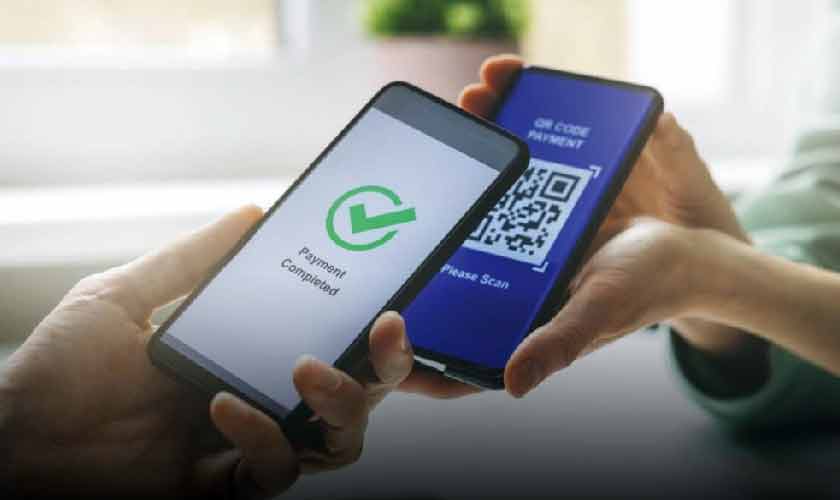
We have quietly crossed a line in digital payments. A few years ago, paying a fruit seller in Liberty Market or a tailor in Anarkali meant fishing notes from a wallet. Today, it often means scanning a QR code taped to the counter. The shop owner does not need a card machine. The customer does not need cash. A small QR printed square now does the job. This is not the future. It is the present and most of us are still talking about it as though it has not arrived yet.
The numbers are larger than most readers realise.
The State Bank of Pakistan reported in March that 92 percent of retail payment transactions in the country are now digital, up from eighty-eight percent a year earlier. Raast, the central bank’s instant payment system, has crossed 50 trillion rupees in cumulative value and reached forty-eight million users. In a single quarter from October to December 2025, Raast alone processed six hundred and forty-five million transactions worth Rs 18.5 trillion; over two million merchants are now on its rails.
By any honest measure, this is the most significant shift in how Pakistanis move money.
What does it mean for ordinary citizens? A great deal.
For most of our history, the formal financial system was something most Pakistanis stood outside of. A bank account meant queues, paperwork, a minimum balance, and a polite distance that small earners never managed to close. The smartphone changed the geography. A mother running a stitching business in Faisalabad can now receive payments, save digitally and quietly build a transaction history without ever stepping into a branch. That last point matters more than people understand. A digital trail is a credit history in waiting.
This is where small and medium enterprises become the real story. Pakistani SMEs employ most of our urban workforce and produce most of our non-agricultural output; yet, they have always struggled to borrow. Banks ask for collateral the corner sweet shop cannot offer. Documented sales rarely exist. Without records, there is no risk score; without a score, there is no loan.
Digital payments quietly fix this. When transactions flow through Raast or a wallet, the data exists. Lenders, fintech firms and microfinance banks can read it. Credit can finally follow performance instead of property.
International experience shows how powerful this becomes once it scales. Kenya’s M-Pesa drew millions of unbanked households into the formal economy and is now taught as a case study in development economics. India, our closest comparator, processed 22.64 billion UPI transactions in March 2026 alone, with total value reaching Rs 29.53 billion, a system the International Monetary Fund has recognised as the world’s largest real-time payments platform. Pakistan is not at that scale, but the curve is the same shape and the lessons travel. Cheap, instant, interoperable payments rewire small business behaviour. Tax bases widen. Cash hoards shrink. Productivity rises.
Artificial intelligence is the next layer and it will arrive whether we are ready or not. Banks abroad already use machine learning to flag suspicious transactions in milliseconds, to score borrowers using non-traditional data and to spot fraud patterns no auditor could catch by eye. For Pakistan, the application is obvious. The FBR, anti-money-laundering units, the Auditor General’s office and even public sector financial management can use these tools to plug leakages that cost the exchequer billions each year.
The bottleneck is not technology. It is talent.
Our universities still train accountants and auditors in a 1990s vocabulary. The graduates who will be in demand five years from now will need data analytics, fraud modelling and digital risk sitting on the same CV as their financial reporting skills. Curriculum reform cannot wait.
Blockchain belongs in a more measured paragraph. It is not a magic word. Most use cases that excited speculators have not delivered. But the technology does one thing very well. It produces records that are difficult to alter quietly. That suits land titles, public procurement, supply chain documentation and contract registries, exactly the areas where Pakistan loses time, money and public trust to disputes and tampering. The UAE and Singapore have shown the way with focused pilots. Pakistan does not need a blockchain ministry. It needs two or three serious pilots in domains where forgery has long been a national sport.
None of this works without facing the awkward part.
Over 85 percent of the country’s transactions are still conducted in cash, costing Pakistan trillions of rupees each year in lost taxes, cash-handling costs and idle liquidity. Many small merchants prefer cash precisely because formal records bring tax visibility they would rather avoid. Rural internet coverage remains patchy. Cyber fraud is rising in step with adoption and our consumer protection framework has not kept pace. Trust is the currency that builds digital currencies and trust is built only by safe, recoverable, well-policed systems. The SBP’s Rs 3.5 billion subsidy programme to nudge merchant adoption is a sensible step, but pricing alone will not solve a trust problem.
What does Pakistan need to do?
Three things. First, complete digitising government-to-citizen payments—pensions, BISP, salaries—through Raast on schedule, because every transaction the state moves digitally normalises the rails for the private sector. Second, treat consumer protection and cyber security as core financial infrastructure rather than an afterthought. Third, invest in people. Train the accountants, auditors, regulators and bankers who will run the economy of 2030, not the one that existed in 2010.
The country is past the inflection point. The question is no longer whether Pakistan will have a digital economy. It already does. The question is who will benefit from it, how broadly and how safely. Get that right and we will look back at this decade as the one in which financial inclusion in Pakistan finally stopped being a slogan. Get it wrong and we will have built faster payment rails for a small share of the country while leaving the majority on a slow lane that runs parallel to it.
The writer is a chartered accountant and a business analyst.