Print Story
X




Pragmatic posturing Pakistan has been attempting a balancing act since the war began. Various parties have now acknowledged its efforts
| P |
akistan finds itself at the centre of a rapidly evolving crisis in the Gulf region, not only by virtue of its geography—which happens to place it next to a war zone—but also its profile as a mediator in the US-Israeli war on Iran. The former points to a strategic position that has propelled it to the centre stage in a rapidly globalising conflict; the latter points to a crucial diplomatic intervention on the night of April 7-8, when a potentially deadly attack from the US on Iran seemed imminent.
So, what are Pakistan’s stakes in this conflict? More importantly, what makes Pakistan a relevant actor in this conflict?
To begin with, there is the question of energy dependence. Pakistan imports 70-80 percent of its oil from Saudi Arabia, the United Arab Emirates and Kuwait. Qatar remains a long-term supplier of LNG (liquified natural gas) for Pakistan. At the start of the US-Israeli attack on Iran, various official statements grimly described Pakistan’s precarious energy situation. Government officials issued statements concerning Pakistan’s limited energy reserves and the urgency for adoption of austerity measures. Pakistan was certainly not an outlier in terms of states suffering energy precarity as a direct consequence of a third Gulf War. But it had to adapt to a rapidly deteriorating situation.
The government took remedial steps, including switching to online education and reduced hours for commercial entities to bring down expenditure on petroleum products.
There is another domestic side to Pakistan’s anxieties with the Gulf War. The country is home to a significant segment of the Shia population. Around 15-20 percent of Pakistan’s population belongs to the Shia sect, roughly amounting to 40 million in numbers. A regime change or collapse of the Iranian state will most likely arouse an unimaginable level of anger among the Shia community. In the early days of war, there were reports about Shia sit-ins in Gilgit-Baltistan. Angry protests took place outside the US consulates in Lahore and Karachi, which cost more than a dozen lives.
With its grim history of sectarian tensions, Pakistan cannot afford a deepening of sectarian cleavage in the society.
Since the start of this war, Pakistan’s policy has been a textbook, realism-inspired balancing act. On one end, there is Pakistan’s long-term ally, Saudi Arabia, which has been at the receiving end of military strikes from Iran. The latter considers it a co-conspirator with the US as its leadership, infrastructure and people get bombed on a daily basis.
In September 2025, a mutual defence treaty was signed between Pakistan and Saudi Arabia under the collective security assumptions. Since the signing of this agreement, there has been speculation about the extent of security obligations that Pakistan carries towards the Saudi kingdom. Also, is Pakistan’s obligation confined to conventional military capability? Does it include nuclear deterrence?
Pakistan initially sent mixed signals about its security umbrella for Saudi Arabia. Since the Iranian attacks on Gulf states, including Saudi Arabia, there has been increasing speculation about Pakistan’s potential intervention as a security provider.
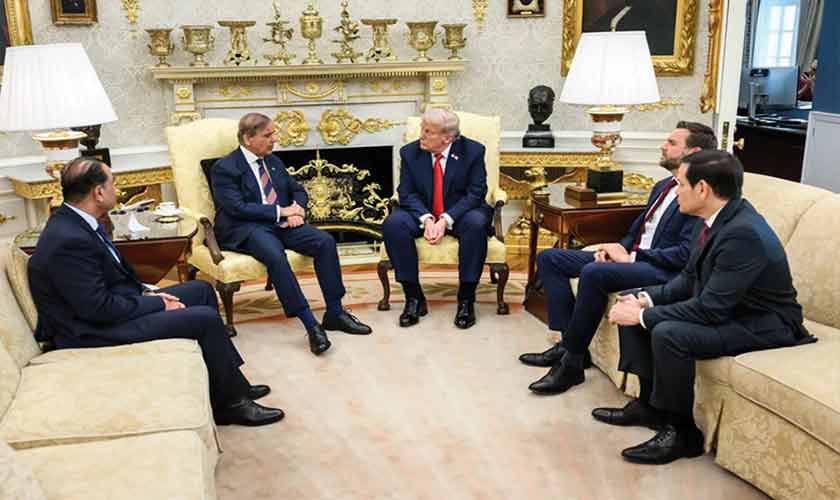
The crowning moment in Pakistan’s role as a conflict manager came on early April 8, when a near-Armageddon situation was averted and a two-week ceasefire was agreed upon by the US and Iran.
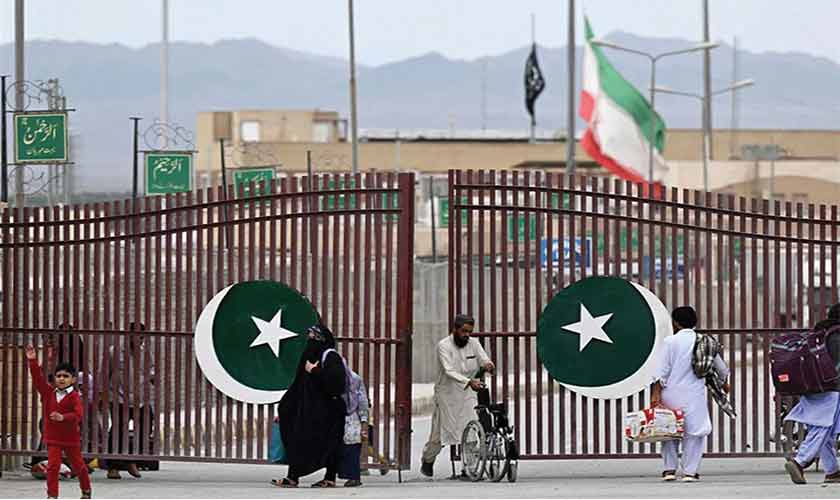
On the other side are Pakistan’s ties with Iran. The two countries share a 900 km border. During 2025, after a limited exchange of fire between the two countries, relations improved considerably. President Masoud Pezeshkian visited Islamabad in August. Pakistan seemed to have developed a working relationship with Iran.
The chessboard of regional politics changed with the sudden US-Israeli attack on Iran on February 28.
Since the start of the war, Pakistan has attempted a balancing act—a Herculean task in times of war and deep polarisation. Various parties have now acknowledged the country’s efforts.
The crowning moment in Pakistan’s role as a conflict manager came on early April 8, when a near-Armageddon situation was averted as a two-week ceasefire was agreed upon by the US and Iran. Islamabad was then set to host consultations to find a long-term solution to the conflict.
What has Pakistan gained from this engagement?
For a start, as per international recognition of its efforts, Pakistan has made a remarkable transition to a chief conflict manager in the war.
Second, Pakistan has much to lose if the war gets out of hand. Apart from the sectarian dimension in the country, Balochistan is home to an active insurgency. Any unsavoury development in Iran will have a direct effect on the Baloch insurgency.
Another prospect is the potential cross-border inflow of refugees from Iran—an all-too-familiar-sight for Pakistan, which has earlier hosted millions of Afghan refugees for decades. The country is already reeling from severe economic difficulties, worsened with the energy shock that has been a consequence of the Gulf crisis.
In the past, Pakistan had resorted to a classical realist ‘bandwagoning’ behaviour. It was once described as the US’ ‘most allied ally,’ and a bosom friend of Saudi Arabia. The fine balancing currently between the US and China on one end, and Saudi Arabia and Iran on the other, speak of a pragmatic state posturing.
So, what can one look forward to?
The US-Israeli war on Iran has defied expectations so far. Iran’s ability to sustain its regime and defence capabilities despite the might of the US-Israeli military has taken the biggest of pundits by surprise.
Pakistan needs to continue to remain engaged in crisis management and make use of the trust shown by all sides.
The road to peace in the region is very long and arduous.
One hopes that Iran, the Gulf states, Pakistan and the world at large will find their way to the promised land of peace. Besides the moral and legal questions—all of which are essential—there are too many practical issues at stake in this conflict.
The writer is an associate professor of political science at LUMS. She is the author of In Search of Lost Glory: Sindhi Nationalism in Pakistan (Hurst Publishers, 2021).