Print Story
X




How to keep you and your family safe from diseases such as CCHFV during Eid
| E |
very year, Eid-ul Azha brings an opportunity to reconnect with family, celebrate Haj and remember the sacrifice of Prophet Ibrahim (peace be upon him). But as millions of animals enter our cities in the days before Eid, they bring with them a host of animal diseases. Most of these pose no danger to humans. However, one virus, the Crimean-Congo haemorrhagic fever, is the exception.
While the name may suggest this is an African virus, the Crimean-Congo haemorrhagic fever virus or the CCHFV, is the most common tick-borne infection in the world, with a belt that spans from Pakistan all the way to West Africa. An estimated 10,000 to 15,000 infections occur due to it per year. The virus is harmless to animals and infected animals usually have minimal to no symptoms. But when it accidentally enters humans, it can cause a severe infection.
In its early stages, Crimean-Congo presents like any other viral infection, with fever, headache and body pain. However, after a few days, more severe symptoms such as bleeding, worsening headache and drowsiness may develop. The death rate with CCHFV can be as high as 40 percent, according to the World Health Organisation.
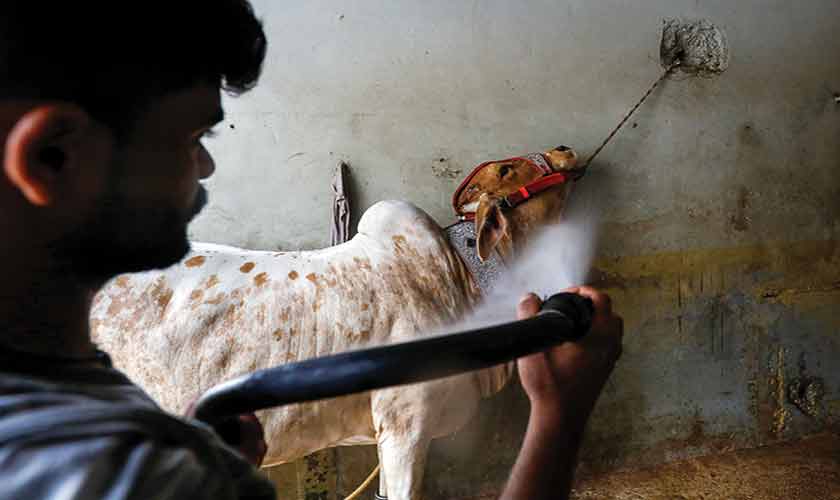
There are two ways of getting the Crimean-Congo fever. The first is a tick bite from an infected tick. A tick is a small insect-like parasite that feeds on the blood of humans and animals. Unlike mosquitoes, it does not fly but crawls. While taking a blood meal, it will stick to the skin until it is done. Also, while it feeds, the person will feel no pain or discomfort.
To protect yourself from ticks while buying animals, you can do a few simple things.
First, wear light-coloured clothing so the ticks are easy to spot, as they are very small. Also, wear full-sleeved clothes and cover your feet with shoes or socks to prevent ticks from reaching your skin. After coming home, bathe and do a quick inspection of your body to make sure there are no ticks attached. If you do find a tick, do not panic or try to pull it out with your fingers. Instead, use tweezers and gently pry it out from where it has attached itself.
If you do find a tick, do not panic or try to pull it out with your fingers. Instead, use tweezers and gently pry it out from where it has attached itself.
Fortunately, ticks do not travel very far. After buying an animal, you can also inspect it at home. However, since ticks can be very small, it is best to take the same precautions when caring for animals. Ticks will also try to jump off the hide after the qurbani. Therefore, after skinning the animal, make sure that you put the hide away from where you are sitting so that no ticks find their way to you.
The other way to contract the Crimean-Congo fever is through exposure to an infected animal’s blood, especially if it enters your eyes, nose or mouth. Therefore, during the qurbani, cover your nose and mouth with a handkerchief so that no blood sprays on your face. Also, while working with the meat, make sure that you do not rub your eyes or touch your face without washing your hands.
Meat from an infected animal is safe to eat if well-cooked, so there is no need to worry about getting the infection from food.
The Crimean-Congo fever is a serious illness but some simple precautions outlined above can go a long way in keeping you and your family safe. If anyone develops a fever, headache or body aches in the days following Eid, see a doctor promptly and mention any contact with animals or their blood. The earlier it is caught, the better the outcome.
Have a safe and blessed Eid.
The writer is professor of infectious diseases at the Aga Khan University.