Print Story
X




The Gulf has quietly opened new pathways for Pakistani artists to reach global markets
| F |
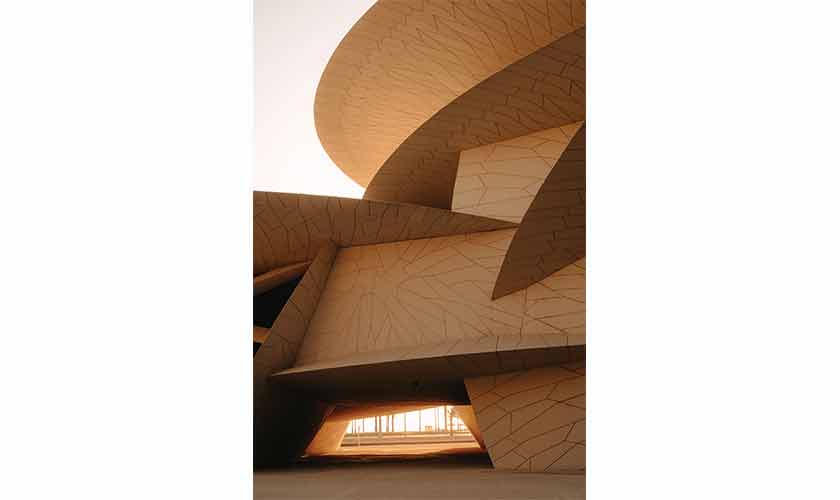
or a long time, the art world seemed to orbit a familiar set of cities: London, New York, Paris. That has been quietly changing. Over the past two decades, parts of the Gulf have repositioned themselves as cultural centres, building museums, hosting fairs and drawing in international institutions. In the process, they have opened up new pathways for artists from South Asia, including Pakistan.
Dubai and Qatar have led the way. Their investments have not just created spaces to exhibit art, but also functioning markets around those. Even Saudi Arabia, once more guarded in its cultural ambitions, has begun to move in a similar direction.
For Pakistani artists, this has been more than a passing trend. The local art market has always had its limits - a small pool of collectors, sporadic institutional support and little in the way of scale. The Gulf now offers something the domestic scene could not: reach.
As these regional hubs were taking shape, they were also looking outward. South Asian artists entered at a moment when the market was still finding its footing. Prices were accessible, the field was open, and there was an appetite for new work. This created a space that felt, at least for some time, unusually permissive.
A rhythm developed. Artists would produce work in Pakistan and sell it abroad. The prices they could command did not quite match those of established global markets, but they were well beyond what was possible locally. That in-between space made a difference. It allowed many to continue working with a degree of financial stability that had previously been hard to come by.
The rise of online platforms only strengthened this shift. Viewing and buying art became less tied to geography. A gallery in Dubai could reach a collector elsewhere just as easily as it could someone walking through its doors. For artists, this widened the field without requiring physical relocation.
There was also the role of the Diaspora. Pakistanis living abroad began to collect more actively, often encountering this work in Gulf galleries rather than back home. It created an external base of support that fed into the local scene in indirect but important ways.
This is not entirely unique. Indian artists, for instance, have long benefited from strong domestic patronage. In Pakistan’s case, however, that support has often come from outside the country. The result is a market that is, in some ways, outward-facing by necessity.
Meanwhile, the Gulf’s own art scene has been evolving. What began largely as a platform for international work is slowly making space for artists from the region itself. The shift is gradual, but visible. These cities are no longer just hosting art; they are beginning to produce it.
All of this sits within a familiar tension. Art often depends on wealth to circulate, yet it does not always sit comfortably with it. In Pakistan, many artists have worked on the edges of acceptance, producing work that can be critical, even confrontational. Greater exposure has not necessarily softened that impulse, but it has complicated it. The categories feel less fixed now, less easily divided into local and global, centre and margin.
For Pakistan, the Gulf has become an important point of reference. Dubai and Doha, in particular, have come to represent access to markets, to audiences, to a certain kind of visibility. But this connection is not quite the same as integration. It is still shaped largely by exchange rather than by deeper institutional ties.
That leaves it exposed. Instability in the region is usually discussed in terms of economics, especially the impact on remittances. Less attention is paid to the cultural consequences, which tend to unfold more quietly. Yet the networks that sustain artistic practice are not immune to disruption.
If these hubs were to falter, the effects would be felt at a distance: fewer exhibitions, fewer buyers, fewer opportunities to place work in an international context. For artists who have come to rely on this ecosystem, the loss would not be abstract.
What has emerged over the past two decades is, in many ways, a bridge, linking studios in Pakistan to galleries and collectors beyond it. It has allowed work to travel further than it otherwise might have, and to find audiences that were once out of reach.
It is still a relatively new structure, and not an entirely secure one. Its strength depends on conditions that are, at best, uneven.
For now, it holds. The question is for how long, and what if it doesn’t.
The writer is a Lahore-based culture critic.