Print Story
X




Are pop-up shows reshaping how Lahore experiences art
| A |
s the world sinks deeper into a state of mayhem, do we turn to art to redeem ourselves? For Picasso and Bearden, art was precisely this: chaos taking shape. This relationship often feels more pronounced in increasingly surveilled societies, where expression often finds a safer outlet through art.
But then, who really has access to art? How can art become part of a larger conversation when it has traditionally been limited to museums and art galleries, often intimidating to anybody who is not a part of that world?
This is where pop-up art shows come in.
These intricately curated shows, often set in unconventional places, can sample new markets and give wider visibility to an artist restricted previously to the whims of the art world. Above all, they allow art to reach people who would otherwise be oblivious to its existence.
Roadside, a creative initiative founded by artist and educator Ali Arshad, is doing just that. “For us, the idea was simple; instead of asking people to come to a gallery, we brought the gallery to them, using public and everyday spaces as exhibition sites,” says Arshad. He says that a part of this also comes from the lack of accessible gallery infrastructure in Pakistan. “Overall, it’s about expanding where and how art can exist, and allowing various kinds of audiences and spaces to interact with it in a more immediate way.”
They have hosted exhibitions in Faisalabad, Lahore and Islamabad under Improvising Rhetorics and as interventions in spaces like a parking lot, Mochi Gate, a working tandoor in DHA, in Liberty Market, a barber shop and a functioning school during the Lahore Biennale (2024).
Their latest exhibition, Anighst Preeminent Prosaics, was held in February at Iqbal House, a pre-partition house located on Zafar Ali Road in Lahore.
Zahra Nusrat Qureshi, a trained miniature artist and the curator of the show, says that what resonates with her is the opportunities these shows are creating for the working class and the younger generation to experience art. “Gen Z kids aren’t really looking out for art shows and exhibitions. The concept of doing pop-ups - inclusive of food and music - is something they are drawn to and enjoy,” she says.
Featuring 14 artists, Anighst Preeminent Prosaics asked the visitors to engage with the “complex tapestry of human experience often obscured by the noise of the spectacular.” Presenting art by both old and new artists, the carefully curated show, at its core, invited “contemplation on the fragile boundary that separates the everyday from the extraordinary and suggests that the most compelling narratives may not arise from grand gestures, but rather from the subtle intersections of our daily lives.”
“Instead of asking people to come to a gallery, we brought the gallery to them.”
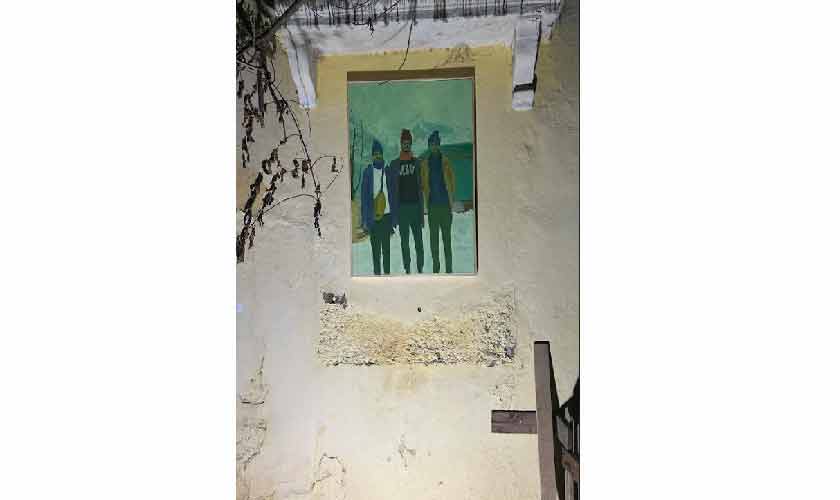
The show’s tone was set by Returns, a painting by artist and educator Sahyr Saeed, depicting a surface filled with scattered stains and fragments in warm tones, carrying a sense of disorder. Nearby, on a dimly lit wall beside the back garden, Out of Bounds by Usama Toru showed three men standing side by side in what seems like winter, drawing one in with its stillness and its soft green tones.
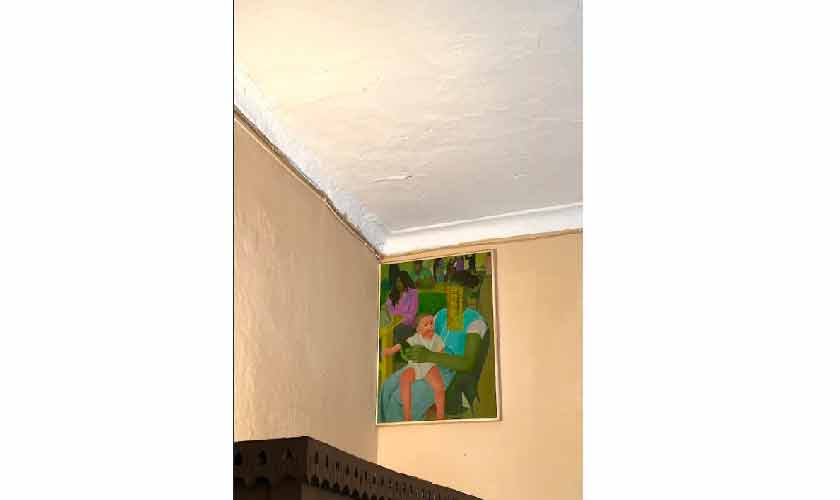
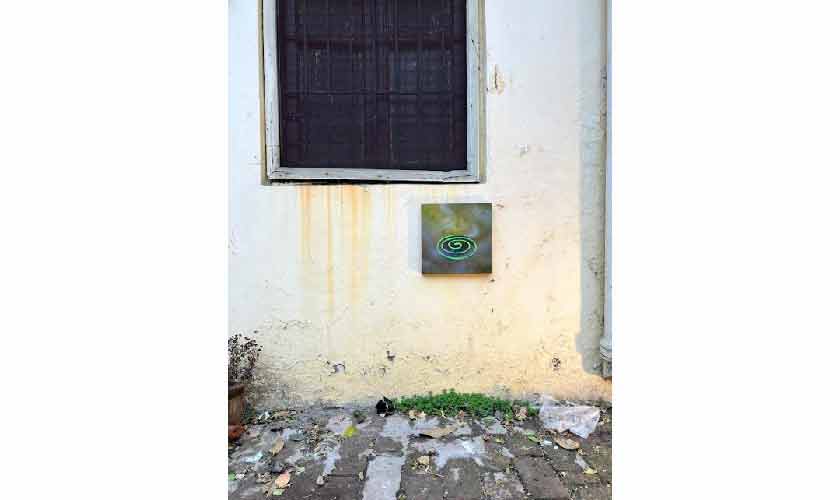
’Tis the Season by Pakistani-American painter Minaa Mohsin, mounted on the exterior wall beneath a window, portrayed a familiar household object, a mosquito coil slowly burning in a spiral. A few of the paintings, like Toru’s Digitel Noise, were placed high up near the ceiling, slightly out of eye level, adding a sense of distance from the scene, as if one is observing the moment from afar.
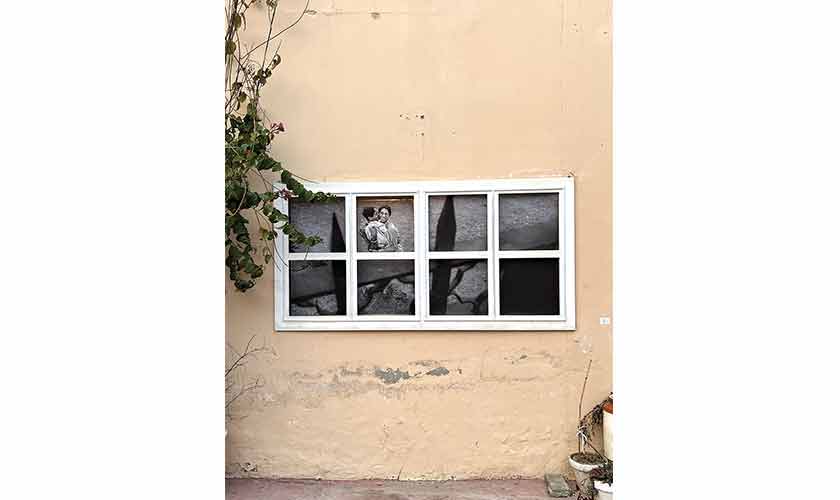
In every corner of the bungalow, there were various characters and memories. These included Ali Arshad’s caricatures of people like Amir Zaki, Moin Akhtar, Saba Qamar and Waheed Murad; and Aun Raza’s An Encounter in the Guddi Ground, a series of black and white images set within a window on an exterior wall, blurring the line between inside and outside.
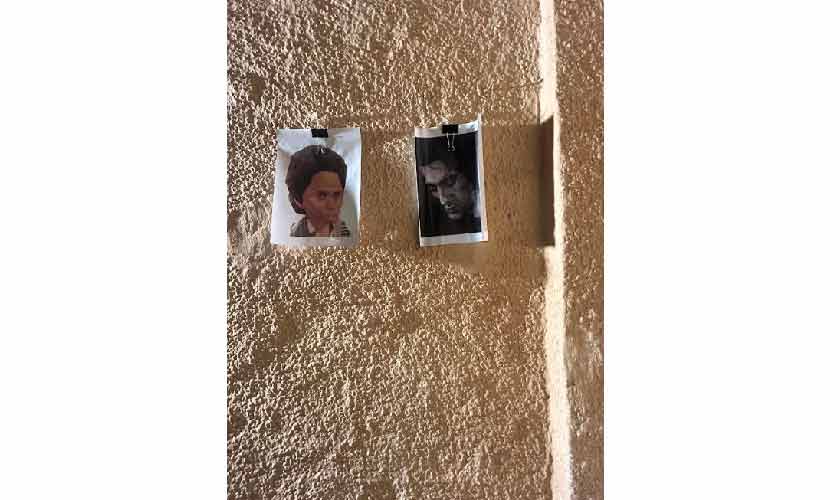
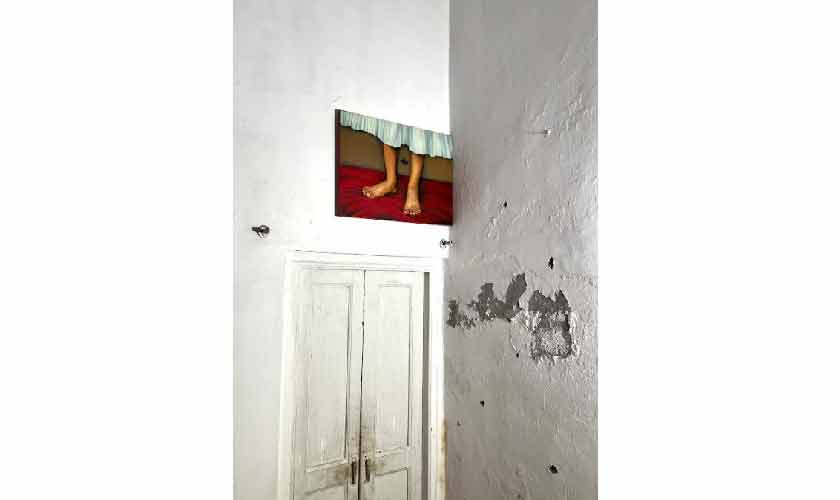
Two pieces by Kaiser Irfan, Ruins I and Ruines II, inkjet on photo paper, carried their own weight. Each work was intentionally placed, carefully aligned with its surroundings. Then there was Sana Saeed’s Quick Sands, showing only a pair of legs against a deep red ground, hung high above a door, against the tired, peeling walls of the room, giving the painting an eerie quality.
Between the show’s smart curation and rich details, Anighst Preeminent Prosaics made a strong case for pop-up shows. “The intention isn’t to over-define it, but to open more things up,” says Arshad.
Whether these shows will continue to appear more often remains to be seen. As far as accessibility of art for the general public and a wider net for the artist is concerned, these shows seem to have figured it out.
The writer is a staff member.