Print Story
X




Iran’s use of asymmetric warfare —cheap drones, cluster warheads and the closure of the Strait of Hormuz — helped it successfully resist US-Israeli conventional dominance
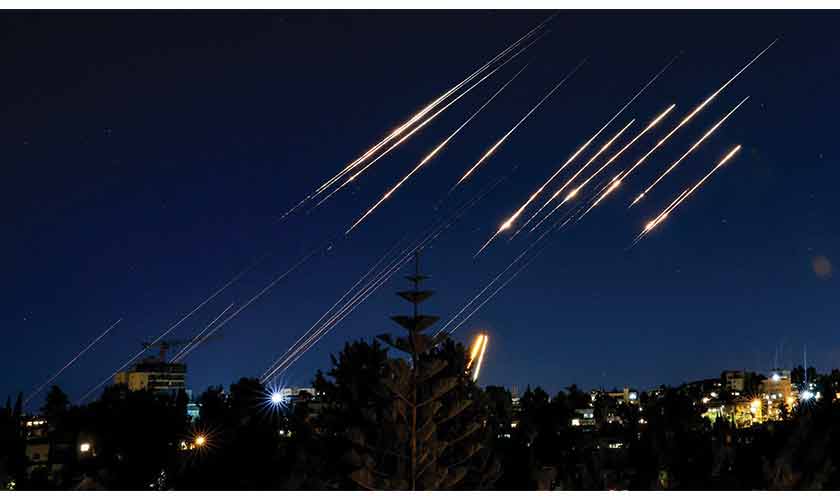
In the US-Israeli campaign launched on February 28, Iran’s top military and political leaders were killed in the opening strikes. Besides, there was extensive damage to military assets and infrastructure and heavy loss of civilian lives.
Its vast geography allowed Iran to absorb the large-scale damage and destruction. It then launched several waves of missiles and drones targeting US military sites across Israel and the Gulf, damaging and destroying military and communications infrastructure. This was followed by attacks targeting civilian infrastructure and energy targets. The Gulf states aligned with the United States were caught in the crossfire. Their belated calls for de-escalation played into Iran’s strategy, ultimately forcing the US to halt its campaign.
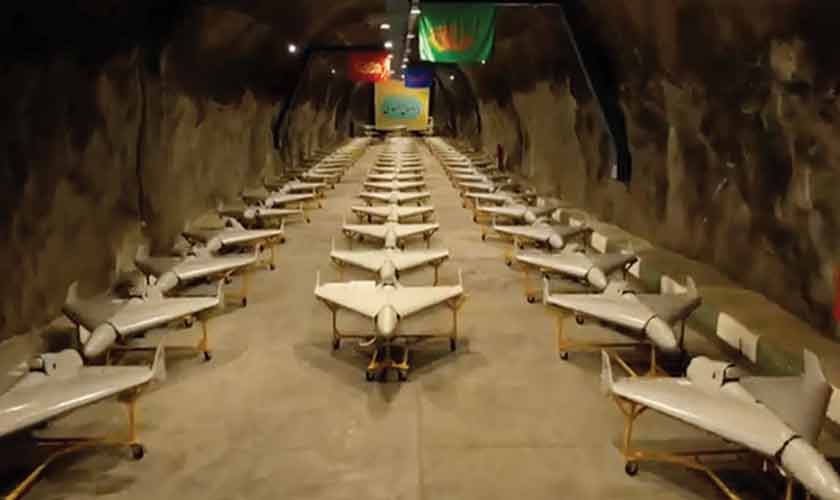
Air Marshal Arshad Malik (retired) says the Iranian strategy revolved around cheap drones and missiles. Iran’s drone force operates as a layered ecosystem. It combines swarm drones such as the Shahed and Ababil to overwhelm air defences; precision UAVs like the Mohajer and Kaman to strike key targets; and stealthy long-range platforms such as the Saegheh and Fotros to extend Iran’s reach. This diverse mix allows Iran to conduct low-cost, high-impact asymmetric operations.
“In addition to hypersonic missiles and those carrying cluster munitions, Iran employs missiles with advanced optical and electro-optical seeker technology. This helps warheads home in on targets more precisely, making them much harder to intercept. Missiles like the Qassem Bassir combine inertial navigation with onboard electro-optical/ infrared seekers, allowing warheads to identify heat-emitting targets, adjust their path in real time and strike moving targets. Similar systems are integrated into the Fateh-110 family and some Ababil short-range ballistic missiles, improving accuracy against well-defended targets and making them largely immune to GPS jamming and electronic countermeasures,” Malik explains.
In the opening weeks of war, Washington and Tel Aviv claimed to have destroyed up to 75 per cent of Iran’s missile launchers. Later, they claimed a 90 percent reduction in missile fire and suggested that the war was “already won in many ways.” Yet, Iran continued to inflict strategic damage and disrupt tanker traffic through the Strait of Hormuz.
While Iran suffered visible tactical losses, its reliance on drones and missiles allowed it to sustain operations despite heavy US-Israeli strikes. “Airpower, despite its scale and intensity, failed to neutralise these capabilities,” Malik says.
“Iran has set its military infrastructure in mountainous terrain, giving Tehran a major defensive edge. Decades of planning have produced vast underground “missile cities” and cave complexes. These fortifications house ballistic missiles, drones, launch systems and their production facilities. They allowed Iran to survive sustained air campaigns and keep firing even after surface launchers were struck,” he says.
Iran’s resilience was also bolstered by foreign support. Media reports suggested that Russia provided satellite imagery and targeting intelligence against US and allied positions and China supplied commercial and dual-use technologies, including AI-enabled surveillance and imagery analysis, enhancing Tehran’s precision targeting and battlefield awareness.
Warfare is changing fast. In the past, most countries relied on a small number of highly advanced and expensive weapons to win wars. Today, the focus is shifting towards producing large numbers of cheaper, effective systems quickly. The contrast is stark: around 1,000 drones can be produced every day, while Lockheed Martin plans to manufacture only about 2,000 Patriots in 2027.
The key lesson is that quantity, speed and connectivity now matter as much as quality. Technologies like drones, artificial intelligence, satellites and sensors are being combined to detect and strike targets faster than ever before. This means that even smaller countries can build powerful capabilities without needing massive defence budgets.
In the new age of warfare, success depends on being fast, flexible and able to produce and deploy systems at scale—not just having the most sophisticated weapons.
Warfare is changing fast. In the past, most countries relied on a small number of highly advanced and expensive weapons. Today, the focus is shifting towards producing large numbers of cheaper, effective systems. The contrast is stark: around 1,000 drones can be produced in a day, while Lockheed Martin plans to manufacture only about 2,000 Patriots in 2027.
Iran’s combination of drones and precision missiles did more than damage infrastructure—it disrupted the balance of military readiness for regional and global powers. It nearly depleted Israel’s and its Gulf allies’ missile interceptors, forcing the US to divert additional assets from the Taiwan Strait and South China Sea, highlighting the critical need for flexible, scalable force deployment to maintain readiness against potential adversaries like China, North Korea and Russia. Key systems—including air defence, long-range weapons, naval forces, strategic airlift, ISR platforms and missile interceptors—were also redirected to the Middle East. How quickly the US can restore readiness for homeland defence and for potential conflicts with other major powers remains a major question.
Iran’s naval strength, too, remains a challenge. It is made up of two main forces. The first, the conventional navy called the Artesh, operates larger ships and traditional naval platforms. US has claimed that this fleet has been significantly degraded. The second, more strategically relevant force, is the naval arm of the Islamic Revolutionary Guard Corps. This force is specifically trained and structured for asymmetric warfare.
Explaining Iran’s naval doctrine, Rear Admiral Syed Faisal Ali Shah HI(M) (retired) says Tehran relied on a multi-layered threat environment—combining sea mines, anti-ship missiles, drones, fast attack craft, midget submarines and unmanned surface vessels. “Large numbers of rockets or missiles deployed on fast attack craft can overwhelm and target much larger vessels.”
Even if a significant number of these boats are destroyed, “the IRGC Navy can weaponise fishing boats into mobile rocket or missile platforms capable of striking commercial or military shipping within the strait,” he says.
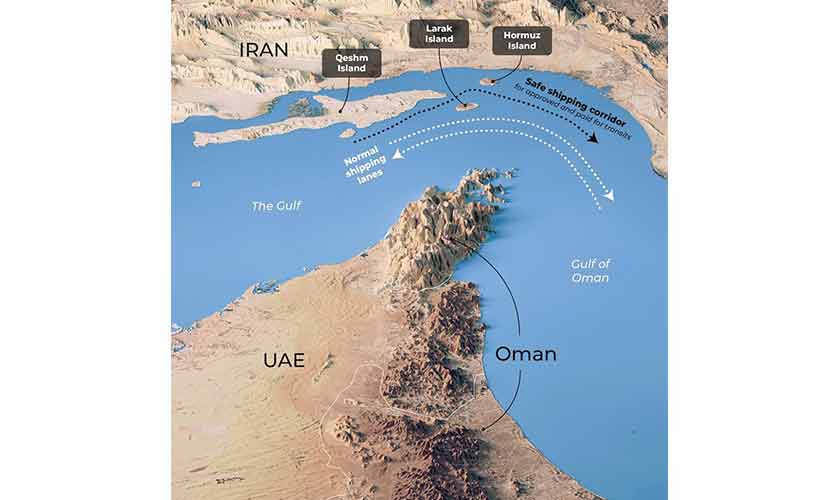
The conflict has once again brought into sharp focus the strategic centrality of the Strait of Hormuz. The Persian Gulf and the Gulf of Oman are effectively dominated by Iran. It controls the entire northern coastline of the Strait of Hormuz while the southern approaches remain constrained. This allows Tehran to regulate and monitor maritime traffic.
“The region’s terrain—including hills, mountains, valleys and developed areas—provides natural concealment, complicating the detection and tracking of military assets, including missile systems,” says Faisal. “Islands scattered across the strait host Iranian military installations, further extending surveillance and strike capability. This geography allows Iran to hide forces and protect critical infrastructure from air and naval attacks.”
At its narrowest point, the Strait of Hormuz is only about 24 miles wide. The actual shipping lanes are roughly two miles wide in each direction, with a narrow buffer zone in between. Tankers have little room to manoeuvre, making it harder to respond quickly to drone threats, missiles or sea mines.
Another critical component of Iran’s strategy is mine warfare. During the Iran-Iraq Tanker War, Iran had disrupted maritime traffic by mining the strait. Once deployed, these mines can effectively render the narrow shipping lanes unusable. It is against this backdrop that the US officials have described this integrated battle space as a Death Valley, where a mine-clearing mission will first have to survive waves of missile strikes, drone swarms and hit-and-run attacks from small boats before even beginning clearance.
“Given the strait’s narrow navigational corridors, even minimal mining can halt global shipping. The mere threat of mines significantly raises insurance costs and deters traffic, amplifying Iran’s strategic leverage without requiring sustained kinetic engagement. The United States understands that reopening the Strait of Hormuz without Iranian acquiescence will be extraordinarily difficult,” Faisal says.
Iran’s blockade of the Strait of Hormuz highlighted the global stakes of the conflict and allowed Iran to exert its leverage. While the deployment of thousands of US Marines and over 1,000 airborne troops could have forced the Strait open, it carried serious risks—ranging from propaganda gains for Iran to potential strikes on US vessels and combat casualties that could have weakened Washington’s political position.
The same applied to the targeting of Iran’s oil hub on Kharg Island. Even if US forces had seized the island, there was no guarantee Tehran would back down. Instead, this could have further escalated the conflict, leaving little incentive for Iran to reopen the Strait.
The writer is a senior The News staffer in Karachi