Print Story
X




Digital welfare requires connectivity; connectivity is still unevenly distributed
| E |
very few years, a government somewhere announces a new subsidy programme with great fanfare. Ministers stand at podiums, promises are made and budgets are allocated. A year later, the poor are still poor, the money is largely gone and the programme quietly fades. This cycle has repeated itself across the developing world for decades. At some point, the question must be asked: is the problem how much governments spend on welfare, or is it how they spend it?
The answer, increasingly, is the latter.
Across Asia, Africa and Latin America, a new generation of policymakers is arriving at an uncomfortable but liberating conclusion. The traditional model of welfare — fund it, subsidise it and hope it reaches someone — is broken at the structural level. It is not broken because governments do not care. It is broken because the systems through which money flows were never designed for efficiency. They were designed for political convenience, institutional inertia and the quiet comfort of middlemen who grew rich between the point of allocation and the point of delivery.
The real cost of welfare is rarely what governments budget. It is what leaks out along the way.
Consider how food reaches a household in a typical developing-country city. A farmer grows it. A broker buys it cheap. A wholesaler moves it. A retailer marks it up. By the time it reaches the person who needs it most, the price has at least doubled. The farmer earned almost nothing. The consumer paid far too much. Somewhere in between, wealth quietly accumulated in pockets that contributed nothing to the actual production or delivery of value.
This is not a Pakistani problem, or an Indian problem or an Africa problem; it is a design problem. Design problems can be fixed.
In India, the introduction of the e-NAM digital agricultural marketplace did something that decades of subsidy policy had failed to do. It connected farmers directly to buyers across state lines, made prices visible and reduced the layers of intermediation that had suppressed rural incomes for generations. The results were imperfect — technology alone cannot overcome entrenched market power overnight — but the direction was right. Farmers earned more. Consumers paid less. No new subsidy was required. The system simply worked better.
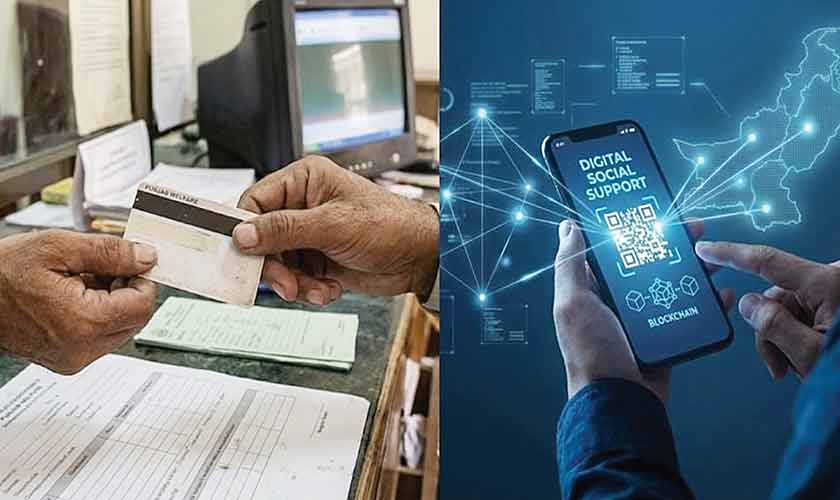
Kenya offers an even more striking lesson. M-Pesa transformed mobile payments in that country. It did not just create a convenient way to transfer money. It fundamentally rewired how welfare reached ordinary citizens. Benefits that once required physical collection points, government queues and the quiet corruption of local intermediaries could now be sent directly to a mobile phone. The administrative cost collapsed. The leakage nearly disappeared. The people who received support could spend it where they chose, rather than where the system instructed them to.
Neither of these transformations required governments to spend more. They required governments to think differently.
In each case, the innovation was not financial. It was institutional. It was the decision to make the system work properly instead of throwing more money at a system that did not.
The economic logic is elegant once you see it. Every layer of inefficiency in a welfare system is effectively a tax on the poor. They pay it not to the government, but to the system’s dysfunction. When you remove that hidden tax — by cutting unnecessary intermediaries, digitising delivery, improving logistics or simply enforcing price transparency — the benefit to citizens is equivalent to a significant subsidy. Except it costs the treasury almost nothing.
This insight is quietly reshaping how the more adaptive governments in the world are approaching public service delivery. Indonesia built a digital identification infrastructure that eliminated duplicate welfare recipients overnight. Bangladesh used satellite mapping to ensure food distribution reached flood-affected villages that manual systems had missed for years. Brazil’s Bolsa Família, widely studied and widely replicatred, succeeded not merely because it gave money to the poor but because it conditioned that money on verifiable outcomes — school attendance, health check-ups — and used data to monitor compliance in real time.
In each case, the innovation was not financial. It was institutional. It was the decision to make the system work properly instead of throwing more money at a system that did not.
None of this is simple. Digital welfare requires connectivity. Connectivity is still unevenly distributed. A government that designs a brilliant mobile phone-based food distribution system for a population where forty percent of people have no smartphone has designed a system for sixty percent of the people who need it the least. Inclusion must be built into the architecture from the beginning, not bolted on as an afterthought when exclusion becomes embarrassing.
There is also the question of political economy. Middlemen do not disappear willingly. Market intermediaries, politically connected distributors and bureaucratic gatekeepers have real interest in maintaining the systems that benefit them. Reform that threatens those interests will be resisted, delayed and repackaged - sometimes quietly killed. This is why institutional reform without political will is largely decorative. The hardest part of redesigning welfare systems is not the technology. It is the decision by those in power to allow the change to actually happen.
When it does happen, the results can be transformative.
There is a deeper philosophical shift underneath this that deserves attention. For most of the Twentieth Century, welfare was understood as the state’s financial commitment to its citizens. The measure of a caring government was how much it spent. Today, that framing is increasingly recognised as insufficient. A government that spends lavishly through broken systems is not a caring government. It is an inefficient one. A government that redesigns its systems to deliver more with less is not being cruel to the poor; it is finally taking them seriously.
The future of welfare is not austerity dressed in digital clothing. It is precision — knowing who needs what; getting it to them efficiently; measuring whether it arrived; and continuously improving. This demands investment in institutions; in data capacity; in accountability infrastructure; and in the unglamorous work of public administration reform.
Countries that make this shift will find that they can protect; even expand welfare coverage without necessarily expanding fiscal deficits. Countries that do not, will find themselves trapped in the familiar cycle: announce the subsidy, spend the budget, explain why it did not work, announce the next subsidy.
The choice between those two futures is not a technical one. It is a political one.
The writer is a chartered accountant and a business analyst