Print Story
X




In the absence of free expression, conscience is in danger of being silenced
| C |
onscience is nowadays often seen as an antiquated term, ill-fitted to a world marked by direct and systemic violence; geopolitical and capitalist interests that put profit margins over human dignity and life. Conscience, as a way to understand and move through the world, seems out of step with today’s grim realities. Yet, throughout human history it has emerged as a guiding force for many. Human rights defenders in our midst continue even today to choose to follow their conscience and speak truth to power.
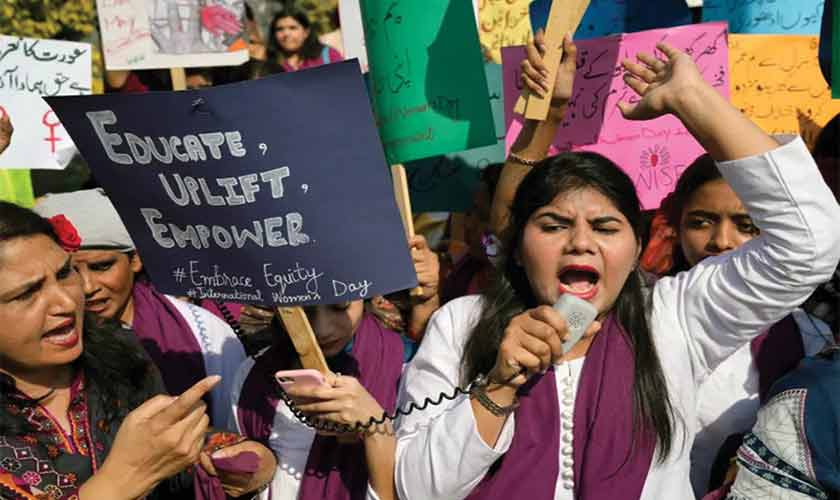
Survivors of gender-based violence and sexual harassment continue similarly to speak up, despite being aware of daunting consequences—victim blaming, lawsuits and stigma. Many such survivors have recently named the people who inflicted violence on them, so that others should not have to experience what they did. Women continue to show up in courts to testify in their cases despite knowing that conviction rates in many parts of Pakistan are less than 3 percent.
In spite of the odds, these people are guided by their conscience.
Many others, however, cannot fully act on their conscience. They are unable to exercise their freedom of expression. Freedom of expression allows us to voice dissent and beliefs that can lead to social change. Deeply held beliefs—patriarchal, racist, classist and ableist—cannot be undone or changed without an enabling environment where everyone has the right to freedom of expression, especially to challenge beliefs held by powerful actors in society. Without open debate and adequate safeguards for those expressing dissent, we cannot hope to foster a tolerant and diverse society.
It is important to recognise that speech does not operate on a level playing field. Who is allowed to speak; and who is believed is often determined by gender, caste, class and other structural inequalities.
In the absence of the right to express oneself, conscience is in danger of being silenced or privatised. While people might be able to express themselves in closed settings or highly curated spaces, losing the ability to speak freely in public stifles the circulation of ideas and the development of consciousness outside of one’s immediate lived experience. It can also sequester spaces that foster conscience into elite and private settings that are accessible to only people with certain privileges.
There exist tensions in the nexus between free speech and consciousness. Some countries evoke conscience, particularly the conscience of the majority, to restrict and penalise expression. This begs the question: whose conscience and whose values matter in society?
Laws centring the conscience of society can embody values that benefit all, but can also be a tool for excluding and penalising others. In Pakistan, we have seen social media platforms, shows and books being banned on the basis of ‘morality’—a vague understanding of what the collective conscience is.
While people might be able to express themselves in closed settings or highly curated spaces, losing the ability to speak freely in public stifles the circulation of ideas and the development of consciousness outside of one’s immediate lived experience.
We must also confront what we do with ideas that cause harm, especially to vulnerable and marginalised populations. Must some ideas be allowed to circulate even if they cause harm or deepen the marginalisation of already vulnerable groups? This is one of the thorniest aspects of developing a society that values dialogue and free communication.
Many argue that suppression of ideas, no matter how harmful, can often allow them to flourish and harden. Nevertheless, free speech devoid of empathy or an understanding of power structures can often flatten free speech to mean a free-for-all. The challenge, then, is not simply whether speech should be restricted or allowed, but how societies can ensure that protections for expression do not become protections for domination.
Conscience remains one of the primary spaces that have potential for radical change. It is only once we are convinced of ideas and the righteousness of a particular idea that we can truly accept them. At a societal level, movements and activists hope to strike a chord with the collective conscience through their work, acts of resistance and the popularisation of ideas. Authoritarian leaders realise that consciousness as a tool for social change has both an external and internal aspect. While restrictions on freedom of expression speak to the external part, we know that thought policing through surveillance, both at an individual and mass level, seeks to kill consciousness and ideas even before they percolate.
If we are constantly looking over our shoulder before speaking and are unable to articulate our imagination, these ideas remain underdeveloped. Surveillance systems are becoming increasingly common in the digital age; however, they have always existed in other forms—the fear that one would be reported for something one said in a gathering or for attending an event where critical ideas were expressed. These forms of consciousness policing play out most explicitly in education systems. Curricula are often designed to exclude certain forms of thinking or histories that are deemed disruptive.
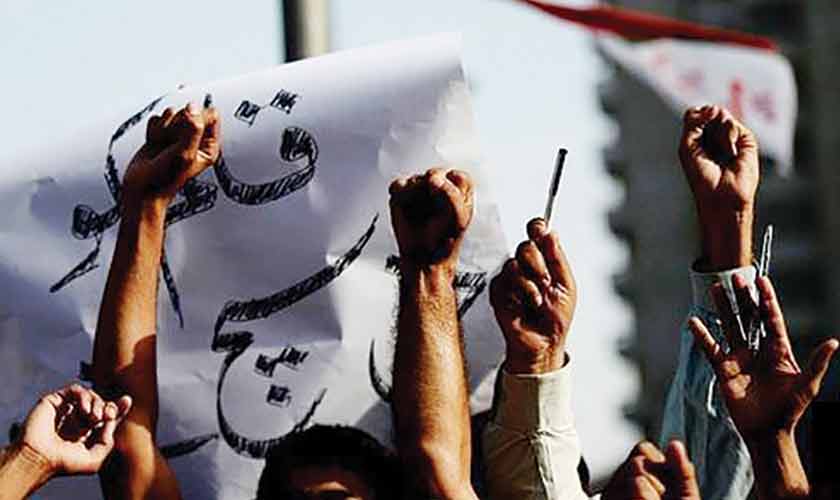
While the International Day of Conscience calls for harmony and peaceful coexistence, the process of getting to that point often arises from friction, dissent and resistance. People have engaged in civil disobedience practices to register their protest against laws and policies believed to be inherently unjust or discriminatory. The path to genuine coexistence is not paved by suppressing friction but by creating conditions where people, especially those historically silenced, can speak, question and transform society. An enabling environment for conscience is not one of unbounded speech nor of censorship, but one grounded in justice.
The writer is a researcher and campaigner on human and digital rights issues.