Print Story
X




Conscience can bridge the assertion of identities by providing a moral framework, rising above divisions
| T |
he concept of conscience sits at the intersection of ethics, religion and political theory. Socrates, one of the earliest voices on this subject, viewed it as an inner moral guide over and above external authority. For Thomas Aquinas, conscience is God-given but requires reasoning; Martin Luther justified resistance to authority as an essential element of conscience. Hannah Arendt argued that conscience required active thinking and judgment. John Rawls proposed that it was central to justice and pluralism. Mahatma Gandhi transformed conscience into a formidable force in the form of non-violent resistance to unjust and illegitimate authority.
Whereas the core objective of observing the International Day of Conscience is promoting peaceful coexistence, ethical reflection, respect for human dignity and precedence of dialogue over conflict, it has a nuanced but deep connection with individual and collective identities which either co-exist and compete or diverge and collide in social, economic, political, cultural and psychological spheres. It revolves around the basic premise of how we act or react towards others; particularly when we are different and have different worldviews of socialisation and civic education. Thus, the promotion of conscientious living builds into nationalism and nation building processes because its end is co-existence.
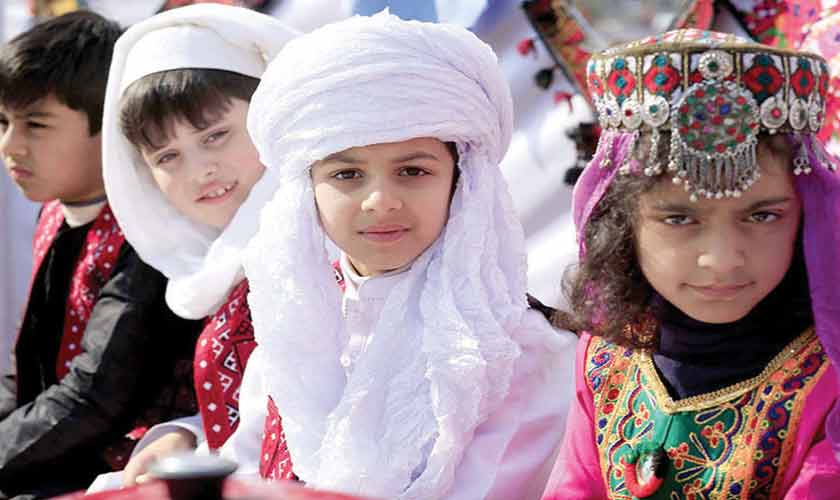
Identities in Pakistan are layered, not singular. These may configure in religious (Muslim or minority communities); national (Pakistani); ethnic (Punjabi, Sindhi, Pashtun, Baloch and Muhajir); or sectarian (Sunni, Shia or else) aspects. These layers of identities sometimes coexist peacefully. Sometimes they clash in a competitive environment. Conscience can play a bridging role between assertion of identities by providing an ethical framework that may help rise above identity divisions. The moral reflections may include asking oneself why should a majority identity dominate minorities by promoting religious majoritarianism as has been seen in Pakistan and India.
Other questions may include: how should the state treat diverse ethnic groups and what is morally right, as opposed to politically convenient. Pakistanis can seek inspiration from MA Jinnah’s vision of the country that embraced religious freedom and equality of citizens as its core tenets. Our conscience should help us decide whether the state and the society are living up to the standards set by the founder of the country. For instance, as national unity and cohesion were sought to be built on an Islamic identity and Urdu language in the early decades of Pakistan, ethnic, linguistic and political rights of the Bengali citizens were ignored. This paved the way to a civil war and the separation of East Pakistan. It was not merely a political or leadership failure, as has been proposed by some academicians. It was also a failure of collective conscience.
It is important to understand that sub-national ethnic and regional identities are not simply cultural as is sometimes believed; they are political and economic appellations as well. The Punjabi identity is often viewed as dominant in the state structures whereas Sindhi nationalism is rooted in culture, language and historical quest for autonomy spelled out in the form of separation from Bombay presidency during the British Raj. The Pashtun identity that shares cross-border ties with Pashtuns in Afghanistan has gone through an ordeal of war against terrorism and religious radicalisation. Baloch nationalism is linked to concerns about resource development and control, political marginalisation and under development. Unlike these, the Muhajir identity is urban, migration-based and in oppositional relationship with the indigenous populations. The national conscience demands co-existence of all these identities based on social justice and judicious distribution of resources.
Conscience provides a moral lens to evaluate how identities are formed, expressed, managed and articulated and why it is important to be plural, ethical and capable of coexistence despite differences and divisions.
Are all population groups treated fairly by the state structures? Do the religious minorities such as Christians, Hindus and Ahmadis have equal citizenship rights? Identities without conscience are exclusive, competition- and conflict-driven, politicised and suppression-oriented. However, conscience makes them inclusive, dialogue-driven, ethical and respectful to diversity and dissent. Conscience provides a moral lens to evaluate how identities are formed, expressed, managed and articulated and why it is important to be plural, ethical and capable of coexistence despite differences and divisions.
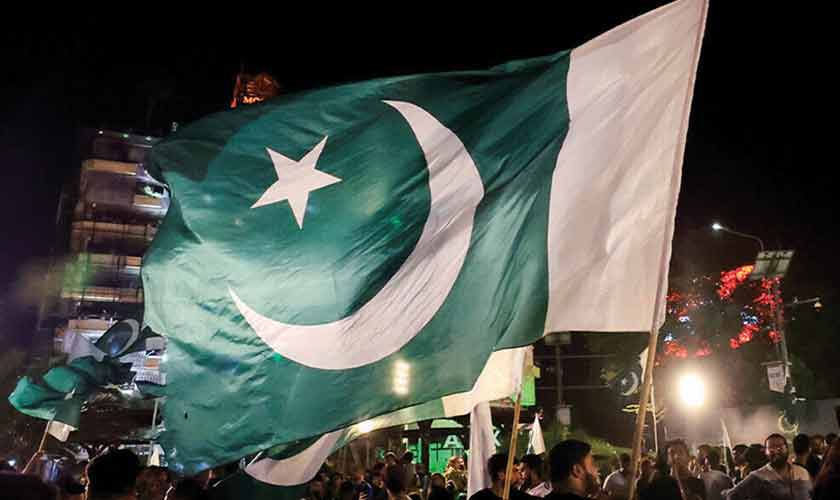
In a country like Pakistan, where identities intersect, the celebration of such a day can be a reminder that peaceful and sustainable national unity and nation building cannot be realised merely through shared identity, it must be grounded in moral responsibility, justice, fairness and respect for diversity. Diversity makes for strength and beauty. In Pakistan, while national identity emphasises national and religious unity, conscience raises questions regarding the status of minority rights, socio-economic justice and the exercise of state power in support of the powerful and leaving the marginalised dispossessed.
National identity and conscience intersect when shared belonging is grounded in ethical principles. They diverge when group loyalties demand actions that violate universal moral standards. In such moments, conscience is the critical force that challenges, reshapes and sometimes resists the majority The discourses developed by Benedict Anderson and Homi Bhabha are relevant and instructive in this regard. Anderson argues that nations are “imagined communities” and, hence, constructed identities. Homi Bhabha contends that “nations are narrations.” They emphasise giving nationalism its rightful place but not yearning for hyper-nationalism as experienced by some European countries, which resulted in internecine warfare and resource capture during the colonial period.
Mohammad Waseem rightfully argues in Political Conflict in Pakistan that religious minorities suffered from what can be described as minoritisation by way of providing “protection” to them in the constitution in a paternalistic mode, thus potentially circumscribing their “equality” of status as citizens. The state treated them as communities rather than citizens who could have carried individual rights and duties and multiple identities based on caste, class, profession and gender.
The writer heads the History Department at University of Sargodha. He has worked as a research fellow at Royal Holloway College, University of London. He can be reached at [email protected]. His X handle: @AbrarZahoor1.