Print Story
X




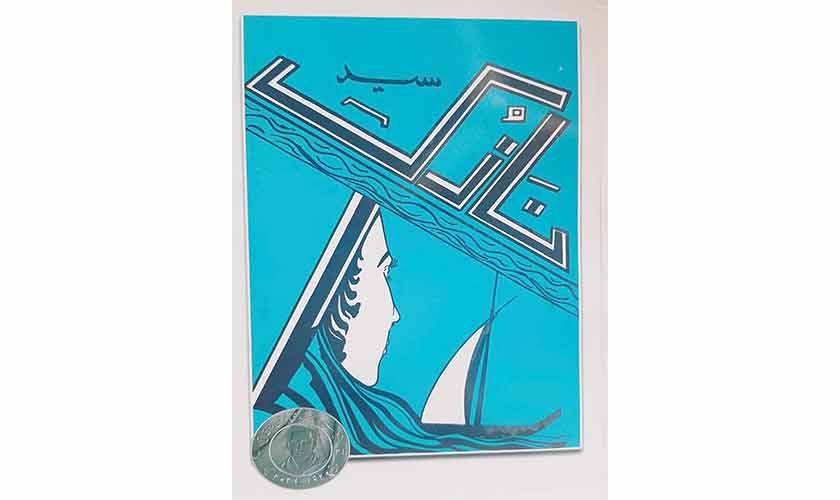
First published in 1976, Nazuk remains a defining work in Balochi literature
| F |
irst published in 1976, Nazuk is widely regarded as the first novel in the Balochi language. Written by Sayad Hashumi (1926-1978), it marks an important moment in the development of modern Balochi literature. Hashumi was not only a novelist but also a poet, linguist, lexicographer and literary historian.
Set in the coastal region of Makran, the novel follows its central character, Nazuk. After three of her husbands die while out fishing, she is labelled a “husband-killer.” When she agrees to marry again, she sets a condition: her future husband must not go to sea.
The novel presents Nazuk as a figure of endurance. After the deaths of her three husbands, she is left to face grief, social stigma and the demands of survival. The narrative follows her as she raises her children and navigates a community that treats her with suspicion. She also resists the advances of men such as Gazabek, a known womaniser who tries to take advantage of her situation, using his position as a town elder and his closeness to the vali, the representative of central authority.
The sea takes on an important role in the novel. For the coastal community, it is a source of livelihood, stability and hope. For Nazuk, however, it becomes associated with loss. One after another, her husbands are taken by it. In the end, she distances herself from it entirely, agreeing to marry only a man whose life does not depend on the sea.
The novel also offers a sharp account of corruption and misrule. The vali is surrounded by sycophants and opportunists who, with his approval, engage in smuggling and other corrupt practices. Their actions drive up prices and create shortages of basic goods, pushing poor fishermen and sailors towards hunger. The same circle serves the vali’s personal interests, seeking out women for him. Using their influence, they manipulate and exploit vulnerable people.
Alongside this, the novel shows a judicial system in decline. Justice is formally represented by the qazi. In practice, he is controlled by a group of intermediaries who position themselves between him and the public. They gather complaints without revealing their role, then pass on the information to the qazi. He openly demands bribes in exchange for favourable decisions. Those who cannot pay have little chance of prevailing. The result is a system that works against the poor, where the law no longer protects the weak; instead it further strengthens those in power.
It becomes a place where relationships are sustained and the rhythms of the community are maintained.
The novel also examines gender roles and the gap between public image and private life. Many men from the elite present themselves as authoritative and dignified in public. Yet, as events unfold, it becomes clear that their control within the household is limited. Many are directed or influenced by their wives. Some are no more than silent observers of domestic affairs. The novel suggests that while men dominate the public sphere, women exercise quieter, less visible influence that shapes everyday life.
Much of the narrative unfolds along the shore, which functions as more than a site of work. It is a shared social space where people gather, exchange views and speak, often indirectly, about those in power. News travels through conversation; private matters are discussed in low voices. The shore remains active throughout the day, with people waiting for fishing boats to return or simply spending time in conversation. It becomes a place where relationships are sustained and the rhythms of the community are maintained.
The novel does not follow a tight or complex plot. Instead, it moves in a simple, episodic manner, without strict chronology. Each section stands on its own, contributing to the larger narrative without relying on linear progression.
The prose is measured and controlled. Sayad Hashumi’s command of language is evident throughout. A linguist, lexicographer and poet, he demonstrates precision in word choice and sentence structure. The prose avoids excess. It is not poetic in the sense of being ornamental or obscure. With few exceptions, it remains distinct from his poetry. As the narrative unfolds, the writing itself becomes instructive, demonstrating a disciplined use of language. In this sense, Nazuk reflects not only the work of a novelist, but also the sensibility of a poet and a linguist.
Overall, the novel presents a detailed account of a society shaped by a maritime economy.
Nazuk
Author: Sayad Hashumi
Publisher: Sayad Hashumi Academy Gwadar, 2026
The reviewer is an assistant professor at Atta Shad Degree College, Turbat. He tweets @FazalBaloch.