Print Story
X




A conversation with Daisy Rockwell on translation as an anti-border act, Urdu and Hindi and the misogyny women are taught to overlook in male writing
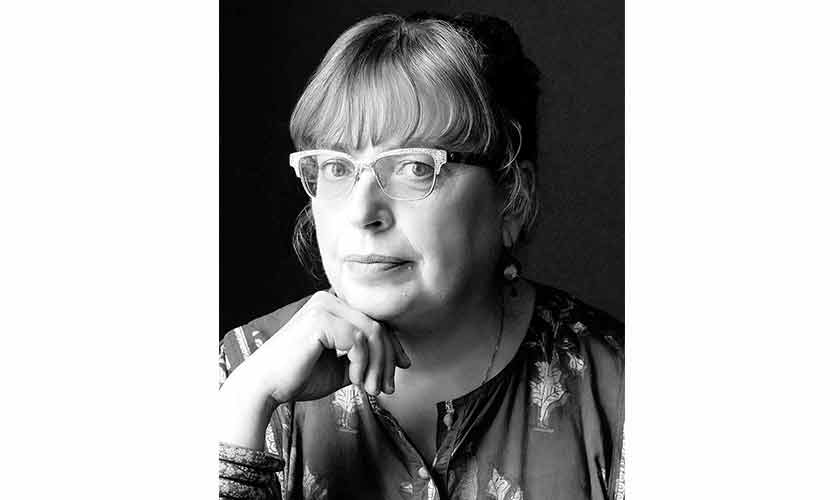
Daisy Rockwell’s latest translation, Sleep Journeys, is around a hundred and fifty pages long. It is slender and compact, a marked departure from the tome that won her the International Booker Prize in 2022: the translation of Geetanjali Shree’s novel Ret Samadhi (Tomb of Sand). Not unlike her other works, this translation of Azra Abbas’s debut book-length Urdu prose poem, Nii.nd kii Masaafate.n, comes with the scholarship and creative determination that have come to define her practice.
Her translated works include Khadija Mastoor’s Aangan (The Women’s Courtyard) and Upendranath Ashk’s Girti Deevarein (Falling Walls). Her contribution has been recognised with the Warwick Prize for Women in Translation, among others. A collection of her poems and a memoir are expected in 2027.
While visiting Lahore late last year, Rockwell spoke to The News on Sunday about the inextricable connection between Urdu and Hindi, translation as an anti-border act and how women are imprisoned in a patriarchal worldview that makes them tolerate the misogyny of male writers. Excerpts.
The News on Sunday: You trained in South Asian literature. What drew you to it and when did it begin to shape your creative life?
Daisy Rockwell: Well, I really love learning languages. In college, I studied a number of languages, such as French, German, Latin and Ancient Greek. I was suddenly seized with this need to learn a language that I didn't know anything about.
In the US system, you are allowed, even encouraged, to treat your first two years of college like a buffet, sampling different subjects to find what interests you. It is quite different from the system here and from the British system, where you have to decide before you even go to college.
So I just thought I would check it out. Then I was really drawn in because, for somebody interested in language and linguistics, South Asian languages are fascinating; there are so many of them, with so many different writing systems. Also, many of them are descended from Sanskrit, which is a language that was perfected by grammarians. So it’s a language learner’s dream to study South Asian languages.
TNS: And you chose Urdu and Hindi.
DR: Those are the ones I translate from because, even though in many ways they’re the same language, they’re certainly not when you get into literature and the vocabulary really diverges. I’ve also studied Sanskrit, Persian and Arabic, not a ton but enough to help me understand the etymology of words when I’m translating. I’ve also studied Tamil and Malayalam.
I feel that languages are like people: some you don’t like, even hate, and some you fall in love with. It’s not even that I fell in love with Hindi and Urdu; they’re sort of my life partners.
TNS: What does it mean to love two languages that carry the weight of Partition?
DR: Part of that weight I express by trying to translate them equally, so I’m not just working with one or the other. I try to move back and forth. And I generally choose projects that are interesting and progressive; whether they directly problematise borders or not, they’re not enforcing them.
It’s not even that I fell in love with Hindi and Urdu; they’re sort of my life partners.
What I love about these two languages is that they’re not really two languages; they’re one, with significant divergences. But it’s much more subtle than political forces would have you believe. For example, the entire grammatical structure of Urdu is descended from Sanskrit: the verbs, the postpositions, words like mein and say. A lot of vocabulary around seasons, weather, flora and fauna also comes from that lineage.
So it’s funny when people insist, for political reasons, that Urdu is non-Indic, that it comes from Arabic and Persian. It just isn’t true. It’s a mix of many influences. Yes, a large part of the vocabulary is Persian and Arabic, but that doesn’t determine a language’s origin. Grammar does. Urdu is an Indic language; it isn’t descended from Persian or Arabic. It’s like saying Urdu comes from English because people use English words in everyday speech. That’s not how language works. It’s the grammar that tells you where a language comes from.
On the other side, Hindi chauvinists try to erase Persian and Arabic influence, constantly pushing those words out. But many of the most basic words in Hindi are Persian; they don’t even realise they’re using them. There’s this idea that Hindi is purely Sanskrit, which is simply not the case.
What’s really happening is that people keep trying to deepen the divide between these two languages, but they’re inextricable. You can’t separate them; it’s impossible. They grew out of an intercultural encounter, out of the Mughal courts and the local populations around Delhi. There’s a lot of anxiety around this, especially in India, but it often comes from a lack of understanding of how the language actually works. Hindi is imagined as a purely Sanskrit-derived language, which is a very simplistic view.
In reality, they are the same language, one that people have been trying, quite aggressively, to separate for over 150 years. You can still see that shared culture everywhere: Pakistanis watching Bollywood films and even the most ardent Hindu chauvinists loving ghazals.
TNS: After Tomb of Sand and now Heart Lamp, it seems as though South Asian languages in translation are having a moment. Do you see that as a lasting trend or as tokenism?
DR: Well, I think it could easily become tokenism. It’s very hard to make inroads into publishing in the Western Anglosphere, especially for translations. But there’s an initiative called the SALT Initiative, South Asian Languages and Translation, based at the University of Chicago.
It focuses on mentoring emerging translators, running workshops and creating opportunities for South Asian languages to reach wider audiences. We’ve held workshops across the region, including in Pakistan, working with translators from a range of backgrounds and experience levels.
Another part of the initiative involves grants for Western publishers to come to South Asia, meet publishers here and discover work that could be translated. There are also grants, through English PEN, to support the publication of translations.
So there are different strands to it. The idea is to take this moment and make sure it doesn’t become tokenism; instead, put down roots and shift how Western publishers think about South Asian literature.
TNS: But is there real interest in South Asian languages in Western publishing?
DR: No. That’s precisely what we’re trying to change. I mean, it’s very white and very Eurocentric, but these kinds of initiatives have worked for other groups. For example, the South Korean government has put a lot of money into doing this kind of work, training translators and so on, and it’s paid off. Han Kang won the Nobel Prize, and now you see a lot of translations from Korean.
Urdu is an Indic language; it isn’t descended from Persian or Arabic.
The Polish government did something similar and Olga Tokarczuk won the Nobel. So I think it is possible to influence things, especially if you give publishers travel grants to go to South Asia, they’ll take them. It’s a bit of a junket, but it does have an effect. If you have no real awareness of the region, and then you go, and people are welcoming, you start to realise how much you don’t know. Maybe that opens your mind. Because it’s also about aesthetics and narrative styles, it’s not the same as what they’re used to; Eurocentrism tends to favour very spare, minimalist narratives about bleak situations, whereas South Asian writing is often much more maximalist. It’s a very different aesthetic, so sometimes they need to see it for themselves to realise what they’re missing.
TNS: You’ve described translators as “mediums.” What happens to you in that process? Do you feel haunted by the voice you’re translating?
DR: When I’m reading a book and trying to decide if I want to translate it, it often just starts translating in my head. Then I have to decide if I can be that voice, i.e. if I can embody it and rewrite the whole thing in English. Some books don’t click, even if I like them; I just feel I’m not the right voice for that writer.
Some of it is practical. One of the hardest things about translation is getting copyright permission if the author hasn’t been dead for over 70 years. That’s a big part of our lives. There are works I haven’t been able to get permission for that still echo in my head.
If I do get permission and complete the translation, I’m not haunted by it. But if I’m not allowed to translate it, it stays with me. If I’m a medium, it passes through me, and I’m fine, but if it gets stuck, then I’m haunted.
TNS: Have you ever been unable to get permission?
DR: Oh, yeah. For many, many years, I’ve tried to get permission to retranslate Aag ka Darya by Qurratulain Hyder. She translated it herself and said she didn’t want anyone else to do it, that her version was the final one. But it was abridged, and she changed it quite dramatically. She did it decades later, when she was much older, and self-translation is tricky because the writer keeps editing. So she wasn’t the same person in a way, and she altered a lot.
The same thing happened with Abdullah Hussain, who translated his novel Udaas Naslein himself. Not as dramatically, but he, too, changed a lot, because authors can’t stop themselves from editing. So she was very clear: no one else should translate it. Her rights holders have held to her wish. And she didn’t die that long ago either.
I’ll probably be dead by the time it comes out of copyright.
TNS: Can translation become a way into Urdu for young readers?
DR: What I see, both in India and Pakistan, is that the education system often pushes people away from their original languages. After a certain point, especially in English-medium systems, people stop reading in them and then begin to feel insecure about going back.
So one thing I’m always encouraging people to do is to read the original alongside the translation. A lot of people in South Asia can actually read Urdu or Hindi, but they’re hesitant. If you open both texts side by side, the English helps you through the vocabulary you may have lost, and you don’t have to keep reaching for a dictionary. It makes returning to the language much easier.
I saw this happen with Tomb of Sand, which was wonderful. People who felt alienated from Hindi started reading both versions together. Sometimes a mother would read the Hindi and a daughter the English, and they would compare sentences.
I keep telling younger people: don’t abandon the arts. Poetry, painting, music, and acting; those are the things AI simply cannot do.
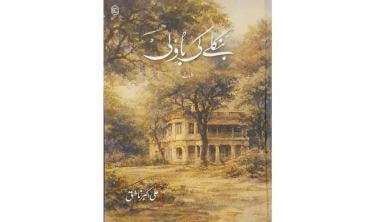
That’s part of what I’m trying to do with Sleep Journeys as well. Having the Urdu and English side by side allows readers to think about the possibilities and limitations of both languages. You can’t do that with a 500-page novel, but with a shorter work it becomes possible.
That also extends to writing. Urdu has been a high literary language for so long, with words that simply don’t exist in English. I’d really encourage young people who are literate in Urdu to try working bilingually. Sit down and write something in Urdu and see how it turns out. That can be a way back into the language: taking something from your English world and moving it into Urdu, just to see what happens to it. Sometimes it becomes something quite different, even more elaborate, and that’s the point.
TNS: For a long time, translators remained almost invisible. What has changed?
DR: Well, it wasn’t always this way. Translation has always existed, but there have been very different approaches to it. Long ago, it was often closer to retelling. But somewhere along the line, probably in the early 20th Century, the ideal became the total invisibility of the translator: the most successful translation was one where you couldn’t tell you were reading a translation at all, where it felt as though the book had simply been written in the target language. You weren’t supposed to be conscious that there was somebody there. It was like The Wizard of Oz: don’t pay attention to the little man behind the curtain. We were the little man behind the curtain.
I’ll tell you what really pulled the curtain aside. It was the International Booker Prize. It used to be the Man Booker International, awarded for a body of work by a translated author, but in 2016 it changed into a prize for a single work, given equally to the writer and translator. Because the Booker is probably the most prestigious literary prize in the world after the Nobel, people suddenly started paying attention. Translators who won it became visible in their own right.
A lot of them also began actively pushing back against this idea of invisibility. Deborah Smith, who won the first of the new-format prizes for translating The Vegetarian by Han Kang, went on to found Tilted Axis Press, which was created to tilt Western publishing away from its Eurocentric vision and towards Asia and Africa. Tilted Axis later published Tomb of Sand.
Another International Booker-winning translator, Jennifer Croft, who translated Olga Tokarczuk, has been one of the major voices arguing for translators’ names to appear on book covers. She’s been extremely vocal about translator visibility and she’s become very visible herself.
So now there’s a whole group of translators pushing against that old invisibility. More prizes are emerging that recognise translators equally. But this shift is very recent, really only since 2016. Before that, you sometimes couldn’t even tell a book was translated; the translator’s name would be tiny, somewhere on the copyright page.
TNS: And now it's on the cover.
DR: Not always. We’re still fighting for that. I get my name on the cover, but not everybody does. Translators still have to fight for visibility and for adequate compensation.
TNS: As borders are hardening, does translation meaningfully resist them, or is that too idealistic?
DR: I think translation itself is anti-border, because you’re breaking down a boundary between two languages. Beyond that, it really depends on the individual translator. Some have more choices than others. I’m able to choose my projects, but not everyone can; it works differently across languages.
That said, I do know translators who actively seek out texts for political reasons, to bring across voices that challenge dominant norms, especially at a time when borders are being reinforced and there’s a rise in more exclusionary politics.
I’ve done that too, in my own way. I’ve focused for a long time on the Partition, which is an important border to question. Tomb of Sand, for instance, is very much anti-border; there’s even a moment towards the end when the main character, an elderly Hindu woman near the Khyber Pass, speaks directly to one of the military officers about how harmful borders can be.
TNS: You’ve increasingly translated women writers. Was that a personal choice, or did it become a political one?
DR: Yeah, absolutely. That probably started around 2016, around the time of Me Too. I realised that I had translated four books, and they were all by men. I don’t know why I hadn’t noticed it before. So I decided to even it out; that was my only goal at first. I put myself on a kind of diet of women only, even in English. For about a year, I was only reading women writers. That’s when I picked up my Khadija Mastoor projects and translated Aangan and Zameen.
But when I tried to go back to male authors, I found I couldn’t. We as women are kind of imprisoned in a patriarchal worldview. We don’t realise how much we excuse when we read male authors. There can be so much misogyny and objectification, and we’re just used to it; we think we have to put up with it.
Now I find it difficult. There are a few male authors I still read, but often a woman character walks in and the first thing you hear about is her body. You miss the interior worlds of women, their viewpoints. There’s a lack of curiosity about how a woman might experience something.
What I love about translating women is that you get into those spaces. As with any non-dominant group, women writers can empathise with the male characters, but you don’t always see that going the other way.
TNS: Many of the writers you translate are stylistically challenging. What draws you to that kind of writing?
DR: I’m really deeply focused on style. It has to be written in a way that I find interesting or beautiful. I do translate authors who write in very difficult styles. Geetanjali Shree, for instance, is very, very hard.
Nisar Aziz Butt is difficult in a different way. Urdu was her third language; she wrote first in Pashto and English, so she writes Urdu in a very strange and complicated way. Her characters are constantly reading 19th-Century English novels or translations of the Russians and you can feel that influence in the writing. She really likes those huge sentences that just go on and on. Sometimes it’s hard to even find the subject.
I have a friend, Aftab Ahmed, who teaches Urdu at Columbia University and is from Lucknow. Whenever I’m in trouble, I send him a WhatsApp asking, “What’s happening here? Where’s the subject?” And many times he finds it difficult too, so we puzzle over it together for quite a while.
The punctuation is also kind of random. There are these little full stops, but sometimes they appear where you’d normally put a comma. So it can be difficult to follow.
TNS: Translators are sometimes spoken of as secondary and sometimes as co-authors. What do you think about that?
DR: Well, I don’t think it’s either. You rebuild the whole book, right? But I don’t feel that I’m co-authoring it because I’m very strictly sticking to the original work. It’s not something I made up.
The best analogy is probably a musician playing a composition, like a violinist or cellist playing Bach. Bach is the author, and the translator is the cellist. They’re both artists, right? It doesn’t make the cellist inferior because they didn’t write the piece of music.
A translator is interpreting. In some ways, it’s a commentary or an interpretation. In others, it’s almost like illustration or sculpture, where you’re recreating something in a different medium. It could be like painting someone’s portrait.
TNS: You’re a painter as well. Do painting and translation feel like separate worlds to you?
DR: They’ve always been really separate. I always wished they would live together. It’s only in recent years, when I started bringing calligraphy into my artwork, that I felt I’d brought them into the same space.
I really love Urdu calligraphy. I love looking at it; watching people do it; and doing it myself. I find it satisfying, even meditative, to create the letters and follow their flow. There’s something about that movement that I find deeply satisfying.
One thing I’ve started to realise, though, is that I use my visual imagination a lot when I’m translating. If something like a landscape or a physical action is being described, translating it literally often doesn’t make sense or sounds wrong somehow. So a lot of the time I have to close my eyes and picture what’s happening and then write that down.
So in a way, I’m refracting the text through my visual imagination, because sometimes the words themselves don’t transport directly.
TNS: As AI becomes more fluent in language, is there something it can still not understand about translation?
DR: Well, one thing that’s become clear, and even OpenAI has acknowledged this, is that AI is never going to be error-free. There are always going to be hallucinations, moments where it simply makes things up. You see this when students use AI to write papers: it invents sources that don’t exist, or attributes books to scholars who never wrote them.
The bigger problem with AI translation, though, is that it has an air of plausibility. It’s very smooth. If somebody gives me an AI translation, at first I’ll think, Oh, this is really good, because it hangs together. It’s not like a bad human translation, where you can immediately see where somebody misunderstood something. But if you sit down and compare it line by line, you start finding errors, misunderstandings, invented details, problems with idioms and nuance.
The human experience hovers around a text in a way AI can’t perceive. It doesn’t understand that certain words make people feel a certain way and that you have to recreate that feeling in another language. If you only translate the dictionary meaning, you lose the aura around the word, the richness of what it means to people when they encounter it. AI can’t grasp that emotional or cultural weight.
People ask me about this constantly. Every time I give a lecture, somebody raises their hand and says, “But what about AI? Isn’t it going to take your job?” And I always say, first of all, I don’t really have a job. And second, that’s not even the point of what we do. Literary translation isn’t like translating instructions for assembling a table, where you just need the basic information. The point is to recreate something beautiful that carries another culture within it.
That’s what I keep telling younger people: don’t abandon the arts. Poetry, painting, music, and acting; those are the things AI simply cannot do.
The interviewer is a staff member